The 'Cliff' Ahead: Zerodha’s Nithin Kamath Warns of Extreme Wealth Inequality Risks
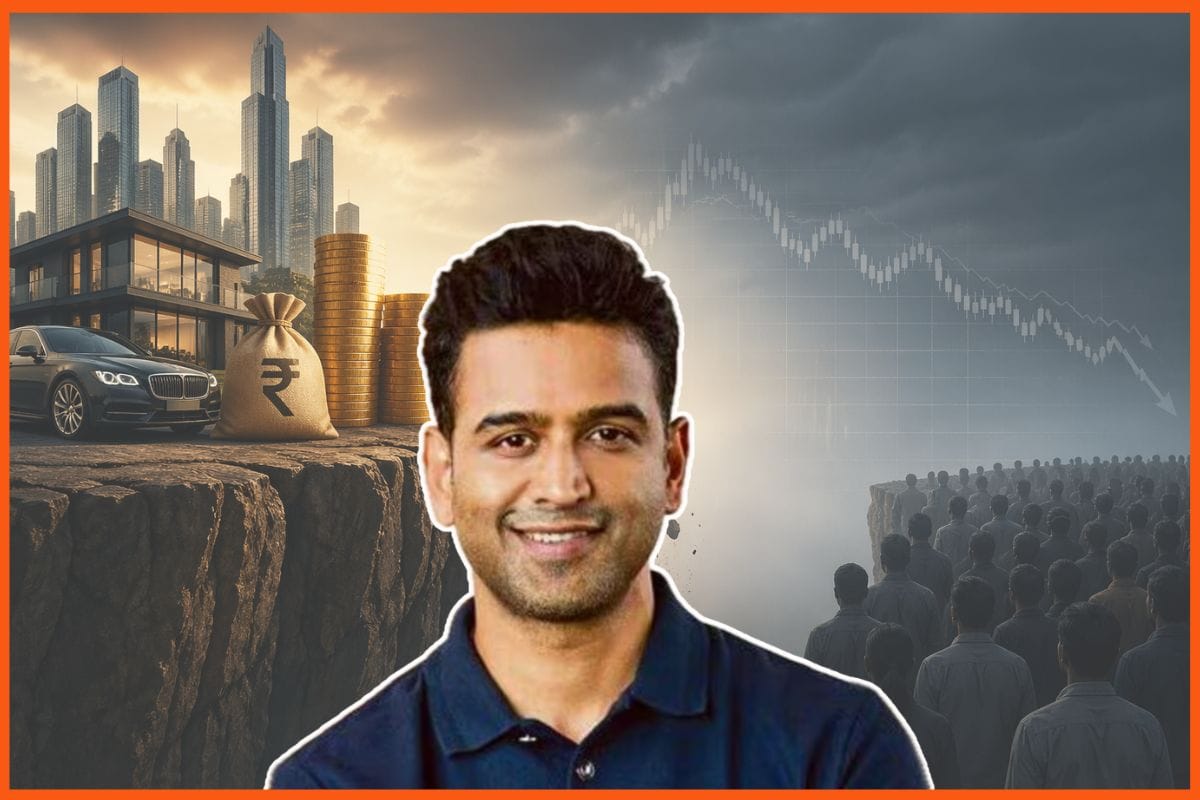
Nithin Kamath, the billionaire co-founder and CEO of Zerodha, India’s largest stockbroker, has issued a stark warning regarding the widening chasm of wealth inequality, describing the current global economic trajectory as "sitting in a car with the brakes cut, watching a cliff approach."
In a candid reflection shared on LinkedIn, Kamath—who built a multi-billion dollar fintech empire from scratch—admitted that his own perspective on wealth has shifted dramatically since his early days. He revealed that his initial ambition was far more modest: "hit ₹5 crore, retire in Goa, beach shack, done." However, the reality of his success has brought the "dark inequalities of wealth and opportunity" into sharper focus.
The Asset Price Trap and the 1% Divide
Kamath’s concerns are grounded in the structural nature of modern wealth creation. He pointed to the post-2008 era of rising asset prices as a primary driver of the current crisis.
"The concentration of wealth among the top 1% is severe and getting worse, and it's even starker among the top 0.1%," Kamath noted.
He argued that because financial assets are held by those who already possess capital, the compounding value of these assets disproportionately benefits the wealthy.
"The post-2008 era of rising asset prices has likely made this worse, because the people who hold financial assets are, by definition, people who already have money," he observed. This trend is not unique to India; Kamath noted that "barring a few exceptions, it's a global phenomenon."
AI and the Threat of Social Fragmentation
The Zerodha chief also highlighted the looming impact of Artificial Intelligence (AI), which he believes has a "non-trivial probability of making things worse" by further automating wealth creation. He cautioned that sustained, extreme inequality rarely ends well in a historical context, leading to social instability.
"Wealth that just sits in financial assets whose value keeps compounding upward doesn't do much good for anyone beyond those who already have it," Kamath stated. He emphasized that if wealth is not "in motion" or being used for social good, the social cohesion that holds communities together will continue to fray. "And if that wealth isn't in motion, if it isn't doing some social good, the fabric that holds us together will only continue to fray and lead to cynicism, resentment, and worse yet, nihilism," he warned.
A Call for Purposeful Capital
While Kamath stopped short of prescribing specific policy solutions, his message to the investor and business community was clear: hoarding wealth is a zero-sum game. "What I am saying is that even if a portion of that wealth were channelled into things that could materially improve lives, that seems worth doing. Hoarding wealth, in the grand scheme of things, doesn't really help anyone," he concluded.
For an industry built on the growth of financial assets, Kamath’s words serve as a provocative reminder. As Zerodha continues to dominate the Indian brokerage landscape, reporting a robust profit growth in FY2024-25, its founder is increasingly looking beyond the balance sheet, urging a collective acknowledgement of the systemic risks posed by the very markets that created his fortune.
 Muskaan Kapoor