Small UPI Players Resist NPCI’s Meta Proposal, Cite Anti-Competition Risks
Smaller UPI apps have approached the National Payments Corporation of India (NPCI) to reconsider its planned UPI Meta architecture, cautioning that it could lead to increased dominance of PhonePe and Google Pay and stifle competition.
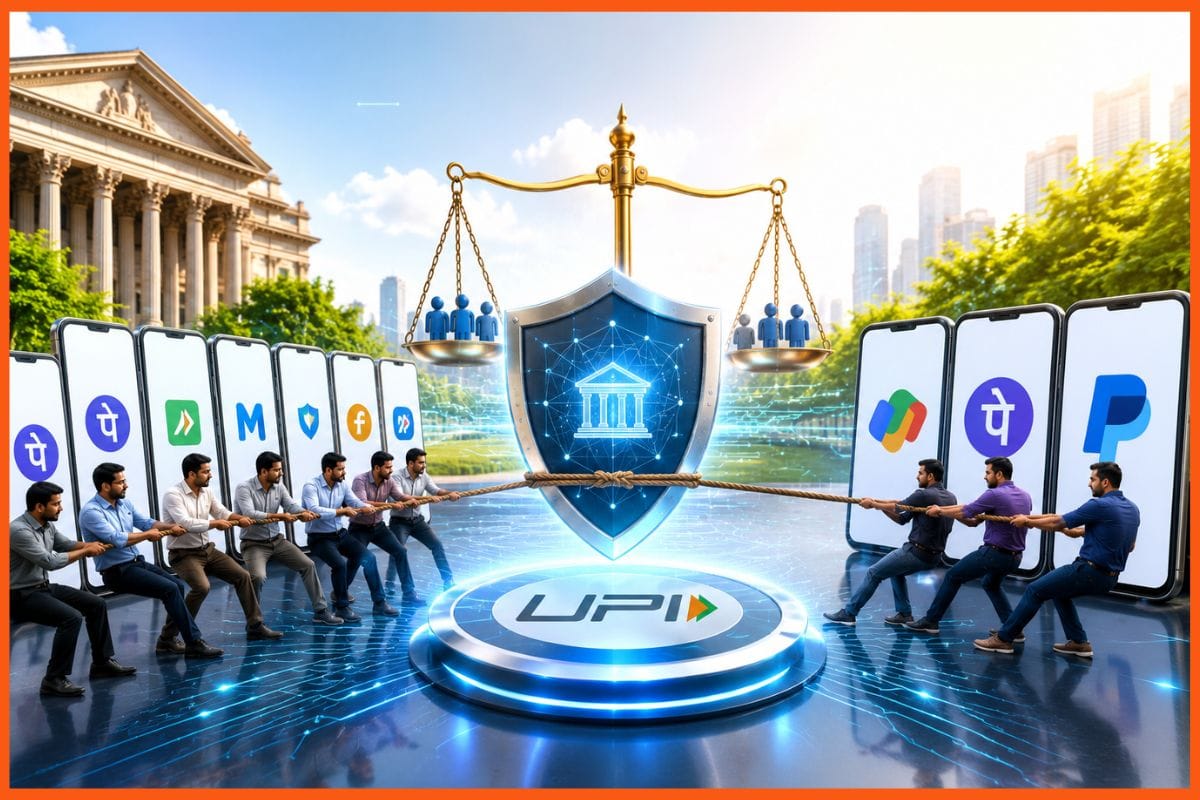
The competition for India's purchasing screen is intensifying prior to the transaction's completion. The National Payments Corporation of India (NPCI) has been asked by smaller UPI apps to reconsider its proposed UPI Meta framework. Additionally, they cautioned that this development could further advantage industry heavyweights Google Pay and PhonePe. Several UPI payment apps have joined together to send NPCI a joint representation.
Accordingly, the claim is that the suggested framework changes UPI's open design without really helping customers. With the new UPI Meta architecture, consumers could bookmark their favourite UPI app on e-commerce sites like Swiggy, Amazon, and Blinkit. After making a selection, users can finish purchases using biometric authentication or a UPI PIN even without launching the payment app.
UPI Firms Calling the Move Can Disrupt the Ecosystem
The businesses maintain that the current UPI process is quick and effective. There is no indication in UPI's data that customers are deciding not to complete their purchases due to the present checkout process. Their main worry is that giving users the option to choose an app only once could give dominating players an edge that lasts. They claim that once users settle on an app, they might not want to change.
Consequently, smaller payment apps are finding it harder and harder to draw in new consumers. The worry is compounded by the fact that the market is already highly concentrated. The study states that of the total volume of UPI transactions, PhonePe is responsible for about 45% and Google Pay for about 33%. Navi, super.money, and BHIM are smaller platforms that together make up about 1% to 2% of the market. Concerns about security, governance, and operational complexity are also raised by the representation, in addition to competitiveness.
Companies are concerned that additional security and technical concerns could be introduced if UPI's scale is used to synchronise consumer preferences across payment apps, banks, retailers, and NPCI.
UPI Firms Raising Further Complexities
The companies have also issued a warning that certain services aimed at customers might be inaccessible if the current UPI checkout experience is bypassed. Checking account balances, issuer bank health indicators, built-in fraud controls, and newer services like UPI Lite, credit cards on UPI, and credit lines on UPI are all part of these capabilities. Before implementing the framework, the payment providers have encouraged NPCI to carry out larger industry consultations.
Companies have also requested research into potential alternatives to the current checkout process that might lessen friction without sacrificing consumer choice, competition, or interoperability. In the midst of this controversy, an even more systemic problem has emerged for India's digital payments ecosystem: how to keep UPI's open, competitive design while simultaneously facilitating quicker and more painless transactions.