Supreme Court Questions FSSAI’s Stand Against Warning Labels on High-Fat, Sugar and Salt Foods
The Supreme Court has questioned the Center and FSSAI on their reluctance on front-of-pack warning labels on goods high on sugar, salt and saturated fat. A bench said that public health, particularly children’s health, had to take precedence above industry concerns.
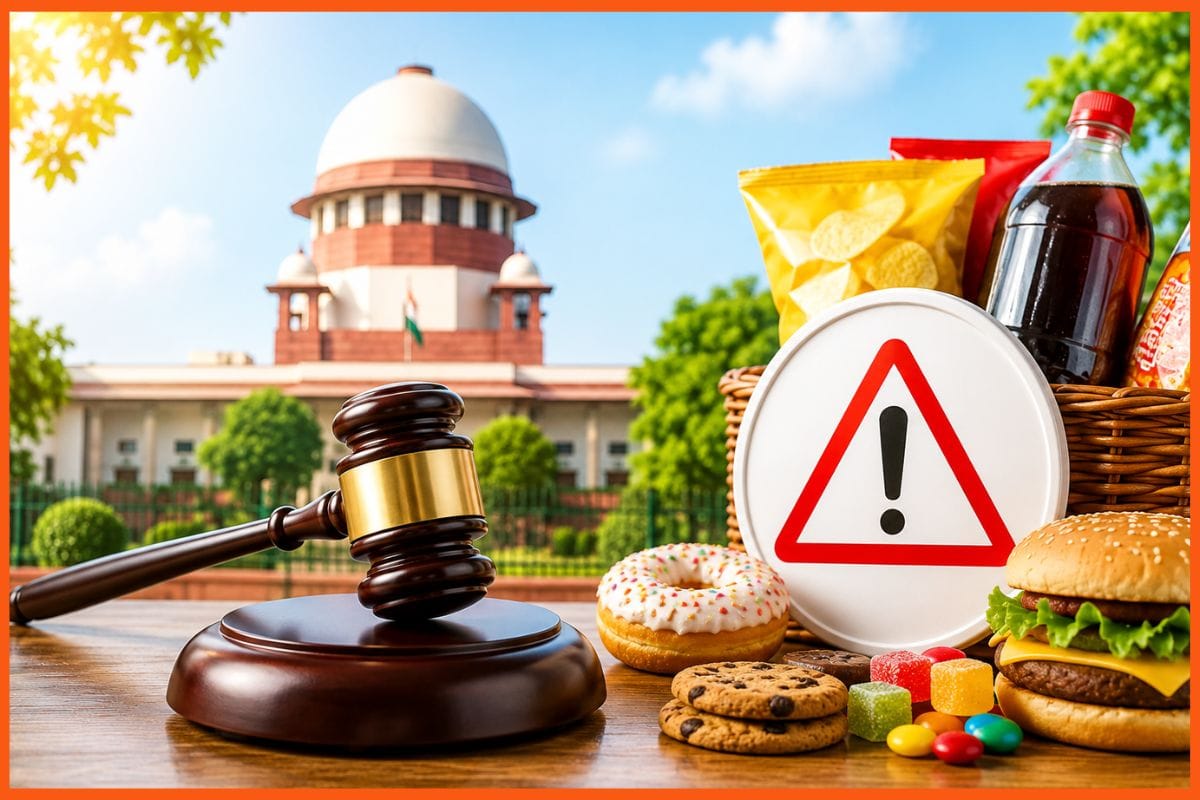
Warning labels should be placed on the front of packaged foods that contain high levels of sugar, salt, or saturated fat; the Supreme Court delivered an ultimatum to the government on this matter on August 13th. In a resounding dissent, the highest court in India has spoken out against the actions of the federal government and the FSSAI.
Continuing the question over whether or not corporations were pressuring the authorities. The court informed the government and the FSSAI that this is a matter of public health, especially for the growth of children. The highest court in the land also said that corporations shouldn't have a say in the matter.
Findings of the Supreme Court
When the petitioner brought up the FSSAI's claim that the industry was against labelling, a bench consisting of Justice K Vinod Chandran and Justice JB Pardiwala drew attention to the matter. The attorney representing the petitioner referenced the March 7 meeting minutes of the FSSAI. Consequently, asserting that the judgements rendered therein were in stark contrast to the prior orders of the court.
The FSSAI has proposed a tabular disclosure of the recommended daily intake of added sugar, saturated fats, and salt. Hence, referencing the industry's resistance to warning warnings on food packaging. It was brought to light that the FSSAI's affidavit merely referenced the food industry's stance. However, the food regulator disregarded the evidence presented by representatives of civil society in support of warning labels to discourage the consumption of goods high in added saturated fats, sugar, and salt.
As a result, the Bench interrogated the Centre's Additional Solicitor General (ASG), Brijender Chahar, with tough questions. Enquiring as to whether or not the administration was hesitant to respond, the court restated that its order was crystal plain.
SC Putting Strong Questions Against FSSAI and Centre
The Bench further noted that the administration was "yielding to that pressure" due to the enormous demands it was receiving from big corporations. In its rationale, the court cited the "public interest" to justify its decision. Concerned with the government's actions thus far, the Bench demanded to know why the court's order was being disregarded. The assistant secretary general of the government, Brijender Chahar, asked the judge to let him clarify the government's plans. Nonetheless, the court made it plain that the administration must carry out the court's precise instructions. "We will issue an order if you are unable to do it," the bench emphasised once more.
According to the Center, several traditional Indian goods, such as namkeen (savoury snacks), could end up with "red warning marks" due to the proposed labelling. The ASG contended that it would be unfair to judge traditional Indian cuisine by the same standards as processed goods from industrialised nations, which tend to have lower amounts of salt, sugar, and fat. The question put before the court was whether India should continue to be an impoverished nation. The court went on to wonder whether the government was not concerned about the well-being of its citizens, especially its youth. "Manufacturers might not like it, but the consumer ought to know," the court noted. A warning label's goal, according to the Bench, is not to prevent sales of a product but to educate buyers about the ingredients.