

Unilever Announces Hiring Freeze Globally Due to West Asia Crisis
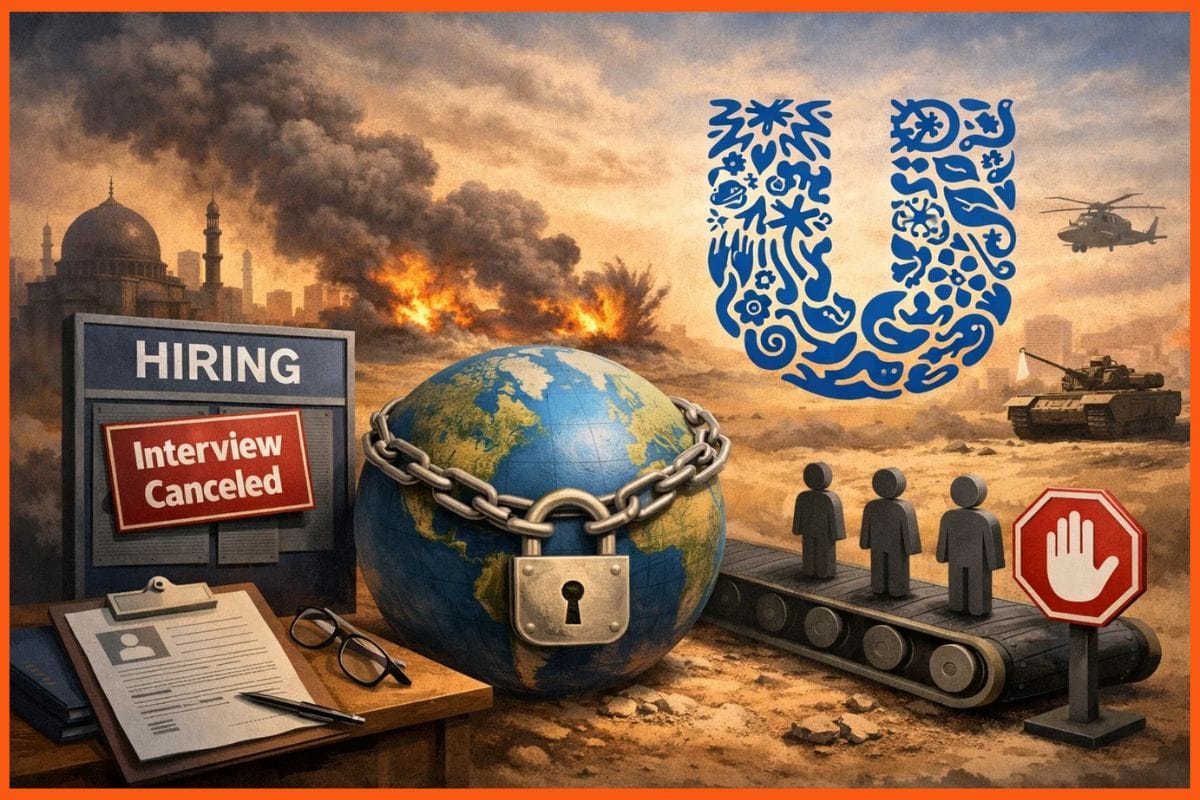
All levels of employment at Unilever have been placed on hold for a minimum of three months. The decision was made in response to the growing number of problems that the conflict in West Asia is causing for businesses. In preparation for the economic consequences of the continuing confrontation with Iran, the corporation informed employees late last week that the freeze would be effective immediately.
Aside from driving up energy prices dramatically, the continuing conflict has messed with international economic patterns. According to Fabian Garcia's note, there will be a lot of difficulties in the next few months due to macroeconomic and geopolitical realities, particularly the crisis in West Asia.
Unilever's Operations Also Hit by Ongoing Conflict
The London-based firm announced in a statement that it had temporarily halted the hiring process. The choice is mostly based on the fact that the external environment is unknown, and it will change plans accordingly. Companies across industries are reevaluating their strategies in light of the rising cost of inputs caused by the expanding conflict, which has affected industries as diverse as aviation and retail. This has a disproportionately negative effect on Unilever because the company uses chemicals, packaging, and food ingredients—all of which are energy-intensive-intensive raw materials.
Despite doing most of its manufacturing in-house, the corporation is nevertheless vulnerable to growing energy costs and logistical constraints through its global supply chains. The hiring moratorium is an extension of a more extensive cost-reduction initiative that was implemented in 2024 with the objective of saving approximately 800 million euros over the course of three years. Roughly 7,500 jobs, mostly in office professions, were anticipated to be impacted by that strategy.
Unilever Going Through a Tough Time
From an estimated 149,000 in 2020 to a current estimate of 96,000, Unilever's workforce has already fallen substantially. Also, since the COVID-19 epidemic, the corporation has had a hard time increasing volume and is looking into new strategies. Under CEO Fernando Fernandez, the company is considering a sale of its food division to McCormick & Company, which would alter its investment strategy. Its ice cream segment, which featured brands including Ben & Jerry's and Magnum, was spun off last year.
In 2025, Unilever made a number of changes, including the elimination of some positions and the appointment of Fernandez as CEO. Fernandez had previously served as CFO. He has been supervising the ice cream spinoff and has also been intent on increasing sales in India and the US. Despite falling sales, the firm managed a modest increase in yearly profits to €5.7 billion ($6.8 billion) in the previous year.
|
Quick Shots |
|
•Unilever announces global hiring freeze
for at least 3 months •Decision driven by economic uncertainty
from West Asia conflict •Rising energy prices & supply chain
disruptions •Impact on raw materials like chemicals,
packaging, food ingredients |