US Announces 15% Polysilicon Tariff as China Chip Supply Chain Faces Pressure
The US has placed a 15% tariff and minimum import prices on polysilicon in a move aimed at China’s domination of key solar and semiconductor supply chains. The move by President Donald Trump is aimed at boosting domestic manufacturing, energy security and advanced computing infrastructure.
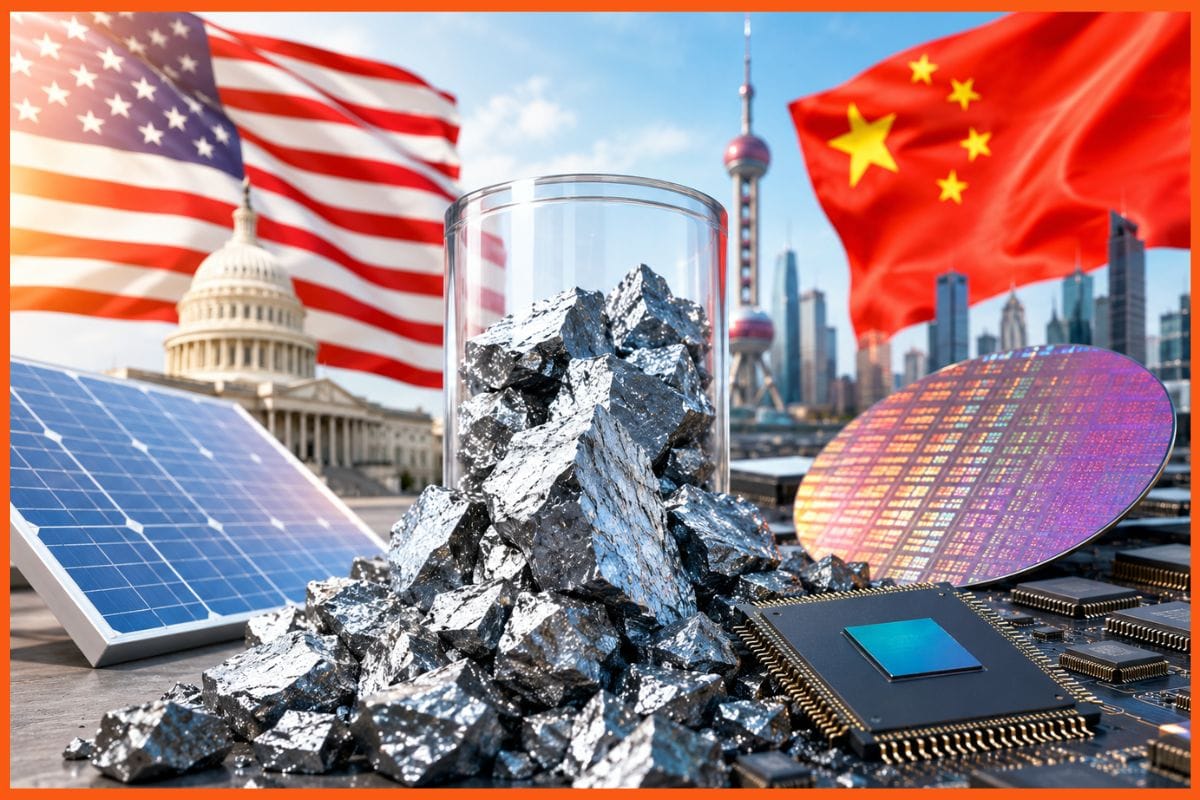
On August 6, the White House levied a 15% tax and several price floors on polysilicon goods. China is the world leader in producing polysilicon, a key ingredient in solar panels and semiconductors. The purpose of President Trump's proclamation, which is based on Section 232 of the Trade Expansion Act of 1962, is to bolster domestic supply chains for solar panels and chips.
To compete with China in the energy and AI markets, these panels and chips are necessary. Among other things, the order's stated plan of action will assist guarantee that American production of polysilicon and its derivatives can continue to meet economic and national security needs in a commercially viable manner.
American Firms Accusing Chinese Firms for Unethical Practices
For the past ten years, American solar producers have accused their Chinese competitors of flooding the market with solar panels. Additionally, American businesses assert that their Chinese competitors are taking advantage of unfair government subsidies and relocating production overseas to avoid American tariffs. The US is home to two polysilicon manufacturing facilities. The Michigan-based Hemlock Semiconductor is a partnership between Corning and Shin-Etsu Handotai of Japan.
Tennesse is home to a factory run by Wacker Chemie, headquartered in Munich. The supply chains for semiconductors and solar panels begin with polysilicon, an extremely pure variety of silicon. Solar panels are made by assembling solar cells, which are made from silicon wafers. According to a Corning representative, the company's move today will help the United States remain competitive in the long run by encouraging investment in domestic capacity. Wacker stated that the company values the administration's ongoing involvement in the matter. Further, this decision has significant implications for the resilience of the semiconductor supply chain, the development of advanced computing infrastructure, and the broader interests of the United States in terms of defence and security.
Industry’s Response to the Move
Since tax incentives were introduced by Congress in 2022, solar manufacturing in the United States has grown. But much of the expansion has been in the panel assembly sector. That means factories will have to wait longer for investment-heavy imported wafers and cells. Many companies with solar manufacturing in the US were pleased by Trump's decision. These included T1 Energy, First Solar, and Qcells, the US solar division of Hanwha, a South Korean solar power company. Dan Barcelo, CEO of T1 Energy, remarked that this is a critical success for advanced American manufacturing and investment in domestic energy supply chains.
T1 is spending $510 million on a cell manufacturing and a solar panel plant in Texas. According to the White House, the trade barriers will be put into force on December 4th. Delaying implementation might cause a spike in imports in the next months, according to trade attorney Tim Brightbill of Wiley Rein, who has filed multiple trade lawsuits against Chinese solar companies. Companies that purchase solar panels have stated that delay is necessary in order to modify supply contracts in response to increased prices.
The president established a minimum import price of $21 per kilogram for polysilicon, according to a document from the White House. In addition, solar cells cost $0.22/watt and solar modules/panels $0.38/watt, while polysilicon ingots and wafers cost $100/kg.