US Tightens China Tech Controls, Imposes New Export Limits on Nvidia and AMD
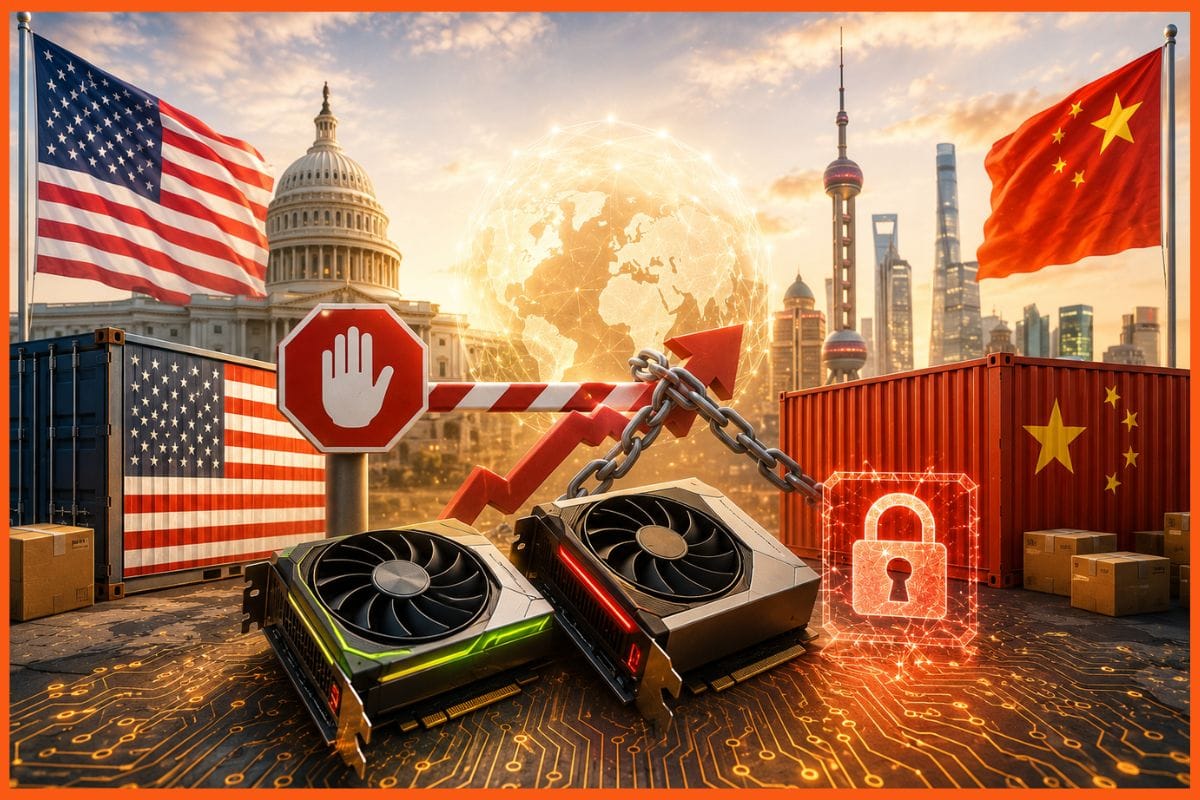
On May 31, the U.S. Department of Commerce issued instructions. These proposed guidelines would now seal a possible window of opportunity for the export of advanced chips. AI chips from brands such as Nvidia's Blackwell and Rubin processors, AMD's MI350x, and others now will not be able to export to Chinese enterprises operating outside of China.
A new set of rules published on the website of the U.S. Department of Commerce makes it clear that even non-Chinese firms with a Chinese headquarters are subject to the licence requirements for advanced chips. Despite broader U.S. efforts to restrict Chinese access to semiconductors needed for AI development, this move shows that the most advanced AI chips from the US may have been reaching Chinese AI firms' subsidiaries in places like Malaysia for nearly a year.
How US’ AI Chips were Reaching China Earlier?
Supposedly, the trade opening was first conceived of in May of 2025. At the time, the Trump administration had already stated that it would not be enforcing a security guideline known as "AI Diffusion" that had been left behind by the Biden administration. The United States government's leniency in this area allowed Chinese subsidiaries to buy top-tier American technology.
These include Nvidia's Blackwell and Rubin processors, AMD's MI350x CPUs, and AMD's powerful graphics processing units (GPUs). It is still unclear how many strong chips managed to get past the security measures. But sources in the business are saying the harm is done.
|
Some Interesting Facts of the Story |
|
1.The US government is increasingly
treating AI chips as strategic assets, similar to how critical technologies
were regulated during previous geopolitical rivalrie 2.The US-China technology rivalry has
shifted from smartphones and telecom equipment to artificial intelligence and
semiconductor dominance. 3.The restrictions highlight how global
supply chains are being reshaped by geopolitics, with semiconductor exports
becoming a key tool of foreign policy. |
US-China Tussle Continues in AI Space
The United States government has granted Nvidia permission to market its H200 chips. But Chinese authorities, who are encouraging domestic chip manufacturers, have not given their stamp of approval. Nearly ten Chinese companies have received U.S. approval to purchase the H200, Nvidia's second-most powerful artificial intelligence processor, but not a single shipment has been made thus far.
Allegedly, the Trump administration has given Chinese corporations a way to purchase export-controlled semiconductors, according to Chris McGuire, a former State Department official who oversaw technology policy during the Biden administration. It is fortunate that this clarification makes it clear that Blackwell exports to firms outside of China with Chinese headquarters are now unlawful, according to McGuire. However, it is important to observe how many shipments have actually gone before assessing the impact.
In their ongoing struggle for artificial intelligence (AI) supremacy, the United States have imposed multiple limitations on the export of cutting-edge technology to China. A significant easing of Washington's export restrictions was announced by Trump in December, when he authorised Nvidia to sell its H200 chip to China. The H200 isn't Nvidia's most cutting-edge chip, but it's almost six times more powerful than the H20, which was Nvidia's most advanced semiconductor that China could import before.
|
Quick Shots |
|
•US expands export controls on advanced AI
chips, tightening restrictions on Nvidia and AMD sales to Chinese-linked
entities. •Chinese subsidiaries operating outside
China will now require licences to access high-end US AI processors. •Nvidia’s Blackwell and Rubin chips and AMD’s
MI350X accelerators are among the technologies affected by the new rules. •The move aims to close a loophole that
allegedly allowed Chinese firms to acquire advanced AI chips through overseas
subsidiaries. |