
Why India Needs a New Leadership Model That Connects Education, Governance and Diplomacy
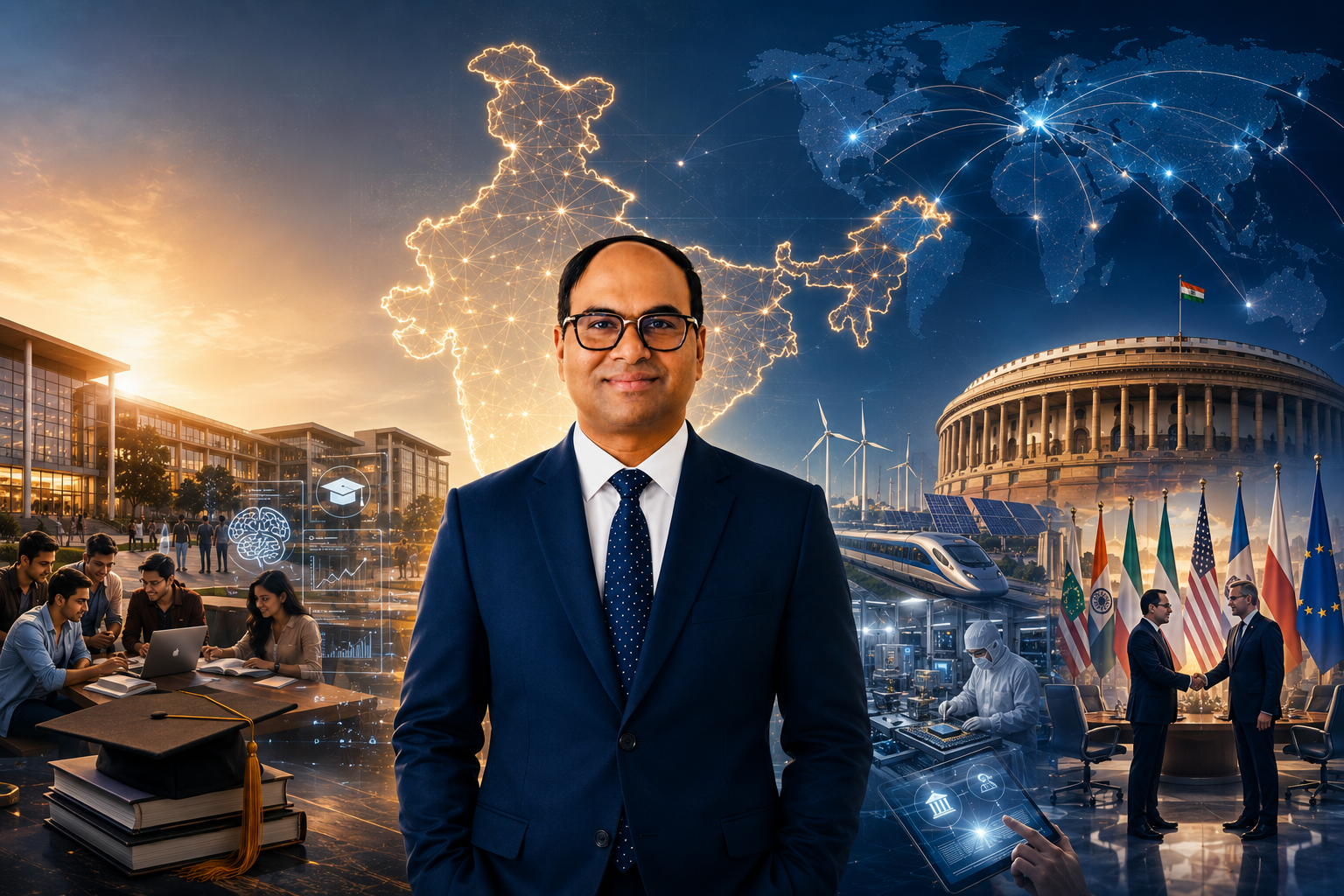
This article has been shared by Ashok Thombre, Advisor, Focus Academy
India is at a pivotal moment of its development trajectory. It is a big world with a large population base and is one of the fastest-growing major economies, and we have a lot of opportunities before us. However, we have also got complicated issues to deal with, from educational inequality to youth unemployment, from global economic uncertainty to social inequality. These challenges cannot be overcome with normal leadership. I believe that this requires a fresh system of leadership in India that merges education, governance and diplomacy as a whole in India and not isolated from each other.
These aspects of leadership have long been disjointed. The choices made in one context, have an impact in another. The educational system of a country forms the workforce, the governance models determine the distribution of opportunities, and diplomacy has an impact on the access to global markets, investments and strategic partnerships.
The Changing Nature of Leadership
The world has been changing in unprecedented speed and pace due to climate change, changing geopolitical scenarios, technology, and artificial intelligence. The World Economic Forum estimates that almost 170 million new jobs will be available by 2030 worldwide and that many of the jobs that are in existence today will be replaced by automation. Education must adapt to the future and get rid of traditional learning methods.
Meanwhile, governance issues are becoming more complex. Governments today have to face not only their own issues but also issues that affect people's lives at the global level. The impacts of global events are increasingly affecting local realities, as evident in a range of scenarios from supply chain disruptions to international conflict, climate commitments, and digital regulations.
Education as the Basis of National Progress
The biggest asset that India has is its youth population. More than 65% of Indians are below the age of 35. This population edge can be transformed into an effective growth driver if we put in place suitable investments in education and skills.
In India, there has been a significant improvement in school enrolment but there are still challenges to be overcome. There are still reported learning gaps and inequities of access to quality education, and disparities between urban and rural areas. The Annual Status of Education Report (ASER) proves that the question of foundational learning outcomes is a concern in many parts of the country.
Governance Must Be Grounded in Reality
Good governance starts with knowledge of the situation of citizens. Policies that are effective are based on the lived experience of the people for whom they are designed.
Throughout these years I have worked on issues that span from child marriage prevention, access to education, gender equality to policy literacy. The experiences I have had have taught me that there are many social issues that are interrelated. The risk of early marriage increases with a girl who has left school.Girls are more susceptible to early marriage if they have left school. If a family is not aware of government schemes, they can continue to be denied opportunities that are meant for them.
Why Diplomacy Matters More Than Ever
Domestic reforms are not enough to fulfill the aspiration of India. The success of our growth in the future will also rely on our interactions with the world.
Diplomacy today shapes investment, technology cooperation, educational cooperation, and international commerce. In recent years, India has made significant strides in exports and strategic relations with Asian, European, African and North American nations are emerging with fresh opportunities.
I have seen the power and strength of international cooperation in national development firsthand, having participated in international business relations and attended many international forums, including the United Nations. Diplomatic relations do not exist in isolation, but they influence the life of millions of citizens in many aspects, such as employment, innovation, entrepreneurship and education.
Developing Leaders Who Can Bridge All Three Worlds
The leadership required in India should be able to operate in a classroom, boardroom and policy room. Future leaders should know the role and importance of education in shaping society, the role of governance in creating opportunities and how diplomacy can affect economic and social progress in human life.
There needs to be a change in the way leaders are prepared. Interdisciplinary thinking should be promoted at universities, public institutions and training programs. Youth should be introduced to public policy, community action and global affairs, as well as academic topics.
Conclusion
India's next step of growth will not just be on the basis of economic parameters, it will also be on the basis of the quality of its leadership. Although education, governance and diplomacy are considered unique and different fields, they actually go hand in hand and influence the future of a country.
A leadership model that can span these domains can lead to more inclusive policies, robust institutions, and enhanced opportunities for the citizens. The world is becoming more and more Indian and we need to nurture leaders who are aware of the ground reality and will know the international dynamics. It is only when we are able to construct a future that is not just economically robust, but also a society that is inclusive, a world respected, and a future sustainable for generations to come.