Part 1: How Subhash Chandra's ₹22,006 Crore Debt Case Became a ₹6.5 Crore Payout
The National Company Law Tribunal has approved a repayment plan under which Essel Group founder Subhash Chandra will pay ₹6.5 crore against admitted creditor claims of ₹22,006.57 crore. Here is what the order actually says, and what each side says it means.
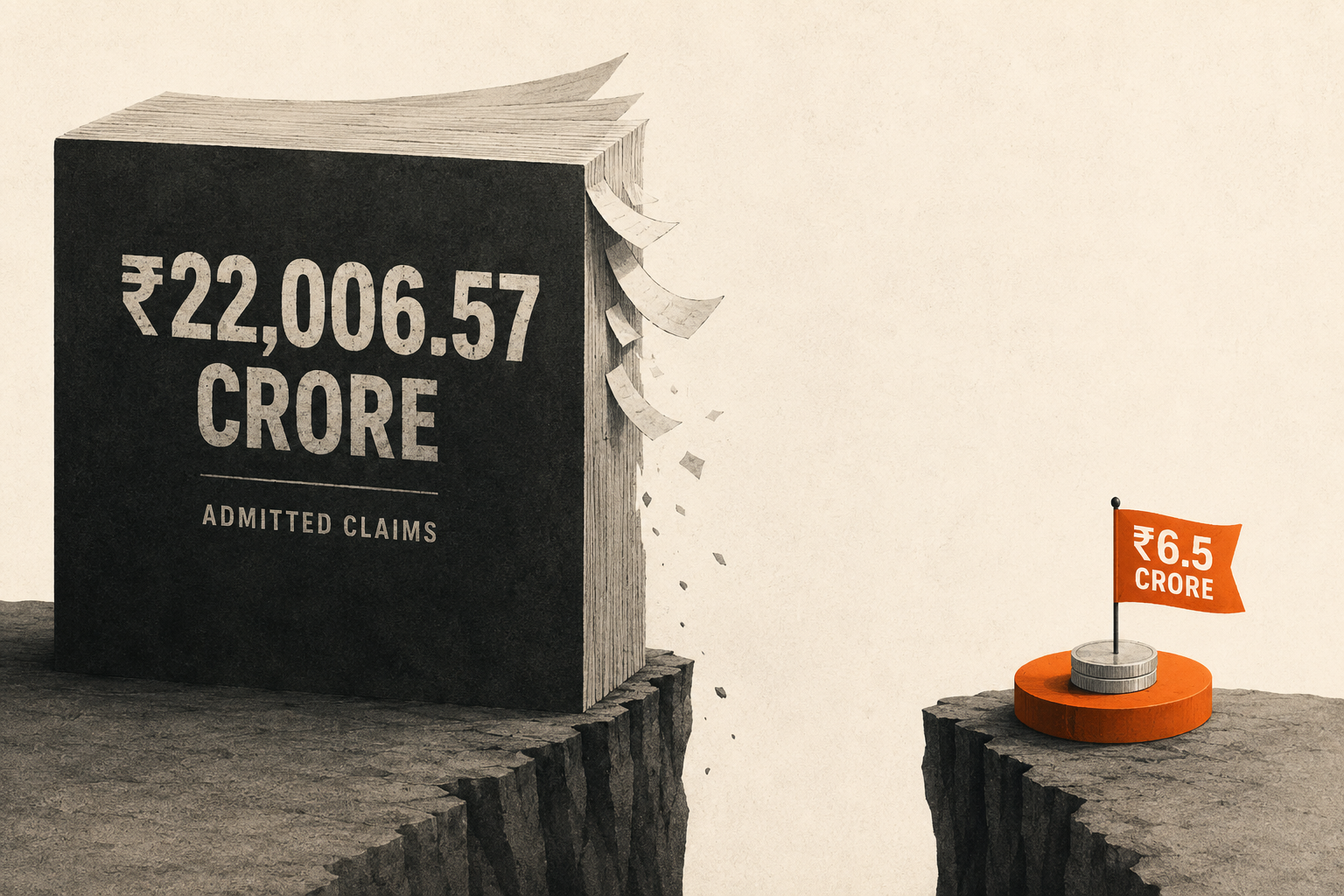
The National Company Law Tribunal approved a personal insolvency repayment plan for Essel Group founder Subhash Chandra in the last week of August 2026. Under the plan, Chandra pays ₹6.25 crore directly to creditors plus ₹25 lakh toward process costs, for a total plan value of ₹6.5 crore. The admitted claims against him stood at approximately ₹22,006.57 crore. That is a haircut of roughly 99.97% for creditors, or a recovery of about 0.028% of what was claimed.
Where the ₹22,006 crore figure comes from
Chandra's personal insolvency proceedings trace back to 2022, when Indiabulls Housing Finance Limited (now Sammaan Capital) filed a case against him under Section 95 of the Insolvency and Bankruptcy Code. The trigger was a ₹170 crore loan to Vivek Infracon, an Essel Group entity, which went bad. Chandra had personally guaranteed that loan.
From there, the admitted claims against him grew to ₹22,006.57 crore, reflecting personal guarantees Chandra had extended across a wider set of loans taken by Essel Group companies from various lenders.
The two competing accounts of what that number means
Chandra has disputed the way the ₹22,006 crore figure has been used publicly. He has said the amount actually tied to personal guarantees held by the lenders objecting to his repayment plan is closer to ₹3,900 crore, not ₹22,006 crore, and that he was a guarantor rather than a direct borrower on the larger figure.
Separately, Chandra has said Essel Group's total borrowings stood at around ₹45,000 crore, of which the group has repaid about ₹43,000 crore, with roughly ₹2,000 crore still outstanding due to what he described as asset-liability mismatches, including delayed payments from state governments on infrastructure projects. He has called on the banking system and the Finance Ministry to appoint an independent auditor to examine the group's debt, defaults, and repayment record.
On the other side, government sources have said that describing the outcome as a "99.97% bank haircut" is misleading, since the ₹22,006 crore figure represents claims filed against Chandra as a guarantor rather than money he personally borrowed and did not repay.
I checked the order's own figures against both public statements while reporting this. They describe two different things, a claims total and a guarantee total, not two versions of the same fact. The ₹6.5 crore payment against ₹22,006.57 crore in admitted claims is what the order approved either way.
How the plan got approved
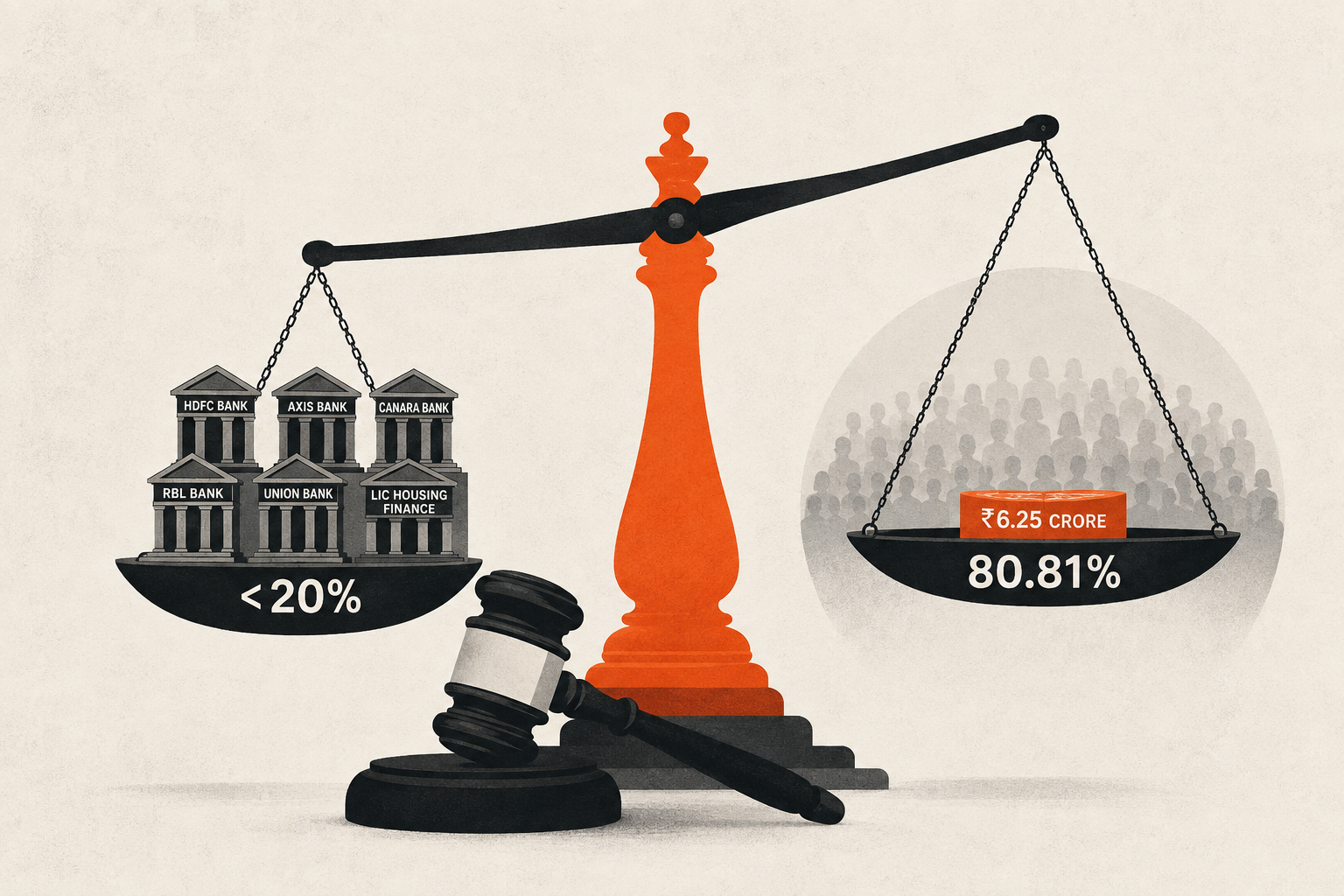
The repayment plan was approved on the strength of financial creditors holding 80.81% of the voting share voting in favor.
Not every creditor agreed.
Canara Bank, which held a 1.60% voting share, voted against the plan. LIC Housing Finance's own admitted claim was cut from ₹1,322 crore to ₹38 lakh under the plan, and it voted against as well. HDFC Bank and Union Bank of India (UK) Ltd also opposed it. Under India's individual insolvency framework, a repayment plan does not need unanimous creditor consent to be approved by the tribunal, only the required majority threshold. That is the mechanism that let this plan go through over the objections of some of the creditors involved.
The system this sits inside
This case is not happening in isolation. According to Insolvency and Bankruptcy Board of India data, of 2,137 personal-guarantor insolvency cases where a resolution professional had been appointed, only 64 had resulted in an approved repayment plan as of June 2026. Across those 64 cases, creditors realised a combined ₹234.56 crore.
The Insolvency and Bankruptcy Code was itself amended in 2026, with stated aims of strengthening creditor oversight and improving procedural clarity in cases like this one.
What happens next
Canara Bank, Union Bank of India (UK) Ltd, and LIC Housing Finance have each said they will challenge the NCLT's order before the National Company Law Appellate Tribunal. HDFC Bank has said it is weighing a similar appeal, and has separately stated that only 3.2% of its own ₹680 crore claim was admitted under the NCLT's order.
None of the appeals had been formally filed as of this writing. What they could change, and what HDFC Bank's specific objection is built on, is covered in Part 2.
This is Part 1 of a three-part series on the Subhash Chandra insolvency case. Part 2 covers the bank appeals. Part 3 covers the public dispute between Chandra and Mukesh Ambani's Reliance network, and what Chandra has said about his plans after the case.