Part 2: Why Six Lenders Are Fighting the Subhash Chandra Repayment Plan
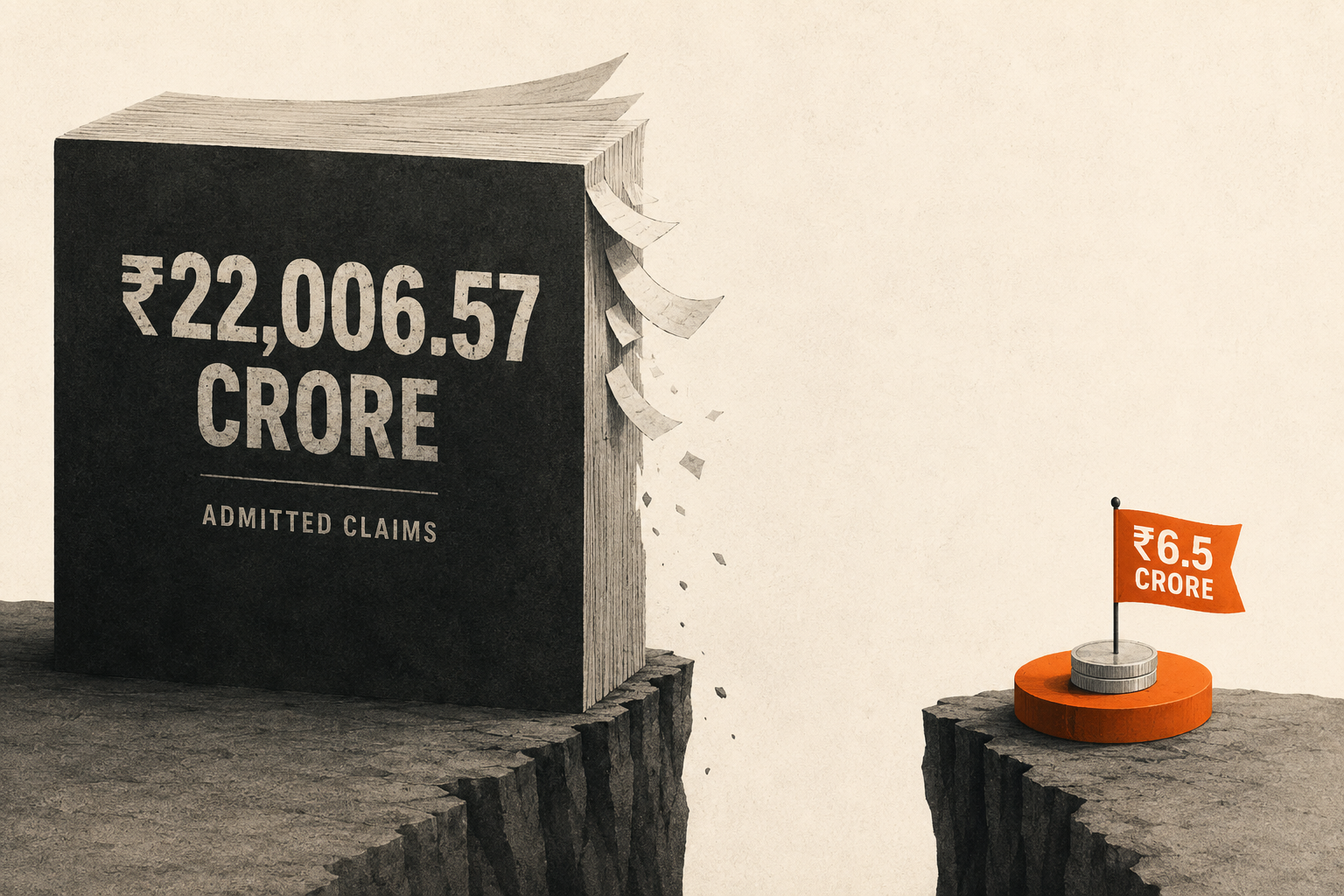
HDFC Bank, Axis Bank, Canara Bank, RBL Bank, Union Bank of India, and LIC Housing Finance all opposed the NCLT-approved plan under which Subhash Chandra pays ₹6.5 crore against ₹22,006 crore in claims. Here is what the tribunal itself said its role was, and was not.
Part 1 of this series covered how the National Company Law Tribunal approved a personal insolvency repayment plan for Essel Group founder Subhash Chandra: ₹6.25 crore to creditors plus ₹25 lakh in process costs, against admitted claims of ₹22,006.57 crore. Six institutional lenders voted against that plan. This part covers who they are, why the plan was approved anyway, and what happens next.
Who opposed the plan
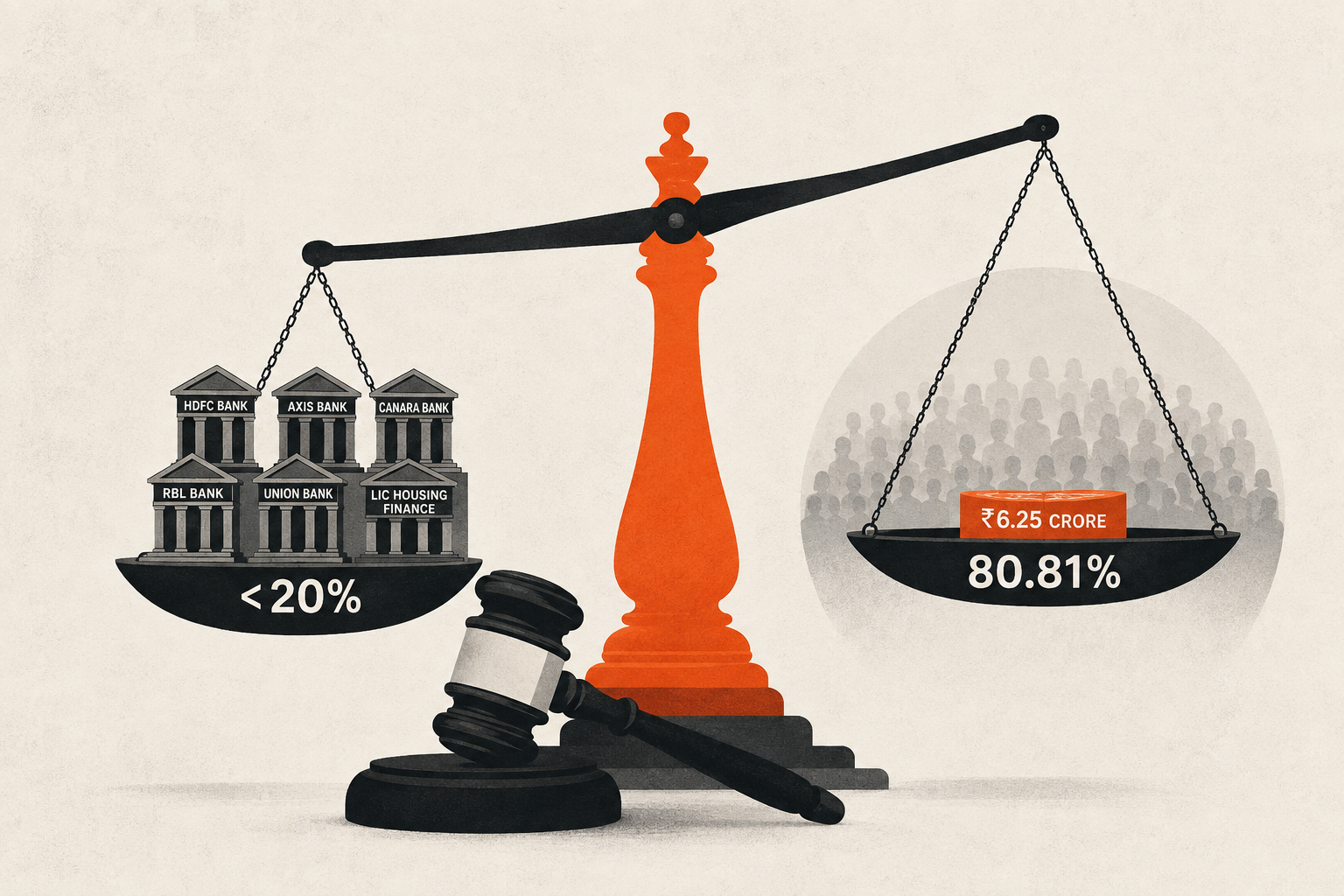
HDFC Bank, Axis Bank, Canara Bank, RBL Bank, Union Bank of India, and LIC Housing Finance all voted against the repayment plan. Together, they accounted for less than 20% of the voting share; creditors holding 80.81% approved it.
HDFC Bank has said only 3.2% of its total claim was admitted under the NCLT's order, out of a claim it put at ₹680 crore. It said it inherited the loan facility from its parent, HDFC Limited, ahead of the 2023 merger.
LIC Housing Finance's own admitted claim was ₹1,322.39 crore. Under the plan, it stands to receive about ₹38.09 lakh, a recovery of roughly 0.028%.
What LIC Housing Finance actually argued
LIC Housing Finance argued that the recovery was unviable and unlawful, and separately questioned whether the payment promised under the plan was sufficiently certain.
The tribunal rejected that argument.
I read the order's own reasoning while reporting this, and the size of the recovery was never actually the question in front of the tribunal. Only whether the process that produced it was valid was.
Its stated reasoning was narrow: the National Company Law Tribunal said it could not substitute its own commercial judgment for that of the creditors who had voted. Its role, as the tribunal described it, was to examine whether the statutory process had been followed and whether the voting itself was valid, not to decide whether ₹6.25 crore was a fair price for ₹22,006 crore in claims.
Separately, the resolution professional's valuation found that Chandra's realisable personal estate was worth less than the amount already on offer under the plan. The tribunal's reasoning was that rejecting the plan and pushing Chandra into bankruptcy might not have produced a better recovery for creditors than the settlement already being offered.
How the tribunal actually reached its decision
The order did not come from a single, unanimous bench. The original two-member NCLT bench delivered a split verdict on the plan.
A third member broke that tie.
That third member approved the plan under Section 114 of the Insolvency and Bankruptcy Code. The matter now returns to the original two-member bench for what has been described as consequential directions arising from that approval.
Where things stand with the appeals
LIC Housing Finance has said it will file an appeal before the National Company Law Appellate Tribunal immediately. Canara Bank and Union Bank of India have each said they intend to move the NCLAT as well. HDFC Bank has said it is exploring an appeal but had not confirmed filing one as of this writing.
None of the appeals had been formally admitted by the NCLAT as of this writing. The tribunal's own stated position, that its role was procedural rather than a judgment on whether ₹6.25 crore was the right value, is the specific reasoning any appeal would need to engage with, since a simple argument that the recovery is too small was already made to the NCLT and did not succeed there.
This is a live, moving case. What actually happens with the appeals will be added here as it develops.
This is Part 2 of a three-part series on the Subhash Chandra insolvency case. Part 1 covers how the ₹22,006 crore claim became a ₹6.5 crore payout. Part 3 covers the separate public dispute between Chandra and Mukesh Ambani's Reliance network, and Chandra's own statements about his plans after the case.