PoSH Complaints Are Surging in India’s Tech Sector, But Compliance Still Remains a Checkbox
PoSH complaints in India’s tech sector have nearly quadrupled, but most companies still treat compliance as paperwork. As reporting rises across IT firms, weak implementation, legal risks, and trust gaps are emerging as major challenges for startups and HR leaders.
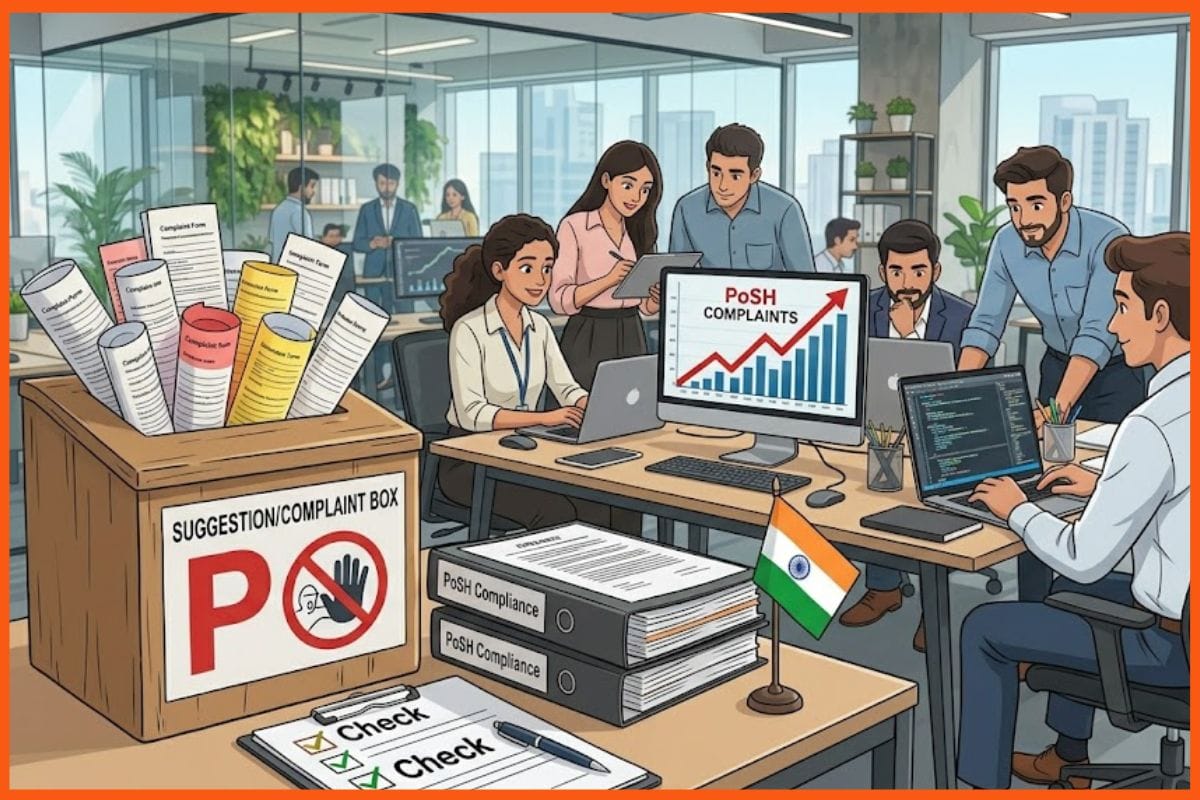
PoSH complaints in India’s tech sector have nearly quadrupled in just a few years.
Yet, most companies still treat compliance as paperwork rather than practice.
PoSH, or the Prevention of Sexual Harassment (PoSH) Act, was designed to ensure safe workplaces. But the gap between policy and practice is widening, turning compliance into one of the most overlooked risks in India’s startup ecosystem.
Recent data shows a worrying trend. Complaints under the PoSH Act have risen sharply, with top IT firms alone seeing a near fourfold increase by April 2026.
The table below shows how complaints have grown in recent years:
| Financial Year | Total Reported PoSH Complaints (Listed Firms) |
|---|---|
| FY22 | 1,313 |
| FY23 | 2,026 |
| FY24 | 2,777 |
| FY25 | 2,995 (Estimated) |
This growth highlights a clear gap between the law and what happens in reality. While more people are reporting issues, the system is struggling to keep up.
Compliance vs Reality
Many firms view PoSH as mere paperwork. They believe having a policy is enough. But this is not true.
Monica Lakhanpal, Founder of VakeelSaab, states, "This is not an HR checkbox; it is a statutory obligation with serious legal consequences." She also points out, "Most organisations consider the policy document to be sufficient, store it away, forget about it, and provide it if audited." This shows a big gap between the law and what companies actually do.
Indeed, a report from April 2026 found that India's PoSH Act enforcement is seen as weak, scoring only 34 out of 100. This suggests that while policies exist, their real-world impact is often limited.
Certain sectors face more issues than others. In FY25, two sectors stood out for having the most complaints:
| Sector | Share of Total PoSH Complaints (Nifty Companies) |
|---|---|
| Banking | 378 cases |
| IT Services | 561 cases |
| Total (Combined) | 66% of all Nifty company cases |
This shows that even in large, modern firms, harassment remains a major problem.
 Varun Bhardwaj
Hybrid Work and New-Age Risks
Work has changed a lot. Many people now work from home or a mix of home and office. This 'hybrid' way of working brings new dangers.
Ambrish Kanungo, HR Head at Beyond Key, says, "While the modes of communication have changed due to hybrid and remote working, risks have only shifted, not decreased." He adds, "Now, it can take the form of improper actions via electronic mail, chats, video conferences, or even social platforms." This means firms must think about PoSH outside the office. Kanungo believes, "PoSH will stop being location-related and become behaviour-oriented."
This shift makes PoSH compliance for remote and hybrid teams a key challenge for HR and startup leaders. It means companies need to adapt their policies to cover these new ways of working.
HR Leadership and Trust Deficit
HR teams are very important for PoSH. How they act affects how staff feel about reporting problems. Kanungo says, "The HR leadership decides whether PoSH remains a compliance function or becomes an employee safety mechanism." He also points out, "What matters most for employees is observing how leaders react to their grievances rather than what is stated in the policy documents." If staff do not trust HR, they will not report harassment, even if policies are in place.
Myth of Young Workforce Safety
Some people might think that younger, modern workplaces are naturally safe from harassment. This is not true. Kanungo warns, "It is erroneous to assume that an environment made up of younger or progressive employees would not require the implementation of PoSH." Harassment can happen anywhere, no matter the age or views of the staff.
Legal Risks and Compliance Failures
Not following PoSH rules can cause major legal trouble. The Internal Complaints Committee (ICC) is key here.
Lakhanpal explains, "ICC is a quasi-judicial agency with legal powers to hold enquiries, make recommendations, and determine compensation." If this committee is not set up right, its work can be useless.
She warns, "If incorrectly established, all its investigations will become legally void." The law also has clear punishments. Lakhanpal states, "Section 26 prescribes a fine up to ₹50,000, with a double fine for repeat offenders, even leading to a licence revocation." She sums it up: "Companies considering PoSH merely as a document instead of a system are storing liability issues in their accounting books."
Recent events highlight these risks. For example, the Maharashtra government ordered strict PoSH Act enforcement after a serious incident at a Nashik TCS unit. In FY25 alone, TCS reported 125 PoSH complaints, up from previous years. This shows that even the biggest firms are under the spotlight.
The government is also pushing for better reporting through the SHe-Box portal. Here is the latest data on its use:
| Metric | 2025 Data |
|---|---|
| Complaints filed on SHe-Box | 254 |
| Total complaints since relaunch | 296 |
| Cases resolved | 105 |
This shows that while the portal is being used, many cases are still waiting to be solved.
Role of Legal Tech
Technology can help with PoSH compliance, but it doesn't change the basic rules. Lakhanpal clarifies, "Legal technology doesn't change anything about the PoSH compliance requirements. It enables organisations to implement them." This means tech tools can make compliance easier, but companies still need to understand and follow the law.
What Good Compliance Looks Like
Good PoSH compliance goes beyond just having a policy. It means creating a workplace where everyone feels safe and respected. It involves proper training, a well-functioning ICC, and leaders who take complaints seriously. It's about building a culture of trust and accountability.
Final Thoughts
PoSH compliance is vital for India's tech and startup sector. It's not just about avoiding fines; it's about protecting employees and building strong, ethical businesses. Companies must move from seeing PoSH as a simple checklist to a core part of their workplace culture. Only then can they truly ensure a safe environment for everyone.
Sanvi Barjatya