Vedanta Demerger Explained: How Anil Agarwal's Big Split Changed the Picture for Shareholders
Vedanta's five-way demerger went live on 15 June 2026, with Vedanta Aluminium leading gains on debut. Here is what the listing prices show about value unlocking, the risks ahead, and what comes next for Vedanta shareholders.
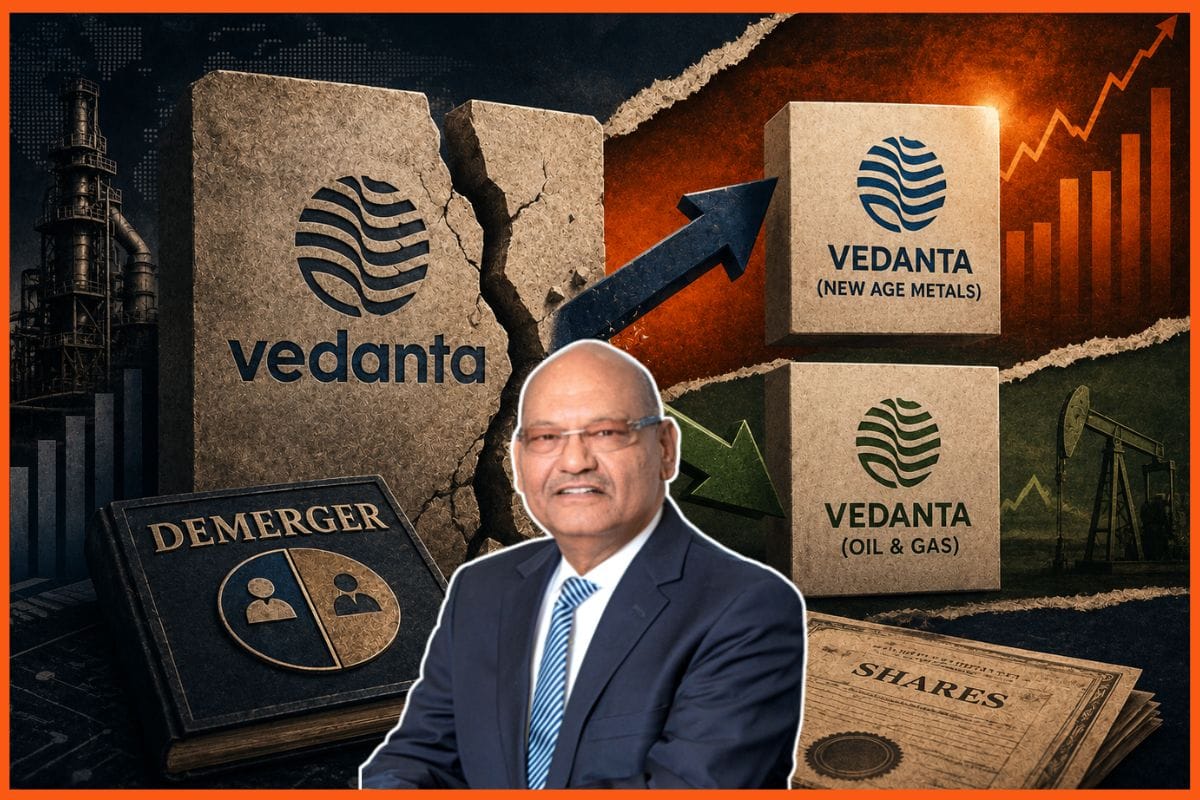
On 15 June 2026, the Vedanta demerger reached its final stage. Four new companies from the Vedanta group began trading on the BSE and NSE on the same day. Vedanta Aluminium Metal listed at ₹522 on the NSE. Vedanta Oil & Gas listed at ₹38. Vedanta Power listed at ₹41.80. Vedanta Iron & Steel listed at ₹20. The original Vedanta Ltd, now a smaller company, traded around ₹308.
Market watchers are calling this one of the biggest value unlocking events in Indian markets this year. Adding up the listing prices of all five companies gives a combined value of around ₹920 to ₹930 per original Vedanta share. This is well above the ₹300 to ₹325 range that brokers had expected for the residual Vedanta stock alone. For Vedanta Resources chairman Anil Agarwal, the listings mark the completion of a restructuring plan he first set out nearly three years ago. For anyone tracking mining stocks India or metal stocks India, this Vedanta stock analysis is a useful starting point to understand what changed and why.
Vedanta Demerger Explained: Why Was the Group Split?
Vedanta first announced its demerger plan in September 2023. The original idea was to split the group into six separate companies. In early 2025, this plan was revised to five entities, with the base metals business kept inside the main company for now.
The path to listing was not smooth. In May 2025, the National Company Law Tribunal rejected part of the scheme related to Talwandi Sabo Power. The appellate tribunal then stayed that order. In December 2025, the NCLT finally approved the full demerger scheme, and Vedanta shares rose around 5% over two days on the news.
The record date for the demerger was 1 May 2026. Vedanta shareholders received one share each in four new companies for every Vedanta share they held.
Anil Agarwal has pushed this restructuring as his main strategic project for the group. He has described the demerger as a step towards building focused, world-class companies, each with clearer goals and its own growth path. In a letter to shareholders in May 2026, Agarwal also pointed to Vedanta's strong FY26 numbers, including its highest-ever profit after tax and an improved debt position, as a solid base for the newly listed companies to build on.
Why split a large company at all? Big conglomerates often trade at what analysts call a "conglomerate discount". This means the market values the whole group at less than the sum of its parts. Investors find it hard to put a fair price on a mix of businesses such as aluminium, oil, power and steel under one roof. By listing each business on its own, every unit gets a share price set by investors who focus on that sector. This is the basic idea behind value unlocking through a stock market demerger.
Vedanta Aluminium Emerges as the Biggest Winner
Vedanta Aluminium Metal was the star of listing day. It opened at ₹522 on the NSE and ₹527 on the BSE. This was above the average analyst fair value estimate of around ₹463, and some brokerages had pegged fair value as high as ₹600. The price used for price discovery before listing was only ₹121.03, so the debut price came in well above that base.
The stock later slipped, falling around 5% from its opening level on both exchanges during the session. Even after this fall, its market value stood at over ₹2 lakh crore, more than the whole of Vedanta Ltd at current prices.
Analysts see Vedanta Aluminium as the group's crown jewel among the Vedanta demerged entities. It holds a large share of India's primary aluminium output, including through its stake in Bharat Aluminium Company. The business benefits from large-scale plants and access to low-cost power. With India's aluminium demand rising on the back of automobiles, construction and renewable energy projects, brokerages expect this unit to remain the main driver of value for Vedanta shareholders.
How Much Value Has the Demerger Actually Created?
| Entity | Listing Price, NSE (₹) | Key Business |
|---|---|---|
| Vedanta Ltd | 308.15 | Zinc, copper, residual operations |
| Vedanta Aluminium Metal | 522 | Aluminium, Bharat Aluminium Company |
| Vedanta Oil & Gas | 38 | Cairn oil and gas assets |
| Vedanta Power | 41.80 | Power generation |
| Vedanta Iron & Steel | 20 | Iron ore and steel |
Adding these five listing prices gives a combined value of around ₹930 per original Vedanta share. After the early trading swings, this combined figure settled closer to ₹900 to ₹905.
Before the demerger, Vedanta Ltd shares had closed in the ₹720 to ₹775 range. Brokerages such as ICICI Securities had expected the residual Vedanta to trade at only ₹300 to ₹325 once the other businesses were carved out.
This means the combined value of the five Vedanta companies is between 17% and 25% higher than the pre-demerger price. For shareholders, this gap is the value the market believes was hidden inside the old conglomerate structure. It also shows that investors are willing to pay more for focused, single-sector businesses than for one large diversified group, which is the central case for Vedanta value unlocking.
The Real Test Starts Now for the New Vedanta Companies
Listing day is only the start. Each of the five companies now has its own board, its own management focus and its own balance sheet. This brings both opportunity and pressure.
Independent listing gives each company direct access to capital markets. A pure aluminium or oil and gas company can raise funds for its own projects, without competing for capital with other businesses in the group.
Capital allocation also becomes clearer. Vedanta Aluminium can focus its spending on smelters and mines. Vedanta Oil & Gas, which houses the Cairn business, has already set out plans to raise output from around 100,000 barrels per day to as much as 500,000 barrels per day, backed by billions of dollars in planned investment.
Each company will now be judged on its own numbers. There is no longer a strong performer hiding a weaker one inside the group results. This should bring sharper focus, but it also means weaker businesses, such as Vedanta Iron & Steel, will need to show a clear path to profitability on their own.
What Are the Risks Investors Should Not Ignore?
The new Vedanta companies are still tied to commodity cycles. Aluminium, oil, power and steel prices move with global demand and supply. A fall in metal or crude prices can hit revenue and profit at these companies quickly.
Debt is another factor. Vedanta Ltd reported a net debt-to-EBITDA ratio of 0.95 times for FY26, an improvement from earlier years. How this debt has been split across the five entities will matter for each company's financial health going forward.
A slowdown in global growth, especially in China, remains a key risk for metal prices. China is the world's largest consumer of aluminium and steel, so weaker Chinese demand can pressure prices for Vedanta Aluminium and Vedanta Iron & Steel.
Energy transition is a longer-term risk for fossil fuel and coal-based power businesses. Vedanta Power and Vedanta Oil & Gas will need to plan for a world that is slowly moving towards cleaner energy.
Finally, regulatory and policy changes in mining, oil exploration and power can affect all five companies, given how central these sectors are to government policy in India.
Will Vedanta's Demerger Become a Template for Indian Conglomerates?
Vedanta is not the first large Indian group to think about splitting its businesses. Reliance Industries has separated some operations, such as Jio Financial Services, into independently listed units. Adani Group already runs a listed structure, with separate companies for ports, power, energy and other businesses under one umbrella.
What sets Vedanta apart is the scale of this split. Five separately listed companies from one parent is one of the largest such exercises seen in Indian markets, and it reflects Anil Agarwal's long-standing view that focused businesses are easier for the market to value fairly.
If Vedanta's demerged stocks continue to trade well above their pre-demerger implied values, other large diversified groups may study similar moves. Focused businesses often get cleaner valuations from analysts, since each one can be compared directly with sector peers. For Indian markets, this could mean more sector-focused listed companies in the years ahead, giving investors more precise ways to bet on industries such as aluminium, power or oil and gas.
What Could Happen Next? Future Outlook for Vedanta's Five Companies
Vedanta Aluminium is likely to remain the most-watched stock among the five. Its scale, cost advantages and exposure to growing aluminium demand make it central to the group's long-term story. Expansion in smelting capacity over the next three to five years will be a key thing to track.
Vedanta Oil & Gas carries high ambition, with plans to multiply its output several times over the coming years. Success will depend on execution at its Rajasthan and offshore fields, and on global crude prices.
Vedanta Power's future depends on India's power demand growth and on how it balances thermal generation with any move towards renewable or hybrid projects.
Vedanta Iron & Steel is the smallest of the four new listings. Its path forward will depend on raw material supply and on demand from India's construction and infrastructure sectors.
Vedanta Ltd, the residual company, retains zinc, copper and other operations, with Hindustan Zinc as a major value driver. Over the next few years, the market will watch whether this smaller Vedanta can grow steadily without the scale of its earlier diversified structure.
Final Thoughts: Did the Demerger Create Value, or Just Shift It Around?
The numbers from listing day suggest the Vedanta demerger has, at least on paper, created extra value for shareholders. The combined price of the five stocks is well above the residual Vedanta price that brokers had pencilled in. Part of this gain looks like a genuine re-rating, as Vedanta Aluminium is now valued close to, or even above, broker fair value estimates.
Some caution is still needed. New listings often see sharp price swings on debut, and several of the new stocks fell from their opening prices within hours of trading. Trade-to-trade restrictions on these counters may add to short-term volatility. The real test will come over the next few months, once trading settles and each company reports its own quarterly results.
For now, the Vedanta demerger looks like a mix of genuine value unlocking and a reshuffling of how that value is shown to the market. Vedanta shareholders now hold five separate businesses to track, each with its own risks and growth story. How well each one performs on its own will decide whether this large gap on listing day turns into lasting wealth for investors.
 StartupTalky News