Vijay Shekhar Sharma’s Paytm Under Pressure After RBI Cancels Payments Bank Licence: What It Means for Users and Investors
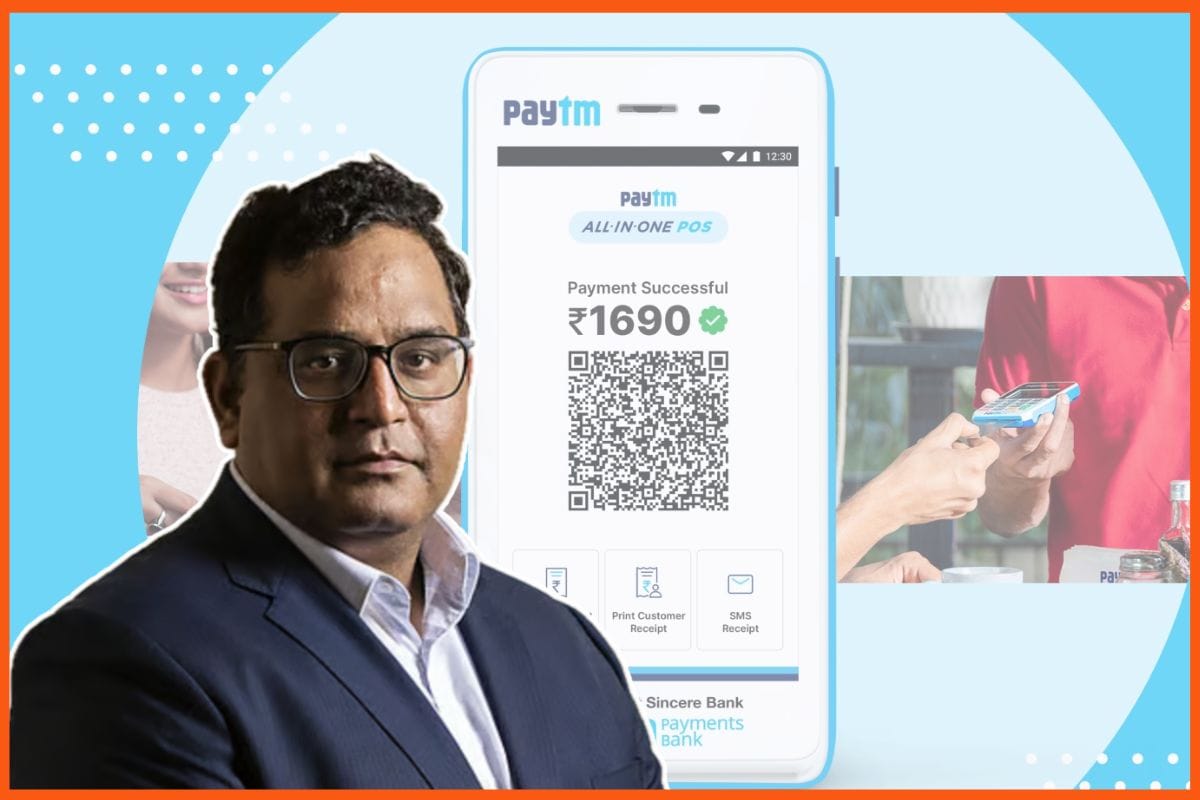
Shares of One 97 Communications fell sharply after the Reserve Bank of India (RBI) cancelled the licence of Paytm Payments Bank (PPBL), intensifying regulatory pressure on the fintech major. The move has raised major concerns around Paytm’s operations, user services, and future growth outlook.
RBI Cancels Paytm Payments Bank Licence: Reasons, Timeline and Regulatory Crackdown
The RBI’s decision comes after months of scrutiny into PPBL’s compliance standards. The regulator had earlier imposed restrictions and flagged issues related to governance lapses, KYC processes, and data management.
Despite multiple warnings and deadlines, the central bank found the corrective measures inadequate. This ultimately led to the cancellation of the payments bank licence, marking one of the strictest actions taken against a fintech entity in India.
This move also signals a broader tightening of rules across India’s digital payments and fintech ecosystem.
What Happens to Paytm Users Now? UPI, Wallet, FASTag and Deposits Explained
For Paytm’s large user base, the immediate concern is service continuity and fund safety.
- Customer deposits remain safe under regulatory safeguards
- UPI services are expected to continue via partner banks
- Wallet and merchant payments will function with adjustments
- FASTag and other banking-linked services may need migration
Paytm has already started shifting its backend banking operations to partner institutions to minimise disruption. However, users may experience some service changes and are advised to follow official updates.
Impact on Paytm Business Model: Revenue, Banking Partnerships and Growth Risks
The shutdown of Paytm Payments Bank directly impacts Paytm’s integrated ecosystem.
The payments bank was central to:
- Processing transactions
- Supporting wallet infrastructure
- Enabling merchant settlements
- Powering financial product distribution
Without its own banking arm, Paytm will now rely more on third-party banks. This could increase dependency, reduce margins, and affect its ability to scale high-margin financial services like lending and wealth products.
What Paytm Told Investors
One 97 Communications, the parent company of Paytm, told investors on April 25 that the board and shareholders of Paytm Payments Bank Ltd (PPBL) had approved the required resolutions to begin the winding-up process. The company said this would follow the RBI’s directions, or take place voluntarily if the central bank grants permission. Paytm also said PPBL will stop being an associate company once the winding-up order takes effect.
The company stressed that the closure of PPBL is not expected to have any material impact on its business, operations or financial condition. It added that it has no exposure to PPBL and no material business arrangements with the bank. Paytm also said its main services, including the Paytm app, Paytm UPI, Paytm Gold, QR, Soundbox, card machines and Paytm Payment Gateway, continue to run without interruption.
Paytm Share Price Impact and Market Reaction
Despite the company’s reassurance, Paytm shares came under pressure after the RBI cancelled PPBL’s licence. Reuters reported that the central bank cancelled the licence on April 24, 2026, while market reports said One 97 Communications fell by as much as 8% in early trade on April 26, touching around INR 1,057 on the NSE. Another report said the stock dropped nearly 8% to about INR 1,065.05 and has fallen 16% so far this year, even though it gained 7.6% in the previous month.
Key Developments and What It Means: Quick Snapshot for Investors
What Next for Paytm and India’s Fintech Sector?
The action against Paytm Payments Bank could reshape how fintech companies operate in India. Compliance, governance, and regulatory alignment are now more critical than ever.
For Paytm, the focus will be on:
- Strengthening bank partnerships
- Ensuring uninterrupted services
- Rebuilding user and investor trust
- Diversifying revenue streams
While the company still has a strong user base and brand presence, the coming months will be crucial in determining whether it can adapt to this regulatory shift and maintain its position in India’s competitive digital payments market.
 Anik Banerjee