
Weddingkart Success Story: How a Nykaa Engineer Built India's AI-First Wedding Management Platform
India runs on weddings. With an estimated market size of over ₹10 lakh crore, roughly $130 billion, and by some estimates nearly twice the size of the US wedding market, India's wedding economy ranks second only to food and grocery in consumer spending. Between 9 and 11 million weddings happen in the country every year, each a multi-day, multi-city, multi-event production involving hundreds of families.
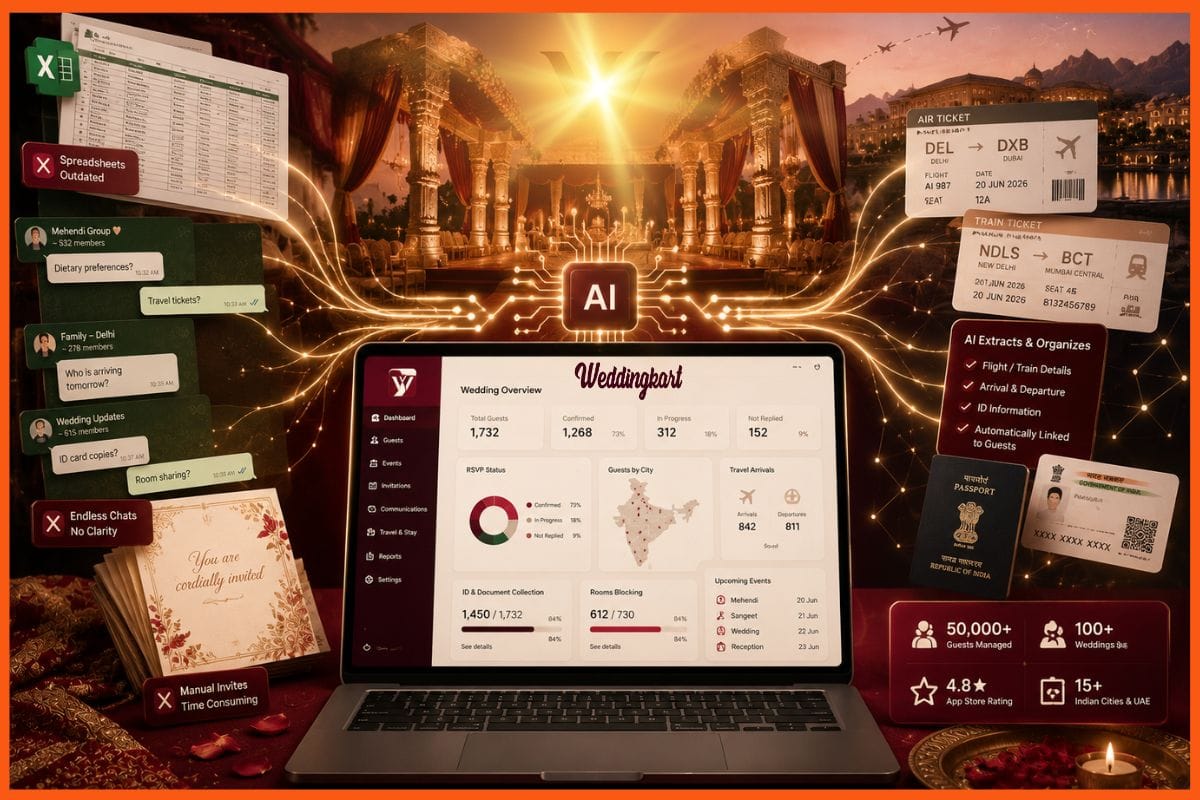
And yet, for all that scale, the entire coordination of a wedding still runs on spreadsheets and a dozen overlapping WhatsApp groups.
Discovery got digitised long ago; you can book a venue or find a photographer online in minutes. But the actual running of a wedding, who's invited, who confirmed, who's landed, who needs a room, whose ID card is lying in which chat, never got software worth the name. Gurugram-based Weddingkart, founded in 2023 by ex-Nykaa Distinguished Engineer Mayank Jaiswal, was built to fix exactly that.
Weddingkart — Company Highlights
| Company Name | Weddingkart |
|---|---|
| Headquarters | Gurugram, Haryana, India |
| Sector | Wedding Tech / AI SaaS |
| Founder | Mayank Jaiswal |
| Founded | 2023 |
| Website | weddingkart.co |
| Available On | iOS, Android, Web (app.weddingkart.co) |
| Markets | India & UAE (live); early traction in Southeast Asia, Europe, and Africa |
| Key Metric | 50,000+ guests managed across 100+ weddings |
| App Rating | 4.8 stars on the App Store |
| Funding | Self-funded (bootstrapped) |
Weddingkart — About
Weddingkart is an AI-first, WhatsApp-native wedding management platform built for professional event managers and DIY couples across India and the UAE. On Weddingkart, event managers and couples import their guest list from Excel and manage the entire event — invitations, RSVPs, travel-ticket collection, ID uploads, announcements, and thank-you messages — from a single dashboard. Every guest interaction happens over WhatsApp. Underneath, AI does the heavy lifting: reading documents, linking scattered guest data, and answering questions for both guests and planners.
The defining design choice is what guests do not have to do: download anything. No app installation, no new account for a celebration they attend once. Every RSVP, every travel-ticket share, every uploaded ID comes back through WhatsApp, the app that Indian guests already open dozens of times a day.
To date, Weddingkart has helped event managers and couples manage over 50,000 guests across 100+ weddings, and holds a 4.8-star rating on the App Store.
Crucially, Weddingkart is not a vendor marketplace. It does not sell catering, décor, or venues. It is the AI-powered operating layer for the guest side of the wedding — software that runs the event, not a directory that finds suppliers for it.
Weddingkart — Industry and Market Size
The Indian wedding market is one of the largest and fastest-growing consumer segments in the world. Independent trackers project it compounding at mid-teens growth rates for the next several years, driven by destination weddings, longer multi-event celebrations, rising guest counts, and a fast-expanding NRI segment.
The problem in this market was never the size of the opportunity, it was the tooling. A professional event manager in India routinely handles 300 to 2,000 guests per wedding, across three to seven events, over several days, while running five to ten weddings in parallel during peak season. The infrastructure for that level of coordination? Paper lists, Excel files, Google Forms, and WhatsApp groups where the latest headcount is whatever was typed last.
Weddingkart's thesis is that the industry didn't need another discovery app. It needed an AI-powered operations layer. The distribution channel already existed in every guest's pocket: WhatsApp has over 535 million users in India, a 98% message open rate (versus roughly 20% for email), and near-universal penetration among internet users. Put AI on top of that channel — to read what guests send and answer what they ask — and you don't have to change anyone's behaviour. You just have to be dramatically better than the spreadsheet.
Weddingkart — Founder and Team
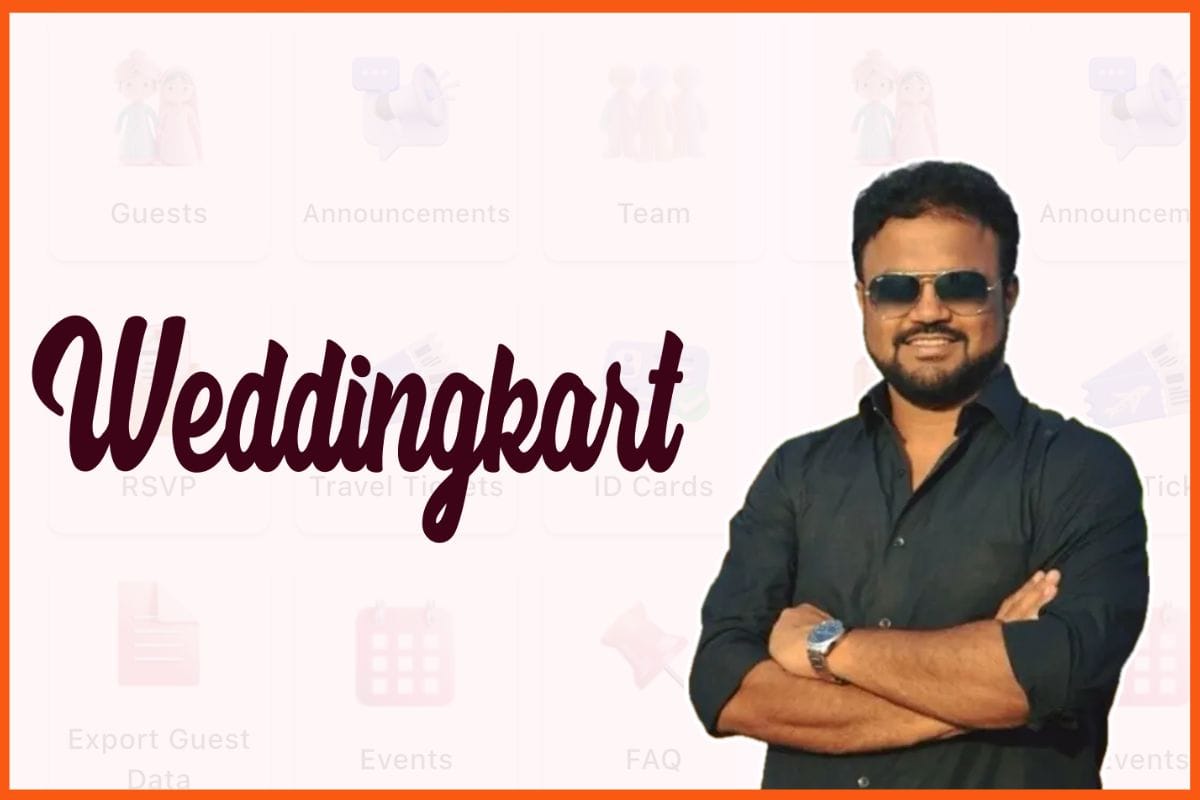
Weddingkart was founded by Mayank Jaiswal, who spent his career building consumer-internet products at scale before turning to wedding tech.
Jaiswal began his journey at Saavn (now JioSaavn) during its high-growth years. He later joined Euler Systems, a startup founded by Saavn’s CTO, where he worked on building the company’s technology from the ground up. After that, he moved to Nykaa, where he built and led some of the company’s most critical systems, including the homepage, search, ads, and recommendation engine used by millions of shoppers every day.
The scale behind that experience is the whole point. At Nykaa, he rose to Director of Engineering and eventually became the company's first-ever Distinguished Engineer, its highest individual contributor role, leading major engineering through Nykaa's high-growth phase, including its international expansion into the UAE.
He's explicit about what he's importing into wedding software: the speed of a fast-moving startup combined with Nykaa's reliability, quality, and class.
Weddingkart's product direction is actively shaped by two professional event managers, Anshul and Neeti, who advise the company and steer features based on real, live weddings they run. Around them sits a lean, senior Gurugram-based team focused on content and growth. The hiring philosophy is ownership-first: people who can own an outcome end-to-end and stay close to real weddings rather than build from a conference room.
Weddingkart — Startup Story
The idea for Weddingkart came from a family wedding, not a market study.
While helping manage his brother Shrey's wedding, Mayank watched event managers Anshul and Neeti take over the preparations, and was struck less by what they did well than by how much of the work was avoidable. Hours went into chasing RSVPs, re-sending the same details to different people, reconciling headcounts, and sorting through travel tickets and ID cards by hand.
He saw clearly what others had overlooked: tasks being handled manually could be automated, with software, and with AI, to save time, reduce stress, and increase efficiency. So Jaiswal proposed building an app, brought Anshul and Neeti in as advisors, and started building.
The earliest version focused on the parts that hurt most: digital RSVPs, customisable digital invitations, and a real-time communication layer to replace manual spreadsheets and fragmented WhatsApp threads. Its first proving ground wasn't a focus group, it was Anshul and Neeti's own live weddings. One of the very first individual users, Vatsal, came through an event manager referral and worked closely with Mayank through version zero of the app, effectively becoming its first design partner.
The biggest early lesson was a humbling one. The first instinct had been to build a guest-facing app. It became obvious, fast, that guests simply will not download software for a wedding they attend once in their lifetime. The fix was permanent and decisive: move the entire guest experience onto WhatsApp, let AI do the back-end work, and keep the app for the host. The moment RSVPs became one-tap WhatsApp buttons, response rates jumped to 70%+ compared to 25–35% on web forms — and the product's value became self-evident.
 Rishita Jain
Weddingkart — Name, Logo, and Tagline
The name carries the promise. "Kart" is the one-stop cart, the familiar e-commerce idea of rolling everything into one checkout, applied to wedding operations instead of products. For a founder who came from the world of online retail, it was a deliberate echo: one cart, one dashboard, the whole wedding.
The clarity of the name, it says exactly what the product is, has been reason enough to keep it unchanged since day one.
Weddingkart — Products and Services
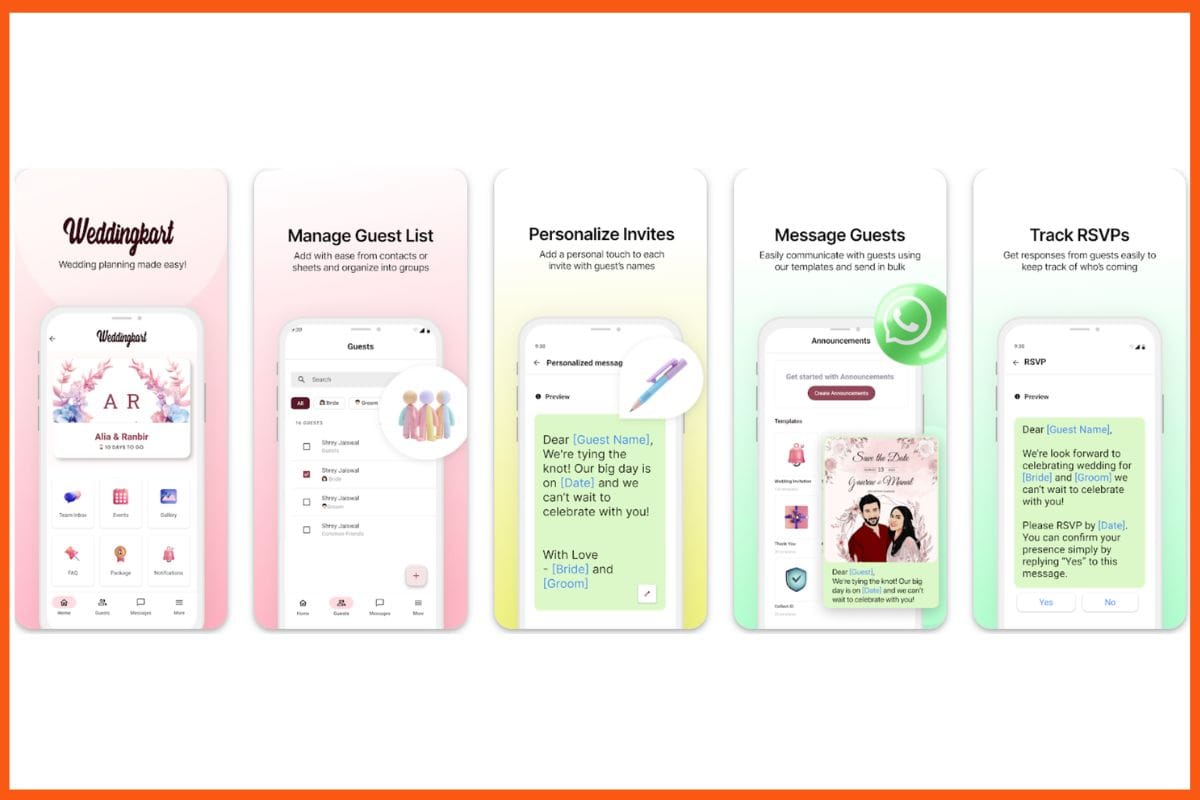
Weddingkart is software, not a marketplace or a managed service. The event manager or couple runs their own wedding on it; AI runs underneath. The platform covers the full guest lifecycle:
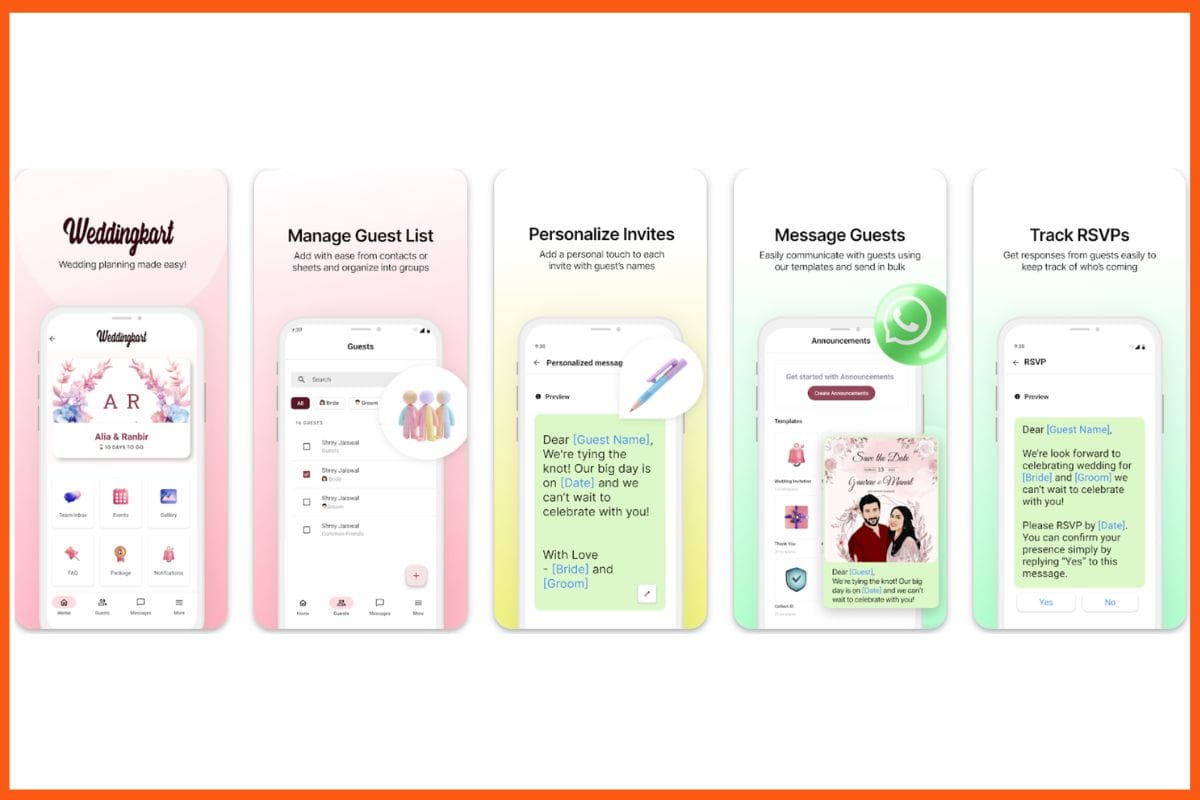
- Guest Management & RSVPs: Import from Excel, organise by family side or group, broadcast over WhatsApp (800 guests in 30 seconds), and collect RSVPs via one-tap WhatsApp buttons.
- AI Travel & ID Extraction: Guests share flight or train tickets and ID cards over WhatsApp; AI reads them and turns them into clean, structured data that hotels and logistics teams can use immediately. No manual data entry.
- Wedding Knowledge Graph: An AI engine maps which ID card, ticket, and RSVP belong to which guest, stitching scattered information into one connected picture of the whole event.
- Two AI Chatbots: A guest-facing chatbot answers guests' questions over WhatsApp (taking repetitive load off the event manager), and an event-manager-facing bot lets planners ask anything about any guest or the wedding as a whole and get an instant, grounded answer.
- Personalised Invitations & Media: Each guest's name is rendered onto image, PDF, and video invitations across 11 Indian scripts. A voice-AI agent can call guests in 14 languages to collect RSVPs.
- Multi-Event Support, Team Collaboration & Live Reports: Mehendi, sangeet, wedding, and reception all on one master list. Multiple event managers on one dashboard. One-click Excel export.
- 17 Free Planning Tools: A budget calculator, planning checklist, AI guest-list Excel cleaner, seating planner, timeline builder, hashtag generator, and a suite of message generators, all usable with no login. New users also get 30 free credits with every feature unlocked, no card required.
Weddingkart — How Weddingkart Works
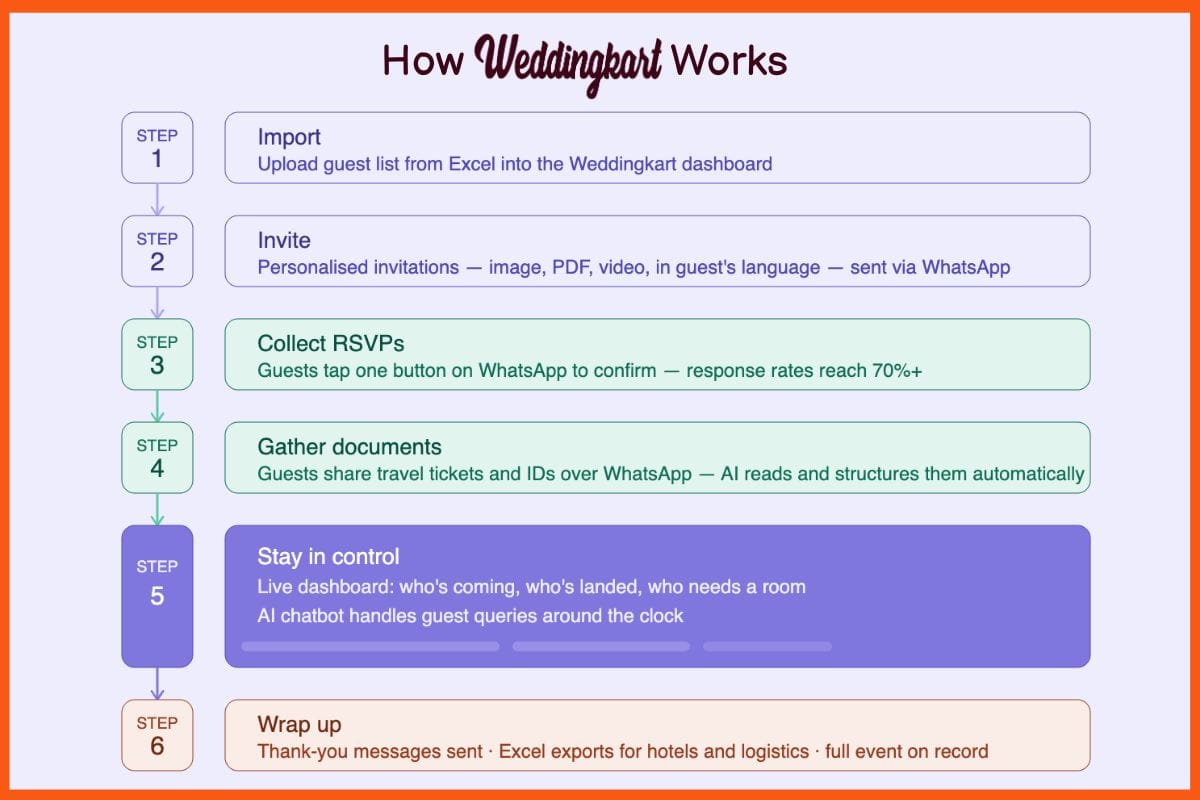
- Import — Event manager uploads the guest list from Excel into the Weddingkart dashboard.
- Invite — Personalised invitations (image, PDF, video, in the guest's language/script) are sent to all guests over WhatsApp.
- Collect RSVPs — Guests tap one button on WhatsApp to confirm; response rates reach 70%+.
- Gather Documents — Guests share travel tickets and ID cards over WhatsApp; AI reads and structures them automatically.
- Stay in Control — The event manager sees a live dashboard: who's coming, who's landed, who still needs a room. The AI chatbot handles guest queries around the clock.
- Wrap Up — Thank-you messages go out, Excel exports are available for hotels and logistics teams, and the whole wedding is on record.
Weddingkart — Technology and AI
If one thing separates Weddingkart from a listings website, it is this: AI sits at the core of the platform, not as an add-on.
The clearest example is document handling. Guests share travel tickets and ID cards over WhatsApp, and AI reads them, extracting arrival times, departure cities, and ID details and turning them into structured data that hotels and logistics teams can consume directly. No one types it in by hand.
From there, an AI knowledge graph connects every ticket, ID card, and RSVP to the right guest, linking scattered scraps into one queryable, reusable picture of the entire event. That graph powers two chatbots: a guest-facing bot that handles questions on WhatsApp, and an event-manager-facing bot that lets planners interrogate any aspect of the wedding instantly.
There is also a dimension of AI that is about emotion, not just efficiency. Traditionally, families sent physical invitation cards with each guest's name handwritten, a small, personal gesture that said you, specifically, are invited. Weddingkart brings that warmth into the digital age: each guest's name is rendered onto image and PDF invitations in 11 Indian scripts, at the scale of a 2,000-person wedding.
All of it is built by a founder who spent years running systems that served millions of users without missing a beat, so the same always-on engineering discipline now sits under wedding software.
Weddingkart — Business Model and Revenue
Weddingkart's pricing is deliberately anti-subscription: you pay per wedding, once, not per month and not per guest.
|
Plan |
Price (+ 18% GST) |
Best For |
|
Basic |
₹4,999 |
Small weddings, DIY couples |
|
Standard |
₹8,499 |
Typical professional wedding (recommended) |
|
Enterprise |
Custom |
Agencies running 10+ weddings/year |
Message-pack top-ups and usage-based voice-AI calls are the only add-ons. Team seats are included in all plans, and there is a 100% refund up to two days before the wedding.
The logic is simple and customer-friendly: the same price covers a 100-guest wedding and a 2,000-guest one. For a celebration where the total budget often runs into tens of lakhs, the software costs less than the flowers, making the purchase decision easy. Because there are no vendors in the model, there are no listing fees, no paid placements, and no booking surcharges to the couple.
Weddingkart — Launch and Early Growth Strategy
Weddingkart's first customers were not acquired through ads, they were the weddings run by its own advisors. Because Anshul and Neeti run weddings professionally, the product was tested on real, high-stakes events from day one: the best possible proving ground, and the best possible reference.
Early couples and event managers came through that network, then through word of mouth. The trust wasn't built with a pitch deck; it was built with results. Guests actually replied. Headcounts were accurate. Travel and ID details organised themselves. The event manager looked organised in front of the family.
In an industry where reputation is everything, "the wedding ran smoothly, and the planner knew exactly who was coming" is the only marketing that compounds.
Weddingkart — Marketing Strategy
Weddingkart's primary acquisition engine is its free tools and content. Seventeen genuinely useful, no-login wedding tools, budget calculators, an AI guest-list Excel cleaner, hashtag and message generators, seating and timeline planners, pull in couples and event managers searching for help online. A growing library of city guides, planning resources, and a wedding knowledge base is engineered to surface in Google's AI-generated answers and be cited by assistants like ChatGPT.
The second engine is the event-manager community. Rather than leaning on celebrity influencers, Weddingkart invests in editorial that treats wedding planning as a profession: pricing models, client acquisition, vendor economics, and the move from solo freelancer to agency. This earns the trust of the exact professionals who become its highest-value users. Organic referrals from real weddings, combined with a steady presence on Instagram, YouTube, and LinkedIn, complete the picture, a growth engine that doesn't depend on paid acquisition.
Weddingkart — Funding
Weddingkart is founder-led and self-funded, with no external funding round announced to date. Capital, and, just as importantly, Jaiswal's at-scale engineering experience, has gone into the product, the AI stack (extraction engine, knowledge graph, chatbots, voice), the WhatsApp infrastructure, and the content engine.
The company is open to raising to accelerate its international expansion and voice/AI roadmap, but its operating priority is efficient, profitable growth rather than raising for its own sake — a posture that fits naturally with a per-wedding revenue model where every wedding pays its way.
Weddingkart — Competitors
Weddingkart's most commonly cited "competitors" mostly play a different game.
WedMeGood (founded 2014) and ShaadiSaga / WeddingBazaar are vendor-discovery marketplaces, they help couples find vendors. Weddingkart helps couples and event managers run the guest side of the wedding with AI. The two are often used side by side, not instead of each other.
The closer competition is the status quo:
|
Competitor |
Gap vs. Weddingkart |
|
RSVP form / microsite tools |
Web forms get 25–35% response; Weddingkart's WhatsApp buttons get 70%+. No document reading, no knowledge graph. |
|
DIY WhatsApp stacks (WABA provider + Excel + Google Forms) |
Monthly fee plus the time to build workflows yourself; Weddingkart is one ₹8,499 payment with AI workflows already built. |
|
Global event SaaS (Eventbrite, Hopin) |
Per-attendee, USD-billed, never designed for WhatsApp-first, multi-event Indian weddings. |
The competition isn't really about price. It's about trust, experience, and AI capability: does it work on the day, will guests actually respond, and does it genuinely remove manual work?
Weddingkart — Challenges Faced
- Behaviour change in a low-software industry: Convincing event managers who have always lived in Excel and WhatsApp groups to move onto one AI-powered system is a trust problem before it's a feature problem. The answer was to meet people where they already are: on WhatsApp, with AI doing the digitising for them.
- An unorganised, cash-heavy trade: The Indian wedding industry operates largely offline and informally. Per-wedding pricing fits naturally into that context — there is no SaaS subscription to explain or justify; you pay for a wedding, and the software delivers.
- Seasonality: Peak wedding season (October–February) is frantic; lean months are quiet. Per-wedding pricing absorbs that rhythm naturally, and the free-tools-plus-content engine keeps discovery alive year-round.
- The biggest early failure: betting on a guest-facing app: The lesson was permanent — never ask a once-in-a-lifetime guest to install anything. Put the guest experience on WhatsApp, let AI handle the back-end, and keep the app for the host.
Weddingkart — Future Plans
Over the next 12–18 months, Weddingkart is pushing AI deeper across the platform — richer document extraction and logistics intelligence, a more capable wedding knowledge graph, and smarter guest- and planner-facing chatbots. Expanded voice-AI and regional-language coverage is also in the pipeline, alongside stronger agency tooling for planners managing many weddings simultaneously.
City expansion continues across India, including tier-2 and tier-3 markets where weddings are enormous but software remains rare.
The bigger bets are international and beyond weddings. With the UAE live and early interest already coming from Southeast Asia, Europe, and Africa, NRI and international destination weddings — guest lists spread across countries and time zones — are a core growth vector. And strong demand from the corporate events segment points to a natural second act: the same AI-powered guest-operations engine, applied to conferences, offsites, and large gatherings of every kind.
By 2030, the ambition is for Weddingkart to be the AI-powered default operating system for celebrations and events — the platform organisers run on, and the one couples are relieved their planner already uses.
FAQs
What is Weddingkart?
Weddingkart is an AI-first, WhatsApp-native wedding management platform. Event managers and couples import their guest list and manage the whole wedding invitations, RSVPs, travel tickets and ID collection, announcements, and thank-you messages, from one dashboard, with every guest interaction happening over WhatsApp.
Who founded Weddingkart?
Weddingkart was founded by Mayank Jaiswal, former Director of Engineering and first Distinguished Engineer at Nykaa, in 2023.
How does Weddingkart use AI?
AI sits at the core of the product. It reads guests' travel tickets and ID cards and turns them into structured data, maps which document belongs to which guest via a knowledge graph, powers a guest-facing and an event-manager-facing chatbot, calls guests in 14 languages to collect RSVPs, and renders personalised invitations in 11 Indian scripts.
How much does Weddingkart cost?
Plans start at ₹4,999 (Basic) and ₹8,499 (Standard), charged per wedding, not per month or per guest, all plus 18% GST. Enterprise pricing is available for agencies. A 100% refund is offered up to two days before the wedding.
Where is Weddingkart available?
Across 15+ Indian cities and in the UAE (Dubai), with early adoption beginning across Southeast Asia, Europe, and Africa. Since the platform runs on WhatsApp, it works anywhere guests use WhatsApp.
Is Weddingkart funded?
Weddingkart is currently bootstrapped and self-funded by its founder. The company is open to raising capital to accelerate international expansion.