What Startup Founders Need to Understand About Responsible AI
Many startup founders have discovered that artificial intelligence (AI) can be a huge asset to their companies’ early growth. However, they aren’t always ready for the legal, consumer, and social expectations that come with using AI.
The problem is that AI has grown quickly in a relatively unchecked way. Consequently, entrepreneurs may find themselves launching businesses that leverage AI and AI-related tools in widespread but unchecked ways.
For instance, a startup ecosystem may rely on several AI products to promote faster scalability without adding headcount. In fact, though it might sound unbelievable, around 41 million solopreneurs are thought to be leading companies of one. And some of them have attracted lucrative seed funding and acquisition deals without ever bringing another person into their startups.
Yet using AI to get a business off the ground isn’t without its risks. If founders aren’t well-versed in establishing responsible AI practices, they may find themselves unable to answer potential investors’ questions regarding the guardrails they’ve put in place to protect their data. Simply saying that they’re using a secure off-the-shelf AI product isn’t good enough anymore. Venture capitalists want to know that startup founders have put measures in place to make certain that AI is an advantage and not a threat.
In other words, founders need to keep a few ethical AI facts in mind before pitching investors.
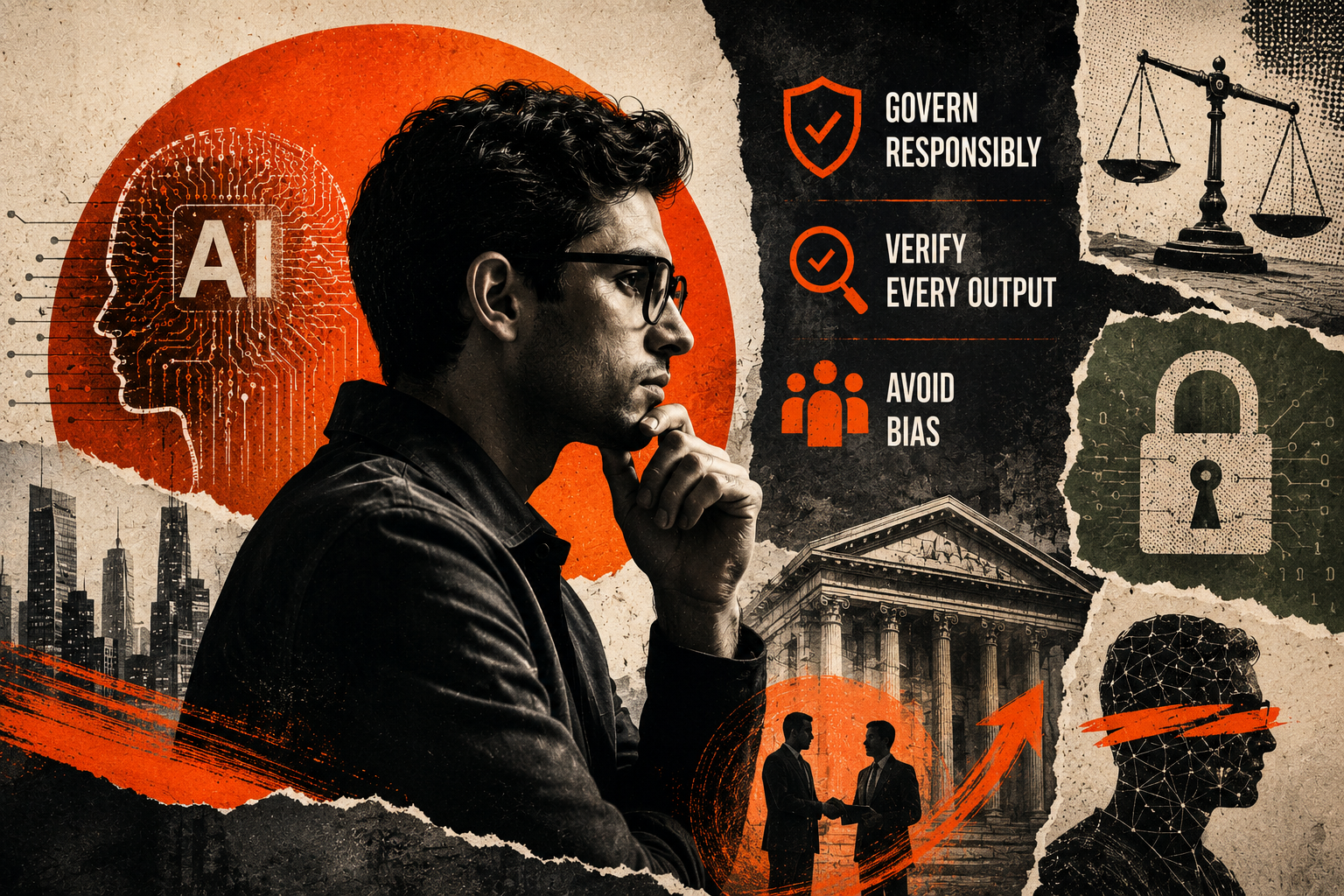
1. All businesses should design and follow AI governance frameworks.
At this point, every business — startups included — needs AI governance frameworks. As EY insights explain, AI practices and emerging technologies within all companies should be ethical and human-centered. To achieve those goals, they must be carefully monitored and managed to mitigate risks. Without any formal AI governance structure, companies that use AI can quickly expose their internal corporate or customer data to threats.
As of 2025, the Data and Analytics Network estimates that only 43% of all companies have some kind of formal AI governance policy. Consequently, more than half of organizations aren’t operating on a responsible AI backbone. The result? They’re not positioning themselves as future-ready.
How can a startup construct an AI governance framework? Working with consultants like EY can be a good starting point. For founders who aren’t solopreneurs, assigning AI governance to an employee or team may also be a solid practice. That way, AI use will remain monitored by an accountable internal individual or set of individuals.
2. All AI outputs should be verified.
Many companies have gotten negative press due to unverified and unchecked AI-related outputs. And these problems aren’t just relegated to small companies or startups. Some of the biggest brands have run into AI-related issues because humans weren’t paying attention to the outputs their AI tools were producing and showcasing.
Take Air Canada’s chatbot incident, for example. The airline ended up in a controversy with a customer because a chatbot gave the customer inaccurate information that the customer assumed to be true. A court ruled in favor of the customer, stating that the airline was responsible for the chatbot’s output. The result wasn’t terribly expensive for Air Canada but was still an embarrassing public relations moment.
The message for startup founders? Startup founders should avoid viewing AI as a "set-it-and-forget-it" technology. All AI needs to be maintained and evaluated by humans, especially if the AI is public-facing.
3. Some AI products have exhibited bias.
It’s possible for an AI product to exhibit bias in the same way that a human might. Therefore, startup founders must be cautious when depending on AI tools to help them make decisions.
This type of bias has emerged in organizations that use AI tools to assist HR professionals and hiring managers with recruiting decisions. Specifically, an AI-based applicant evaluation system may eliminate candidates for biased reasons, which isn’t good for the company or the candidate.
Knowing how an AI tool has been trained can help close this gap. But again, oversight by human agents is often a preferred way to ensure that all AI is responsibly governed.
There’s little doubt that AI is more of a help than a hindrance for founders. With AI, founders can set up their businesses to do more — and to become VC-ready. That said, they need to invest time and resources upfront to ensure their AI practices are secure, transparent, and well governed. Those who make this commitment early will find it easier to respond when investors ask about how they’re shielding their businesses from preventable risks.