5 Misconceptions About Online Degrees That Could Be Holding Your Career Back (2026 Guide)
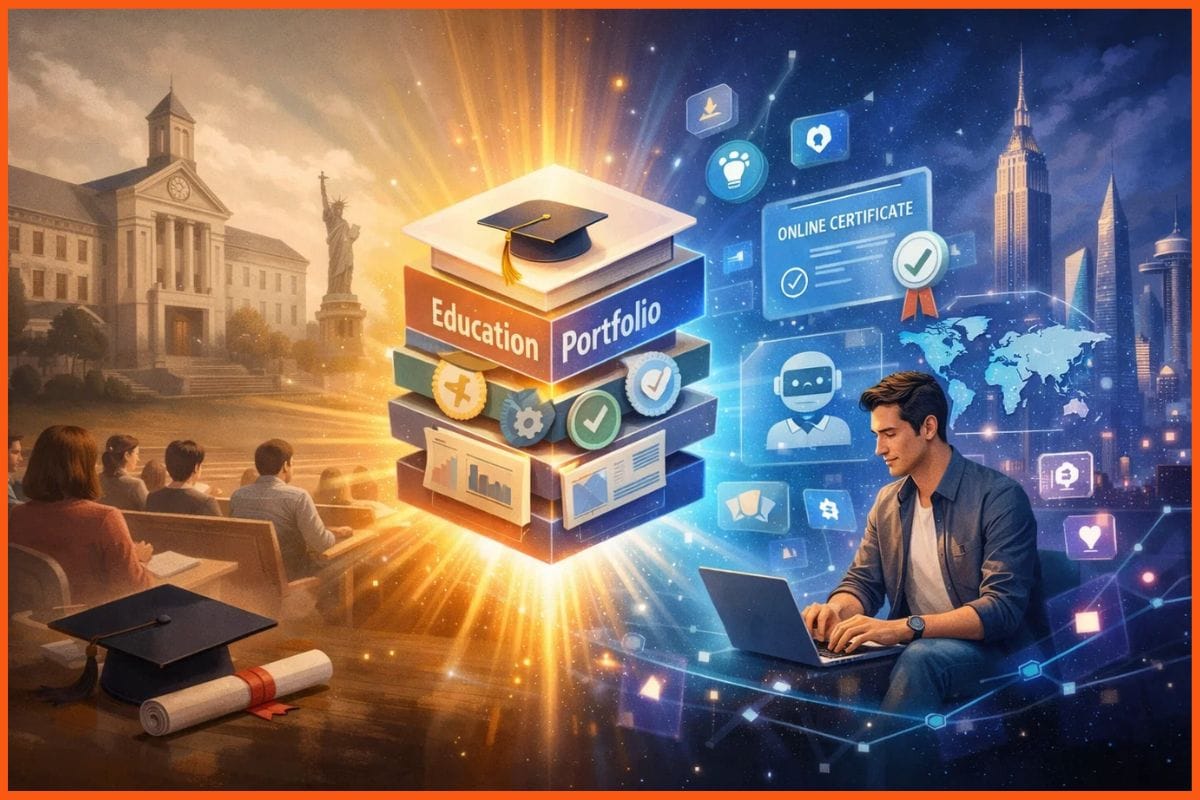
The traditional career roadmap, get a degree, land a job, climb the ladder, is undergoing a structural overhaul. In 2026, the most successful founders and finance professionals are no longer defined by a single, four-year credential from one institution. Instead, they are defined by their "Education Portfolio." We are living in the era of the hybrid learner: individuals who purposefully combine the depth of traditional academic rigor with the agility of specialized digital training. Yet, despite the obvious necessity of lifelong learning, outdated stigmas around digital education persist. If you are still viewing online learning as a "Plan B," you are operating on 2015 data.
Here are five common misconceptions about online degree programs and professional certifications that don't hold up in 2026, and why they might be the secret weapon your career needs.
1. "Online degrees are less rigorous."
The Reality: If anything, they are more demanding. Modern online bachelor’s degree programs and online doctoral programs utilize AI-driven, proctored environments that require continuous, active engagement. Unlike the passive experience of sitting in the back of a 300-person lecture hall, online platforms track every interaction. You cannot "coast" through a module; you are constantly tested on the application of concepts, not just rote memorization. In sectors like fintech and startup management, where precision is a currency, this high-engagement format ensures you aren't just learning the theory, you are demonstrating mastery.
2. "You miss out on networking."
The Reality: Traditional classrooms are limited by geography, but online degree programs are limited only by the internet. When you join a cohort for an advanced online doctoral program or a specialized certification track, you are often interacting with peers who are already working in London, Singapore, or New York. You are building a global support system, not just a local study group. For a startup founder or a finance enthusiast, this is a massive advantage: you are connecting with potential co-founders, investors, and mentors who are actively navigating the same global market you are.
3. "Employers don't value certificates."
The Reality: The "prestige gap" is closing rapidly. Hiring managers in the startup and finance sectors care less about the name on your diploma and more about your "Skill Stack." When you present a verified certificate from a reputable platform such as Coursera, edX, or Udacity it signals to an employer that you are a self-starter. It proves that you have mastered specific, actionable tools, like algorithmic auditing, Python for finance, or agile product management, that your employer needs now.
4. "You’re isolated and unsupported."
The Reality: The "lonely student" trope is a thing of the past. Today’s digital learning environments leverage AI tutors, 24/7 Slack-based communities, and virtual office hours that often provide faster access to instructors than a traditional campus experience. You are part of an active, communicative ecosystem. Whether you are working through an online bachelor’s degree or a short-form course, the infrastructure exists to ensure you are never truly stuck.
5. "It’s all theory, no practice."
The Reality: This is the most outdated myth of all. The best certificates on platforms like Coursera or edX are built as "desk-ready" simulations. You aren't just writing an essay on how to build a pitch deck; you are building the deck and getting it graded by industry practitioners. This project-based approach ensures that you finish your study with a portfolio of work you can show off on your LinkedIn profile immediately.
The New Educational Hierarchy
To stay competitive in 2026, stop thinking of your education as a single box to check. Think of it like a venture capital portfolio:
- The Foundation (Bachelor’s/Master’s): Whether on-campus or an online bachelor’s degree, this provides your theoretical bedrock, the critical thinking and systemic knowledge that doesn't expire.
- The Specialization (Certificates): Platforms like Coursera, edX, and Udemy Business are your "sprint" tools. Use these to pick up the specific software, compliance standards, or AI tools that keep you relevant.
- The Leadership Tier (Doctoral/Executive): For those aiming for the C-suite or lead research roles, online doctoral programs now offer a path to deep expertise without requiring you to leave the workforce.
How to Choose Your Next Credential
Before you enroll, don't just pick the fastest or cheapest option. Apply these three filters:
- The "Industry Endorsement" Test: Does the provider have partnerships with firms your target employers actually respect (e.g., Google, IBM, or top-tier VCs)?
- The "Project Portfolio" Check: Does the course offer a tangible deliverable (a financial model, a code repo, a strategy document) that you can show off?
- The "Stackability" Factor: Will these credits count toward a larger degree later? Always look for programs that let you "stack" your learning.
The Verdict: Why Balance Wins
Traditional education remains the gold standard for long-term branding and foundational depth, but online learning is the engine of modern adaptability. The most dangerous person in the current job market is the one who has both: the theoretical clarity of a formal degree and the "just-in-time" practical skills of an online certificate.
Stop choosing one or the other. Start stacking your education for the future.