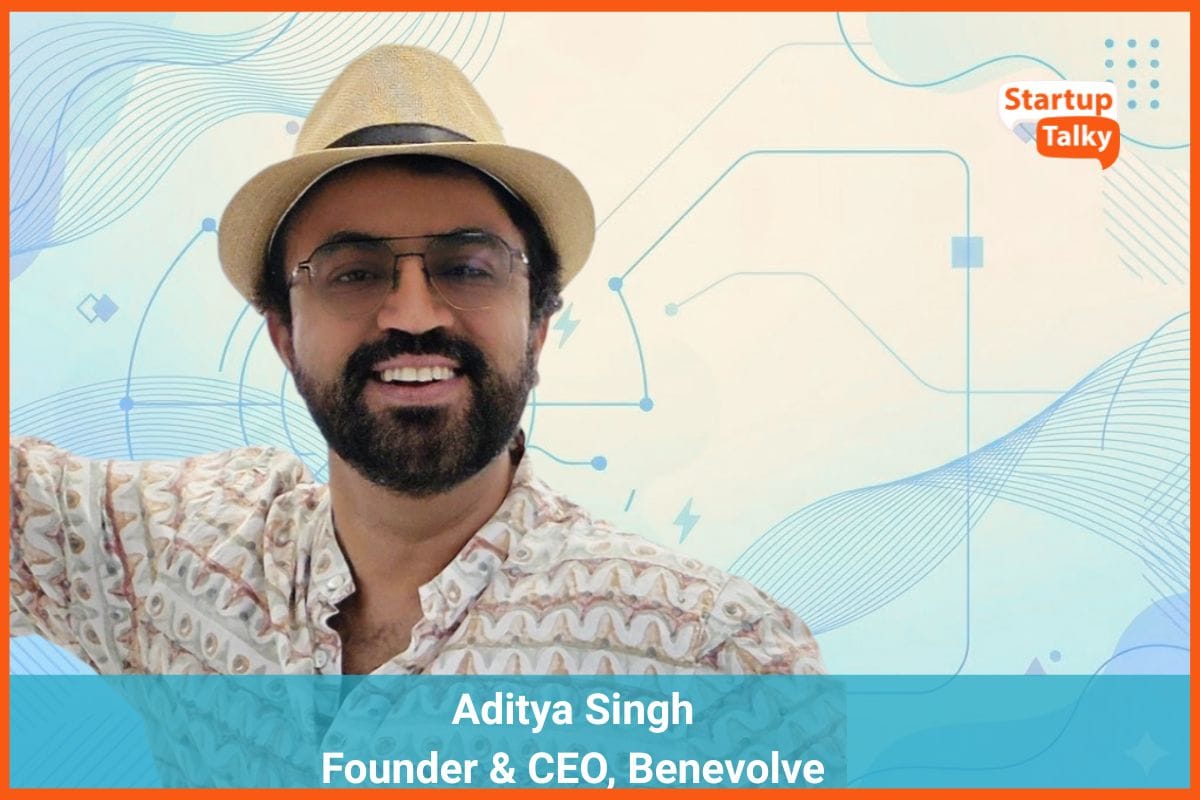
GCCs, AI Talent Risks & the Future of HR: How Workforce Intelligence is Reshaping the Game with Aditya Singh
In this interview, Aditya Singh, Founder & CEO of Benevolve, explains how GCCs are evolving into innovation hubs and how workforce intelligence is transforming HR through AI-driven insights on reskilling, attrition risk, compliance, and global data alignment.
India’s Global Capability Centers (GCCs) are rapidly evolving from cost-focused delivery units into strategic innovation hubs. The GCC ecosystem is expected to grow at a strong double-digit CAGR over the next few years, driven by rising demand in AI, analytics, cybersecurity, and product engineering roles. Industry estimates suggest the GCC market could cross $100–110 billion by 2030, supported by expansion in high-value knowledge work and enterprise digital transformation initiatives.
At the same time, AI-led transformation is reshaping workforce needs. Roles in AI and machine learning are seeing 20–30%+ annual attrition in some segments, while reskilling demand has surged sharply; recent surveys indicate over 70% of GCCs are now actively investing in structured reskilling programs.
In this context, Aditya Singh, Founder & CEO of Benevolve, shares how workforce intelligence platforms are helping GCCs manage compliance, talent risks, learning effectiveness, and global HR data consolidation in a more predictive and unified way.
How Benevolve Handles Dual-Jurisdiction HR Complexity in GCCs
StartupTalky: GCCs operate under Indian employment law on one side and their global parent company's HR framework on the other. How is Benevolve engineered to handle this dual-jurisdiction complexity, and where do the two frameworks most commonly conflict in practice?
Aditya Singh: One of the major problems facing GCCs in today’s world is trying to find the balance between compliance to local rules and global human resources (HR) policies. From what we see in our practice, the most frequent sources of conflicts usually include leave policies, employees' benefits packages, performance management, diversity quotas, and workforce planning.
At Benevolve, our solution allows organizations to achieve this balance using the workforce intelligence model and not the classic HR framework. This means that using our platform will help companies to continue implementing their global talent strategy while getting insight into their workforce on a local level taking into consideration such factors as regulatory environment, labor market conditions, and more.
The reason why this balance should be achieved goes beyond just compliance. Globalization makes GCCs increasingly act as innovation hubs rather than just implementation centers, and talent decisions should reflect this fact.
Moving from Course Completion to Real Learning Outcomes in GCCs
StartupTalky: EY's GCC Pulse Survey 2025 found that reskilling initiatives in GCCs grew to 71 per cent in 2025. How should a GCC HR leader use an AI-driven platform to move the needle on actual learning outcomes rather than course completion metrics?
Aditya Singh: The biggest mistake made by organizations lies in measuring learning activity rather than measuring workforce readiness. While course completion rates are good for understanding participation, they don't guarantee capability development.
An AI-driven workforce intelligence platform can assist organizations in identifying their future skills needs, assessing current capabilities within the workforce, and identifying potential gaps in skills before they hinder the organization.
The emphasis should move away from "What number of employees have been through the learning program?" and towards "Has the organization developed its capabilities in the skills it will need tomorrow?"
Workforce intelligence will give HR professionals the opportunity to link any learning initiatives directly to organizational benefits, including internal mobility, leadership preparedness, projects staffed, and increased efficiency.
Organizations that are achieving the most value from reskilling programs are those that predict future needs and align their learning efforts appropriately.
Predicting Attrition Risk in AI and ML Talent Using Workforce Analytics
StartupTalky: Attrition in GCC AI and ML roles is running at 25 to 30 per cent annually. What predictive workforce analytics does Benevolve provide that help a GCC HR head identify engineers at flight risk before they resign?
Aditya Singh: Traditional HR reporting is usually based on historical records, where attrition only shows up after the employee has gone.
But predictive workforce analysis goes another way around. This technique utilizes various aspects of the workforce, including but not limited to skill development, patterns of career movements, engagement, criticality of the position, succession plans, tenure, and demand for particular skills in the labor market, to highlight potential weaknesses in the workforce.
Instead of looking at the problem of predicting attrition of each individual employee, we believe that there is a need to analyze the risks associated with the whole workforce.
The issue here isn't really about predicting whether an individual would leave or not. It’s about whether there are enough people within the company to carry out its activities if key individuals were to leave.
Data Challenges in Consolidating GCC HR Metrics for Global ESG and DEI Reporting
StartupTalky: Global parent companies increasingly require India GCC HR data to be consolidated into enterprise-wide ESG and DEI dashboards. What are the most common data quality problems that prevent India GCC HR data from being meaningfully aggregated at the global board level?
Aditya Singh: The biggest challenge is not a lack of data but a lack of consistency.
Workforce data is collected from multiple sources within organizations using differing terminologies, formats, and reporting conventions. This presents considerable difficulties in developing organization-wide workforce insights.
In the case of GCCs, some typical problems include inconsistent skills taxonomies, disparate sources of workforce data, conflicting criteria for defining critical talent, incomplete capability mapping, and an absence of insight into workforce readiness metrics.
With the development of workforce governance at the board level, the accuracy of data becomes ever more important. The need arises for one definitive source of workforce capabilities, leadership pipeline, skill gaps, and talent risks.
The evolution of workforce reporting does not lie in generating more data; it lies in developing workforce intelligence.
 Sanvi Barjatya