Comet Success Story: ₹100 Cr Sneaker Brand Series B
Comet went from launch to a ₹535 crore valuation in two years by treating sneakers as storytelling, not footwear. Here's how Utkarsh Gupta and Dishant Daryani built it, and why it's still losing money on every sale.
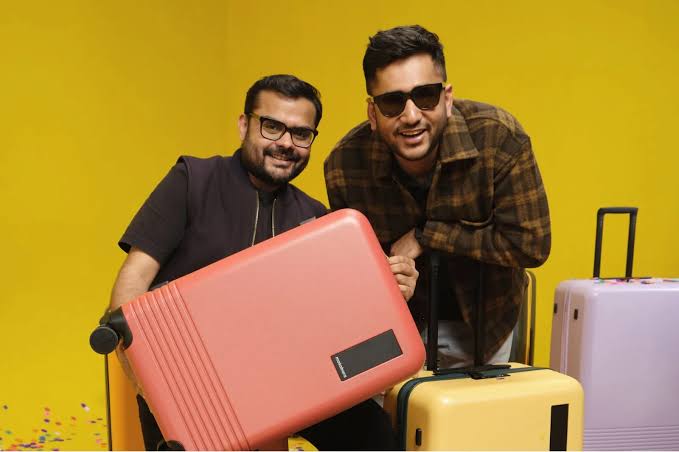
Comet raised ₹100 crore in a Series B round led by Verlinvest, valuing the company at around ₹535 crore, a more than threefold jump from its ₹167 crore valuation just two years earlier. It's one of the fastest-moving entries in the recent wave of D2C brands in India. In FY25, its revenue nearly quadrupled to ₹29 crore. Its losses also widened, to ₹4.39 crore. This is a sneaker brand that launched in July 2023 and is already worth ₹535 crore without having figured out how to make money on a single pair.
I think that gap is the whole story. Comet isn't being valued on what it sells today. It's being valued on the bet that sneakers can be a storytelling business in India the way they already are in the US.
Know more about Comet's Founders and Team, Startup Story, Business Model, Funding and Investors, Growth, Challenges, Competitors, and Future Plans ahead!
Comet - Company Highlights
| Startup Name | Comet |
|---|---|
| Founders | Utkarsh Gupta, Dishant Daryani |
| Founded | July 2023 |
| Headquarters | Bengaluru, India |
| Sector | D2C sneakers and footwear |
| FY25 Revenue | ₹29 crore (up ~4X YoY) |
| FY25 Net Loss | ₹4.39 crore |
| Total Funding Raised | ~$19 million (including the Series B) |
| Latest Valuation | ₹535 crore |
| Key Investors | Verlinvest, Elevation Capital, Nexus Venture Partners |
| Stores | 10 company-owned stores |
Comet - Founders and Team
Utkarsh Gupta and Dishant Daryani both came from operating roles at scaled Indian internet companies before starting Comet. Gupta was chief of staff to Hotstar's CEO and had launched Hotstar VIP; Daryani came from Urban Company, where he worked on product strategy. Neither had a footwear background, which the founders have treated as an advantage rather than a gap: they weren't trying to out-manufacture Campus or Bata, they were trying to out-tell-a-story.
Gupta's interest in sneakers took shape during two years in Chicago for his master's degree, watching American brands turn sneakers into cultural objects, drops, collaborations, hype, rather than just shoes. He came back to India and saw a market full of sneaker lovers with no sneaker culture built around them, and started Comet with Daryani in 2022, launching publicly in July 2023.
Comet - Startup Story
Comet's founding idea was narrow on purpose: build unisex sneakers with genuine product features, a multi-layered sole system, breathable construction, leather and rubber builds, and sell the story around each drop as hard as the shoe itself. Limited-edition releases that sell out within minutes have become the brand's signature move, borrowed directly from the same American sneaker-culture playbook Gupta studied in Chicago.
The company scaled unusually fast for a footwear brand with no legacy manufacturing relationships: from launch in mid-2023 to a ₹167 crore valuation within a year, and to ₹535 crore within two. Revenue grew from ₹7.3 crore in FY24 to ₹29 crore in FY25, a jump the company itself frames as 9X since its last institutional round rather than just year-on-year.
Comet - Business Model
Comet sells sneakers priced above budget domestic brands like Campus and Red Tape, which sit around the ₹2,000 mark, but below the global sportswear tier occupied by Nike and Adidas. It runs primarily direct-to-consumer through its own website, supported by a Bengaluru flagship store and a small but growing network of company-owned outlets, rather than leaning on multi-brand retail the way most Indian footwear brands do.
Marketing is treated as core product spend, not an add-on. Advertising and promotional costs rose to ₹9.3 crore in FY25, a large number relative to ₹29 crore in revenue, which is the clearest evidence that Comet is buying brand awareness and drop-hype aggressively rather than waiting for word of mouth to do the work.
Comet - Funding and Investors
Comet has raised roughly $19 million to date, including its Series B.
| Round | Date | Amount | Lead Investor(s) |
|---|---|---|---|
| Seed | 2022-2023 | Undisclosed | Elevation Capital, Nexus Venture Partners and angels |
| Series A | July 2024 | ₹42.3 crore ($5 million) | Elevation Capital |
| Series B | September 2026 | ₹100 crore (~$12 million) | Verlinvest, with Elevation Capital and Nexus Venture Partners |
The Series A valued Comet at ₹167 crore. The Series B, roughly a year later, values it at around ₹535 crore, more than 3X up. Angel investors in the round include Urban Company co-founder Abhiraj Singh Bhal, Snap Inc.'s Ajit Mohan, and Bhaane founder Anand Ahuja, a roster that reads more like a founder-community endorsement than a pure financial bet.
Comet - Growth
Revenue went from ₹7.3 crore in FY24 to ₹29 crore in FY25, close to a fourfold increase, while losses widened from a smaller base to ₹4.39 crore. On a percentage basis, that loss growth looks alarming next to revenue growth, but on absolute rupees, ₹4.39 crore is still a small number for a company that just raised ₹100 crore, which is probably why investors aren't treating it as a red flag yet.
Comet - Challenges
The obvious challenge is unit economics at scale. Comet's ad spend already runs close to a third of revenue, and that ratio typically has to come down, not up, as a D2C brand matures, or the losses that look manageable at ₹29 crore in revenue become much harder to justify at ₹200 crore.
The less obvious challenge is durability of the storytelling model itself. Limited drops that sell out in minutes work brilliantly for building hype at a small base of devoted buyers. Whether that same playbook can carry Comet to the scale of India's bigger D2C startups, selling to a mainstream buyer who has never waited for a drop in their life, is untested.
Comet - Competitors
Comet sits in an unusual middle position. It's priced above mass-market Indian footwear brands like Campus, Bata and Red Tape, but well below Nike and Adidas, while competing for cultural attention with newer D2C entrants like Yoho and Bacca Bucci. Its actual pitch, design-led sneakers with real product features at a price most of those competitors can't match on either side, is closer to what Nike represents in the US than to any single Indian rival.
Comet - Future Plans
Comet has said the Series B will go toward retail expansion beyond its current 10 stores, deeper product development including in-house sole moulds and tooling, and continued R&D on new footwear models. That's a company choosing to invest in owning more of its supply chain and physical retail presence rather than just spending harder on the same online playbook that got it here.
Conclusion
Two years, no manufacturing legacy, ₹535 crore.
Comet's real achievement so far isn't the revenue or even the valuation, it's convincing investors that an Indian sneaker brand can be valued the way a media brand is: on the strength of its story and its ability to make people want to be part of a drop. Whether that converts into an actual profitable footwear business is the part still unproven.
FAQs
Who founded Comet?
Comet was founded by Utkarsh Gupta and Dishant Daryani, who launched the D2C sneaker brand publicly in July 2023 after Gupta developed an interest in sneaker culture while studying in Chicago.
What is Comet's revenue?
Comet's revenue rose nearly fourfold to ₹29 crore in FY25, up from ₹7.3 crore in FY24. The company posted a net loss of ₹4.39 crore in FY25.
How much funding has Comet raised?
Comet has raised approximately $19 million to date, including a ₹42.3 crore Series A in July 2024 led by Elevation Capital and a ₹100 crore Series B led by Verlinvest at a valuation of around ₹535 crore.