Mokobara: Rejected 33 Times, Now a ₹230 Cr Brand
33 investors passed before Mokobara's first cheque came in. Here's how two ex-Urban Ladder execs turned a broken suitcase into a ₹230 crore D2C luggage brand.
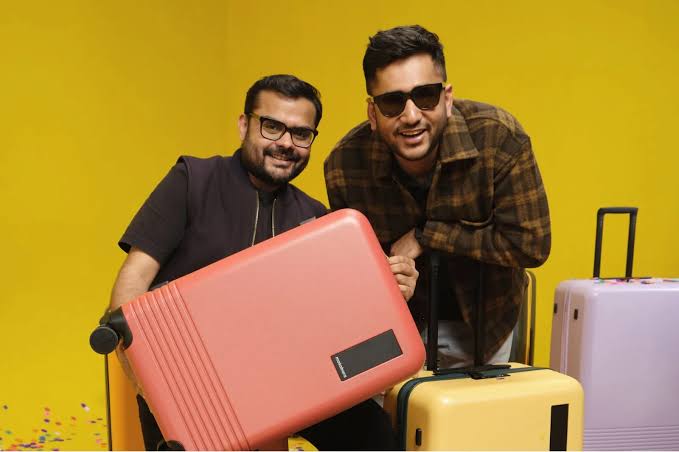
Mokobara's revenue from operations doubled to ₹230 crore in FY25, up from ₹117 crore in FY24, which itself was more than double the ₹53 crore it made the year before. Behind that curve is a five-year-old Bengaluru company that was turned down by 33 investors before its first cheque came in, built by two people who had never sold a suitcase in their lives. This is the story of how Sangeet Agrawal and Navin Parwal turned a broken travel bag into one of India's fastest-growing D2C brands.
I think the more interesting number here isn't the ₹230 crore. It's the 33.
Founded in 2020 in Bengaluru, Mokobara sells premium luggage, bags and travel accessories, backed by venture capital firms like Peak XV Partners and Sauce.vc. It now runs 28-plus stores in India and one in Dubai. Know more about Mokobara's Founders and Team, Startup Story, Business Model, Funding and Investors, Growth, Challenges, Competitors, and Future Plans ahead!
Mokobara - Company Highlights
| Startup Name | Mokobara |
|---|---|
| Founders | Sangeet Agrawal, Navin Parwal |
| Founded | 2020 |
| Headquarters | Bengaluru, India |
| Sector | D2C premium luggage, bags and travel accessories |
| FY25 Revenue | ₹230 crore (up 97% YoY) |
| FY25 Net Loss | ₹10 crore |
| Total Funding Raised | ~$42.1 million (6 rounds) |
| Latest Round | Series C (closed September 2026, ₹170 crore) |
| Key Investors | Peak XV Partners, Sauce.vc, Saama Capital, Aditya Birla Ventures, AYRA Ventures, Niveshaay Investment |
| Stores | 28+ in India, plus Dubai (BurJuman Mall) |
Mokobara - Founders and Team
Sangeet Agrawal and Navin Parwal met at Urban Ladder, the Bengaluru furniture brand, where Agrawal, an IIT-IIM graduate who had previously worked on product at Flipkart, led product, and Parwal, a MICA graduate, worked on brand strategy. At Urban Ladder they watched something unusual happen. A design-led approach turned furniture, a boring, commodity category, into something people were willing to pay a premium for and talk about. Ashish Goel, Urban Ladder's co-founder, has since said Agrawal's product thinking and Parwal's brand instincts stood out even then.
The idea for Mokobara came from an ordinary annoyance. Agrawal's suitcase broke on a trip, and when he went looking for a replacement, he found only two options: cheap, generic luggage with no design thinking behind it, or imported brands priced higher than the flight ticket itself. Nothing existed in between for a buyer who wanted something that looked good, held up, and didn't cost a fortune. He called Parwal, who had no particular interest in luggage but was interested in Agrawal's obsession with the product gap. That conversation became Mokobara in 2020, with Agrawal as CEO and Parwal as co-founder and Chief Marketing Officer, leading brand and design.
Mokobara - Startup Story
In May 2019, before Mokobara was even incorporated, the two set up their first cabin-luggage prototype in a crowded Bengaluru cafeteria to gauge reactions. Almost nobody looked twice. Pitching to investors went worse: 33 of them passed. The founders didn't pivot the idea or cut corners on the design to make it easier to sell. They kept refining the same prototype and showing up again. It took roughly 18 months of field testing before the product they'd pitch investors with was ready.
That persistence had a price the founders were willing to pay. At least one investor who rejected them early came back later with a $5 million cheque, and Mokobara turned it down because the fit wasn't right by then. That's an unusual amount of conviction for a two-year-old company with no revenue to point to, and it set the tone for how selective Mokobara has stayed about who it takes money from since.
Mokobara - Business Model
Mokobara sells cabin and check-in luggage, backpacks, totes, slings, wallets and travel accessories, priced above mass-market Indian brands like VIP and Safari, but below international names like Samsonite and Rimowa. It launched online-only, selling directly to a tech-savvy, urban, millennial and Gen Z audience through its own website rather than marketplaces, which let it control pricing, margins and the customer experience from day one.
Design has been the company's central bet, not a marketing add-on. Mokobara worked with UK-based design studio Morrama on its product line, and its "Going Places" brand messaging treats travel as identity rather than luggage as a functional purchase. It's the same playbook Agrawal and Parwal watched work at Urban Ladder, applied to a different commodity category.
Mokobara opened its first physical store in Bengaluru in May 2023, part of a broader shift where India's D2C brands are betting on malls after years of digital-only growth. It has since scaled to 28-plus stores, with a stated target of three to four stores in every major metro, and opened its first international outlet in Dubai's BurJuman Mall in 2025.
Mokobara - Funding and Investors
Mokobara has raised roughly $42 million to date over six rounds from about 60 investors, including two seed and two early-stage rounds before its Series B. Its Series C closed in September 2026 at ₹170 crore, led by Sauce.vc (which alone put in ₹109 crore), with Peak XV Partners returning alongside two new names, AYRA Ventures and Niveshaay Investment. Only about ₹90.66 crore of that was new primary capital; the rest was secondary liquidity for ESOP holders and members of the founding team, the same selectiveness the founders showed when they once turned down an early $5 million cheque.
| Round | Date | Amount | Lead Investor(s) |
|---|---|---|---|
| Seed + Early-stage (x4) | 2019-2021 | Undisclosed | Multiple angels and early-stage funds |
| Series B | February 2024 | ₹100 crore (~$12 million) | Peak XV Partners, with Sauce VC and Saama Capital |
| Series C | September 2026 | ₹170 crore (~$18 million) | Sauce.vc, with Peak XV Partners, AYRA Ventures and Niveshaay Investment |
The Series B valued Mokobara at roughly ₹700 crore. Its September 2026 Series C was reported as a near-2x valuation step-up from that base, though no exact post-round figure has been publicly disclosed.
Mokobara - Growth
Revenue from operations climbed from about ₹12 crore in FY22 to ₹230 crore in FY25, more than doubling in each of the last two years. But total expenses more than doubled too, to ₹251 crore in FY25 from ₹123 crore in FY24, pushing the net loss to ₹10 crore, up from ₹4 crore the year before. Mokobara is scaling revenue faster than it's controlling costs, a common trade-off for a D2C brand mid-way through an aggressive offline expansion. The company has publicly targeted ₹500 crore in revenue by FY27, which means sustaining a growth rate close to what it has already posted for two straight years. Headcount has grown alongside the stores: Mokobara had about 324 employees as of May 2026, up 41% from a year earlier.
Mokobara - Challenges
The first challenge was simply being believed. Thirty-three investors passed before one said yes, and the founders spent 18 months field-testing a single prototype with no revenue coming in to prove the idea worked.
The challenge now is different: staying profitable while opening dozens of stores at once. Mokobara's losses widened from ₹4 crore to ₹10 crore even as revenue nearly doubled, which means every new store and every new market (starting with Dubai) has to earn back what it costs faster than the last one did, or the ₹500 crore FY27 target comes at the expense of the company's own balance sheet.
Mokobara - Competitors
Mokobara competes with legacy players like VIP Industries, Safari and Samsonite, and with other design-led D2C challengers like Uppercase and Nasher Miles. Its bet has stayed narrow and consistent: price above the mass-market incumbents on design, stay cheaper than imported premium brands, and refuse to chase every price point the way older D2C brands in India eventually do.
Mokobara - Future Plans
Mokobara is targeting ₹500 crore in revenue by FY27, roughly a 2.2x jump from FY25. That growth is expected to come from three levers: opening 25 more stores over the next 18 months, deepening its push into Tier II cities and airport retail, and building on its first international store in Dubai. The Series C round, now closed, is meant to fund exactly this expansion rather than plug an existing hole.
Conclusion
A commodity, reimagined.
That's really the whole story here. Thirty-three rejections and 18 months of prototype testing before any revenue existed is a longer runway of "no" than most founders get the chance to survive, and it is the reason a boring product category turned into a ₹230 crore company instead of a forgotten prototype in a Bengaluru cafeteria. Whether that same conviction survives the jump from a design-led online brand to a 50-plus-store retail chain chasing ₹500 crore in revenue is the question the Series C money is meant to help answer.
FAQs
Who founded Mokobara?
Mokobara was founded in 2020 by Sangeet Agrawal and Navin Parwal, both former Urban Ladder executives, after Agrawal's own suitcase broke and he found no well-designed, reasonably priced luggage option in the Indian market.
What is Mokobara's revenue?
Mokobara's revenue from operations was ₹230 crore in FY25, up 97% from ₹117 crore in FY24. The company posted a net loss of ₹10 crore in FY25.
How much funding has Mokobara raised?
Mokobara has raised approximately $42 million across six rounds, including a ₹100 crore Series B in February 2024 led by Peak XV Partners, and a ₹170 crore Series C that closed in September 2026, led by Sauce.vc with Peak XV Partners, AYRA Ventures and Niveshaay Investment.
Who are Mokobara's competitors?
Mokobara competes with legacy luggage brands like VIP Industries, Safari and Samsonite, and with design-led D2C challengers like Uppercase and Nasher Miles.