Step-by-Step Process to Apply for GST Registration Online in India
Understand the GST registration process in India with step-by-step guidance on eligibility, documents, online application, and post-registration compliance requirements.
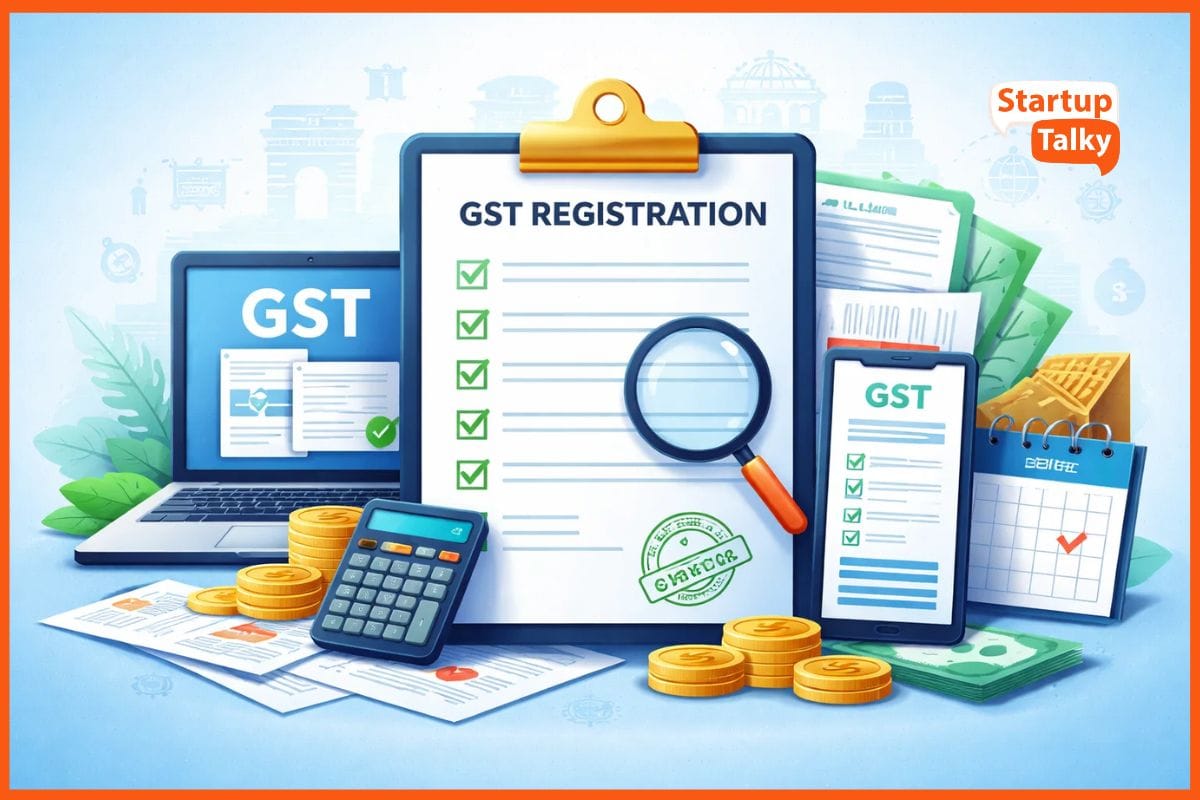
The Goods and Services Tax (GST) refers to a unified indirect tax scheme in which the provision of goods and services within India is subject to taxation. As such, the GST is instrumental in the taxation process, as it helps streamline processes, eliminate tax cascading, and promote transparency in commercial dealings.
Obtaining GST registration online is crucial for the successful operation of eligible businesses under the GST scheme, as it enables the lawful operation of businesses, receipt of payments, issuance of invoices, and input tax credit when necessary. Through this guide, the entire procedure of obtaining GST registration will be explained clearly.
What is GST Registration?
The GST registration procedure is the formal process through which a business entity gets registered in the GST system and obtains a GST Identification Number (GSTIN), which is a special tax number that is required for carrying out GST transactions. The main aim of GST registration is to give the business entity authorisation to charge GST from its customers in respect of the supplies made by it and pay the tax to the government. In addition, it allows the business to take credit for the input tax incurred. A GSTIN is mandatory to issue invoices, keep proper records, and conduct some transactions, such as interstate transactions or vendor registrations.
Who Needs GST Registration in India?
Under the GST law, registration for GST in India is compulsory for those firms having a combined turnover exceeding the relevant threshold limits prescribed under GST. The threshold limit varies according to the type of supply and place of business. There are specific types of organisations that have to compulsorily register for GST irrespective of their turnover level; these include those supplying goods or services across state borders in certain conditions, online e-commerce organisations and operators bound by GST laws, among others. Many businesses register voluntarily even when it is not required to facilitate input tax credits.
Benefits of GST Registration
Having GST registration provides various operational and compliance benefits for supporting business development and making it more efficient.
- First, it provides legal standing within the GST framework and allows collecting and remitting taxes according to the law.
- Second, GST registration enables businesses to claim input tax credit on the items purchased that are subject to GST.
- Third, GST registration allows easy interstate transportation of products and services since some states require GST registration.
- Fourth, GST registration enhances business reputation because many customers and institutions appreciate working only with GST-registered companies.
- Finally, GST registration makes it easier for businesses to participate in large-scale procurement projects.
Documents Required for GST Registration
Before starting to fill out the GST registration form, it is advisable to prepare all required documents. Some commonly needed documents are listed below:
- PAN card of the business or applicant
- Aadhaar card of the proprietor, partners, or directors
- Business address proof, such as a utility bill, rental agreement, or ownership documents
- Bank account details, including a cancelled cheque or a bank statement
- Business registration certificate or incorporation documents, where applicable, based on business structure
Step-by-Step GST Registration Process
Online GST registration process requires the completion of certain steps, which need to be taken via the GST portal. Knowing about each step is vital in order to file an application properly.
- Step 1: Visit the GST Portal: The first step in filing for GST registration online is logging in to the official website portal and clicking on new taxpayer registration. This is where one starts their GST application process.
- Step 2: Enter Basic Details: Fill in the basic information related to the applicant and include details like PAN number, name of business, email ID, and mobile number. In order to proceed, one needs to enter the OTP sent to the provided email and mobile number.
- Step 3: Fill the Application Form: Complete filling in the GST application by adding the required information regarding business details, promoters/directors, principal place of business, other business place, authorised signatory, and nature of the business.
- Step 4: Upload Required Documents: Attach the prescribed documents, which may include proof of identity, proof of address, bank details, and proof of business registration, among others. Make sure that all the documents are in order.
- Step 5: Verification and Submission: Verify the filed document via DSC, EVC, or e-signature according to the prescribed method. After the verification process is complete, the application needs to be submitted.
- Step 6: Application Review and Approval: If the application and documents satisfy all requirements, they will be examined by the GST authorities to confirm the same. In case of approval, the individual will receive the GSTIN and GST registration certificate, thus completing the process.
Post-Registration Compliance Requirements
While obtaining the GST registration is important, the need for continued compliance is inevitable if one wishes to enjoy a good standing under this tax system.
For example, all registered firms must submit GST returns according to the required timeline and according to the business's registration status and filing group. The GST return will detail the sales, purchases, tax payable, and input tax credits.
It is important to note that delayed submissions will attract penalties and interest, among other sanctions,s from the GST regulations. Besides submitting GST returns, all registered firms are required to prepare GST invoices for the taxable transactions.
Such invoices will include certain particulars that are mandatory, such as the GSTIN, invoice number, tax breakdown, and place of supply where necessary. Correct invoice preparation will help in maintaining transparency in the transaction, which will help the customers in enjoying their right to input tax credit.
Additionally, all registered firms must have adequate bookkeeping and GST records of the transactions.
Conclusion
Online registration for GST plays an important role in ensuring that the business operates within legal boundaries as well as complies with taxation laws in India. Having knowledge of how to register for GST, as well as compiling all the necessary documents, can help ensure successful registration without any undue delays. Compliance with all requirements after registration is imperative to the functioning of the business.