Adani Energy Secures INR 4,700 Crore Power Transmission Project in Maharashtra
AESL has bagged a INR 4,700 crore transmission project in Maharashtra to carry 4,500 MW of renewable power from Karnataka to key consumption centers. The Satara project would enhance grid connectivity, enable pumped storage projects and accelerate India’s sustainable energy transformation.
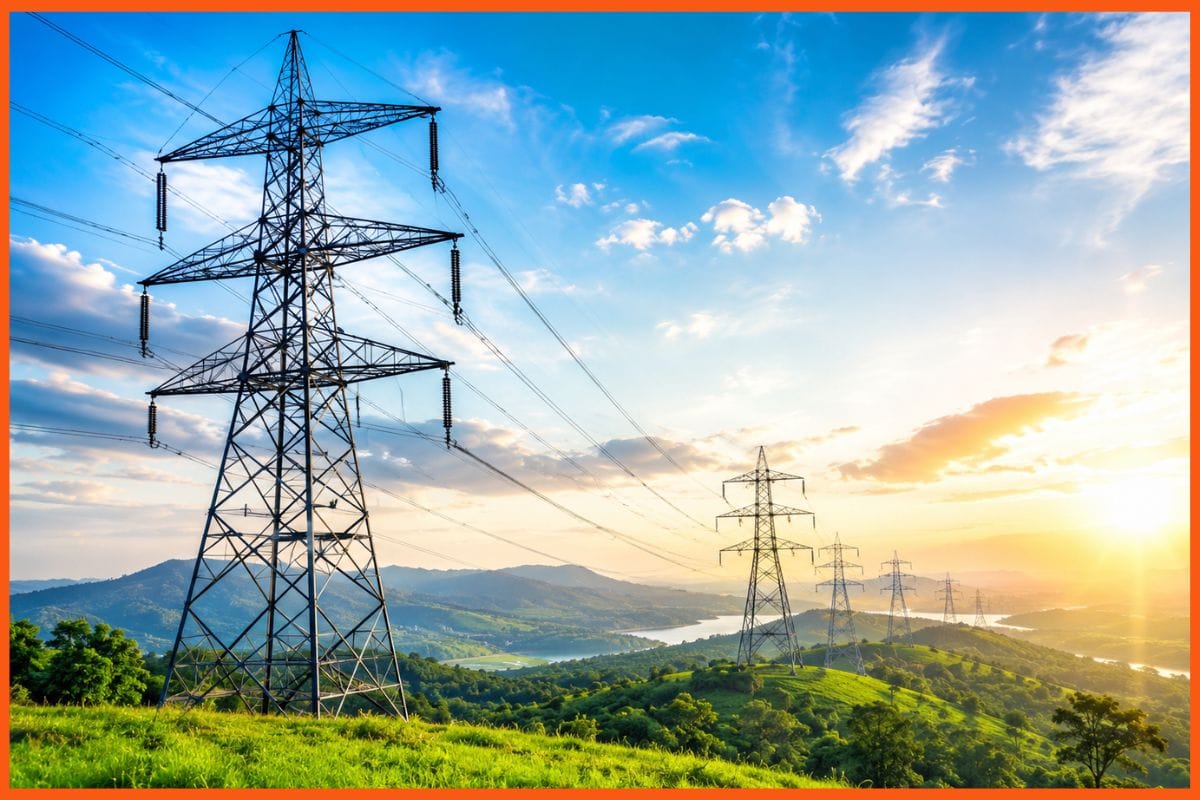
On August 26th, Adani Energy Solutions Ltd (AESL) announced that it has won a transmission project for INR 4,700 crore to transport 4,500 megawatts (MW) of renewable power from Karnataka to large load centres in Maharashtra. Satara, Pune, and the Mumbai Metropolitan Region (MMR) have an expanding pumped storage ecology, which the project would bolster as well.
A company statement from AESL states that they were the lowest bidder in the tariff-based competitive bidding (TBCB) process, which led to their victory in winning the project. The clean energy revolution in India is being made possible by pumped storage projects, according to Kandarp Patel, CEO of Adani Energy Solutions Ltd. These projects offer the stability and flexibility needed to connect large-scale renewable energy sources to the grid.
Satara Transmission Project
In order to facilitate the evacuation of renewable energy sources and the implementation of energy storage, the Satara transmission project will provide an essential transmission backbone. As a result, Patel said, power is flowing more strongly between western and southern India. Within 36 months, the project will be completed under the auspices of Satara Power Transmission Ltd, a Special Purpose Vehicle (SPV). The addition of 562 ckm of transmission lines and 9,000 MVA of transformation capacity would further enhance AESL's services.
The largest private transmission and distribution firm in India, Adani, which is part of a globally diversified portfolio, announced that it has increased its total transmission network to 29,739 ckm and its transformation capacity to 1,43,425 MVA. According to Patel, AESL is still dedicated to constructing transmission infrastructure that is prepared for the future and can support the expansion of renewable energy sources. Improving grid stability and lending support to India's long-term decarbonisation objectives are further benefits. Construction of a 765/400 kV substation at Satara and a 765 kV double-circuit transmission line between Kolhapur and Satara are also part of the project. Additionally, it intends to improve the transmission system and the Kolhapur pooling station.
Project Aims to Support India’s Energy Transitional Goals
Transmission infrastructure is crucial as India moves closer to its goal of generating 500 GW of renewable energy capacity by 2030. Connecting resource-rich green pockets—like solar, wind, and pumped storage—with key industrial and urban load centres across India, AESL continues to dominate the sector by creating specialised transmission schemes.
As a multi-faceted entity, AESL is present in multiple areas of the energy domain, including electricity transmission and distribution, smart metering, and cooling solutions. AESL's cumulative transmission network spans 29,739 ckm, and the firm has the ability to transform 143,425 MVA, making it the biggest private transmission operator in the country. As part of its retail electricity distribution business, AESL supplies power to almost 13 million customers in the Mumbai metropolitan area and the Mundra Special Economic Zone, an important industrial hub.