Aman Gupta Invests in Design-Led Lighting Brand FIG Living
Aman Gupta has backed FIG Living through SailThru Ventures. The lighting brand runs on a thirty-year-old export manufacturer that filed ₹16.2 crore revenue and a 2.5% net margin for the year to March 2025.
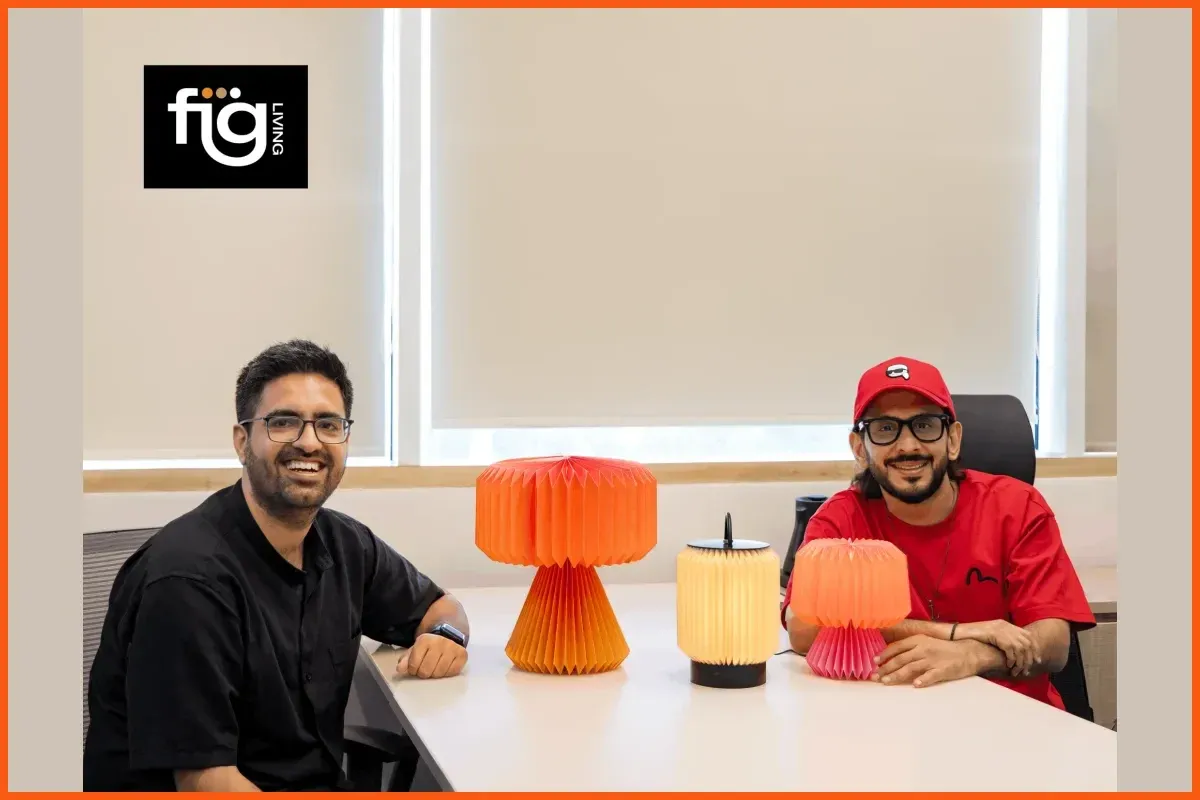
Aman Gupta has invested in FIG Living, a Delhi-based design-led lighting brand, through his fund SailThru Ventures. The amount was not disclosed. FIG Living says it runs at an annual revenue run rate of about ₹12 crore, has sold to more than 40,000 consumers, and is targeting ₹18 crore after the festive season.
FIG Living's products are made by Inmark Exports Private Limited, incorporated in Delhi in November 1995 and the legal entity the brand operates under. Inmark filed revenue of ₹16.2 crore for the year to March 2025, up 22% on the year before. Its net profit over the same period was ₹40 lakh, a margin of 2.5%, down about 46% year on year.
Revenue up, profit down by nearly half. That is what building a consumer brand costs, and it is a reasonable moment to take outside money.
The factory came first
Inmark has spent three decades making origami lampshades, paper star lighting, table and pendant lamps and handmade paper boxes for export, out of a factory in the Export Promotion Industrial Park at Greater Noida. It holds government-recognised Star Export House status and exhibits at Ambiente in Frankfurt. Its filings classify the whole of its turnover as manufacturing of paper, wood and related products. FIG Living's own website describes Inmark as its parent company.
That reframes the growth story. FIG Living is not a young brand that had to solve manufacturing alongside design and distribution. It is a thirty-year-old export manufacturer's capability pointed at Indian consumers under a new name.
It explains what would otherwise look surprising for a company this young. The folded-paper construction that gives the lamps their look is exactly what Inmark has always made. The knock-down and do-it-yourself format applied across nearly 80% of the portfolio, which FIG credits for better shipping economics and wider distribution, is a natural fit for flat-packed paper. A portfolio with more than 36 registered designs is far easier to build when design and tooling already exist in house. And the three-year picture at Inmark is a revenue compound rate of about minus 10%, which makes the domestic brand look less like a side project and more like the answer to a declining export book.
One precision on those designs. India protects the appearance of a product through design registration under the Designs Act 2000. There is no design patent in Indian law, though the American term travels. Thirty-six registered designs is a real moat in a category where copying is quick and cheap. It is just not a patent.
Growing 18 times faster than its market
IMARC puts India's decorative lighting market at $1.7 billion in 2025, compounding at 5.89% a year to $3.0 billion by 2034. FIG Living says it is growing about 20% quarter on quarter, which compounds to roughly 107% a year, or about eighteen times the rate of the market it sells into.
So whatever is happening here, it is not a rising tide. A 5.89% compound rate is a slow market, and at ₹12 crore FIG holds well under a tenth of a percent of it. Growth at that speed is share taken from somebody, or demand that did not previously exist.
Two things are worth holding in mind about the ₹18 crore target. Going from ₹12 crore to ₹18 crore is a 50% increase and the festive season is one quarter away, so at the 20% quarterly rate the company reports, one quarter lands at about ₹14.4 crore rather than ₹18 crore. The target assumes a festive quarter running at roughly two and a half times the normal trend, which for a decorative lighting brand selling into Diwali is reasonable rather than aggressive. It is still an assumption. Separately, a run rate calculated off the festive quarter annualises the strongest trading period in the Indian consumer year, which is true of every seasonal brand and worth knowing when comparing the two figures.
One caveat on the filings above. They belong to the whole entity, covering the export business and the FIG brand together, and the year to March 2025 does not line up neatly with a run rate quoted today.
The boAt line
Sushant Sharma worked in brand and marketing at boAt before FIG Living, which is the relationship the investment runs on. "I have seen Sushant up close, his understanding of brands, consumers and what it takes to build something from scratch," Gupta said. "What stood out to me about FIG is that it isn't simply selling lighting; it is building a point of view around how a new generation of Indians wants to experience and express their homes."
Gupta has widened his investing since moving to a non-executive role at boAt. SailThru Ventures, set up in 2022 and based in New Delhi, invests mainly at seed stage in India and had backed around 61 companies as of March 2026, from food brands such as Fulva and Rosier Foods through to consumer products. FIG Living sits squarely in the design-and-brand territory his investment portfolio favours.
Sharma said the ambition is to move FIG from a lighting company into a broader home and living platform, with lighting as the core design language. The brand has already extended into side tables, accent furniture and tabletop objects, and counts Masaba Gupta, Kiran Rao and Tanmay Bhat among the names it has reached.
The founding team
FIG Living was founded in 2024 and has three people on its founding line-up. Sushant Sharma leads operations and product development. Varun Sharma brings the manufacturing and export side across from Inmark as co-founder. Siya Wadhawan is a co-founder and director heading marketing and sales, after her own stint at boAt and at Boldfit. All three come out of the same orbit that built the brand's design-forward positioning, and the manufacturing lineage is the part that makes the economics work.
The valuation was not disclosed, and neither was the cheque.