Anthropic Faces Backlash as U.S. Limits Access to its Advanced AI Models
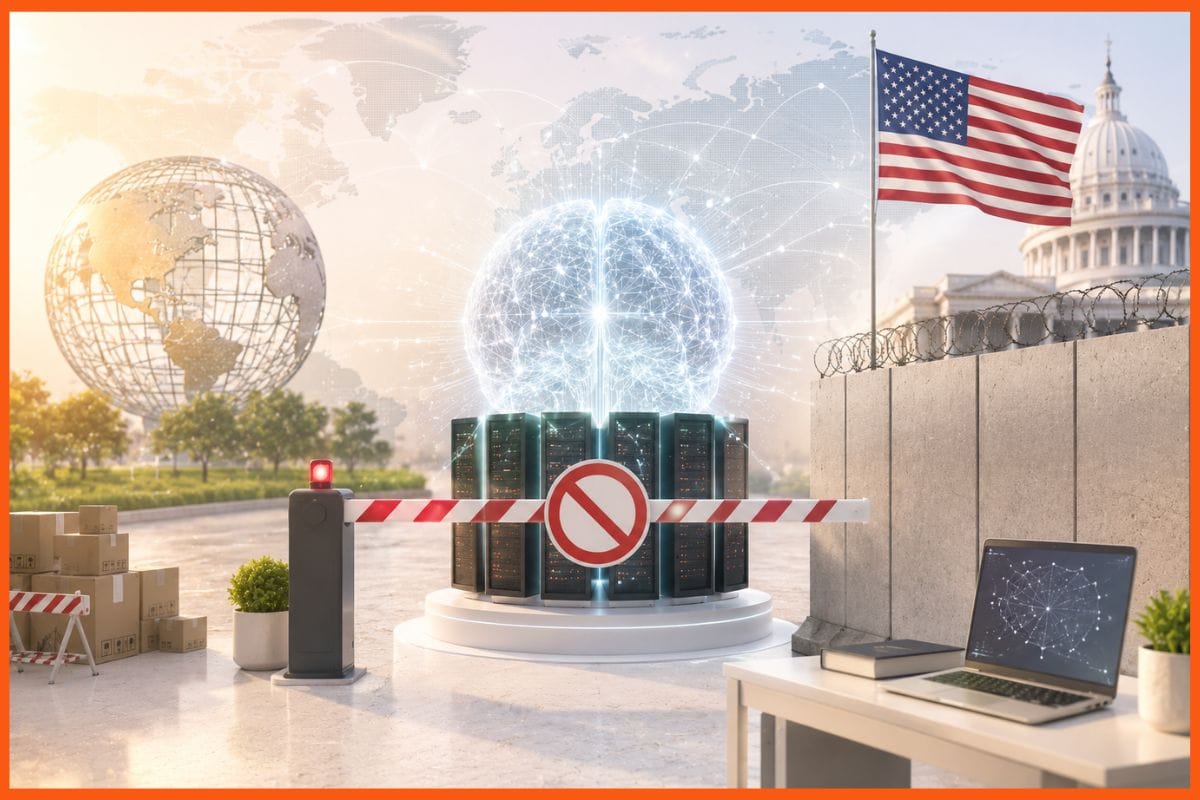
In an announcement made on the evening of June 12th, the San Francisco-based business Anthropic stated that Mythos 5 and Fable 5 had been ordered suspended by the US Department of Commerce for "national security" grounds; however, no other information was provided. In contrast to Mythos 5, which had few restrictions and was accessible to all partners, Fable 5 was carefully guarded to avoid any serious abuse.
This prevention was specifically designed to prevent the development of chemical and biological weapons or cybercrime. However, Anthropic claimed that an unnamed organization informed the Trump administration that it had discovered a method to circumvent security measures meant to prevent Fable 5 from being exploited in a cyberattack.
Anthropic Response to the Loophole Claims
Several news sources have named Amazon as the third party that found the "narrow" vulnerability, and Anthropic has characterised the software vulnerabilities it uncovered as "minor". Anthropic claimed it had to take its models offline because it couldn't differentiate between users based on country, even though the order solely applied to access by foreign citizens. It is rare for a government to blatantly prohibit a local company's advanced AI model. China restricts access to key domestic AI businesses and prohibits access to the most capable Western AI models; nonetheless, these restrictions are typically included in the models before they are released. According to entrepreneur Martin Varsavsky, the order has huge ramifications.
Since Anthropic had been sounding the alarm about the dangers of the most sophisticated AI models for years, some have suggested that the company should shoulder a large portion of the blame for its current situation. In order to address the risks and opportunities that will unexpectedly intensify in the near future, Anthropic CEO Dario Amodei reiterated on June 10th the need for lawmakers to activate a sluggish and fragile policy apparatus. Even though they were vehemently against artificial intelligence legislation just a few weeks ago, several Trump supporters have now tried to justify the order.
|
Some Interesting Pointers for this Article |
|
1.Governments worldwide are increasingly focusing on
how advanced AI could be exploited for cyber operations. 2.AI safety vulnerabilities can sometimes be
uncovered through prompt engineering rather than traditional software hacking
techniques. 3.The controversy could influence future AI
regulations and export-control policies in the United States and other
countries. |
Findings of Amazon’s Researchers
An international news agency reports that Amazon engineers exploited software flaws by tricking Fable 5 into divulging sensitive information through a series of prompts. The administration's heightened focus on advanced AI systems and the dangers they pose to national security led Jassy to allegedly discuss the results with US officials.
The report further stated that in Washington, there has been an increasing number of concerns regarding the use of AI models to aid cyberattacks. This concern is particularly true when corporations develop systems with ever-increasing capabilities. According to Andy Jassy, Amazon CEO, who spoke with officials such as US Treasury Secretary Scott Bessent, researchers from Amazon were able to obtain data that could be used for cyberattacks from Anthropic's recently released Fable 5 model.
|
Quick Shots |
|
•Anthropic suspended access to its advanced AI
models, Mythos 5 and Fable 5, following a U.S. Department of Commerce order. •The U.S. government reportedly cited national
security concerns as the reason for the restrictions. •Fable 5 was a highly restricted model with
safeguards designed to prevent misuse in cyberattacks and the development of
chemical or biological weapons. •Mythos 5 had fewer restrictions and was available
to a broader set of partners. |