Applied Materials Plans $5 Billion India Investment to Expand Green Energy Operations
Applied Materials to invest $5 billion in India over next decade to boost country’s semiconductor ecosystem, green energy ops. The US semiconductor equipment giant will build a 140-acre research park, develop its Indian supply chain and add to its global supplier base.
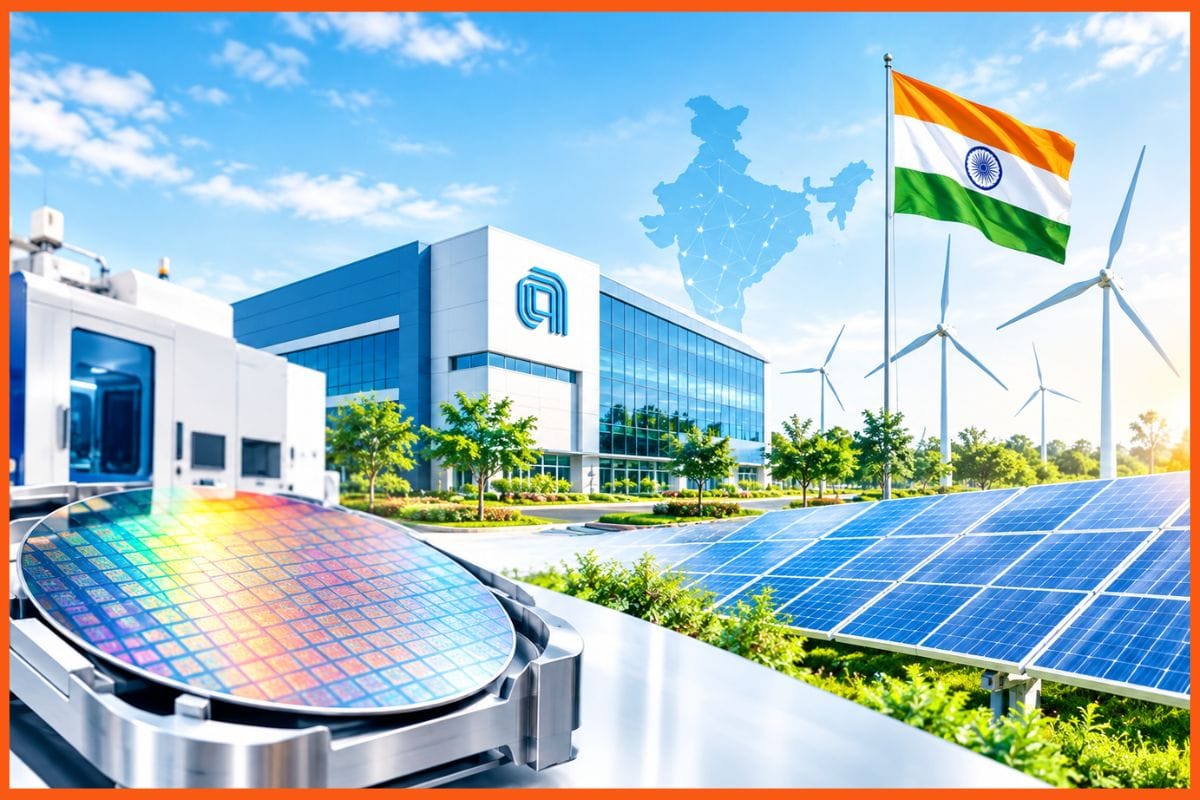
Applied Materials, a US-based semiconductor equipment major, made the announcement on September 17 that it will be investing $5 billion in India over the next ten years. The country is making further strides to expand its semiconductor ecosystem beyond only chip manufacture, which is why this move is not surprising.
A new 140-acre research park in India has been committed to by Applied Materials, according to Prabu Raja, President of the Semiconductor Products Group. As a result of this park, the company's R&D skills will expand, and the nation will have access to cutting-edge technology.
Applied Materials Expanding its Footprints in India
The business is also planning to increase the number of its worldwide suppliers based in India and increase the size of its supply chain based in India by a factor of 10. Over the previous decade, Applied Materials' employment in India has increased fourfold, reaching over 7,000 individuals. According to Raja, the organisation would also prioritise the development of talent.
Applied Materials is increasing its presence in India with its latest investment. Bengaluru has been the site of the company's expansion into the design, testing, validation, and research and development of semiconductor equipment. This investment announcement was made just before SEMICON India 2026 was inaugurated in New Delhi by Prime Minister Narendra Modi. Applied Materials, ASML, Lam Research, Tokyo Electron, Teradyne, Infineon, NXP, and Micron are among the 600-plus firms from 52 nations that will be attending the three-day event.
India Pushing Strongly for Semiconductor Manufacturing
Contextually, the government's extended India Semiconductor Mission 2.0 is being used to spur the semiconductor drive. Instead of limiting itself to manufacturing plants, this goal aims to improve the full semiconductor value chain, which includes chip design, chemicals, materials, gases, and talent.
Twelve projects totalling over INR 1.64 lakh crore were greenlit by the government as part of the initial semiconductor initiative. Government investment will cover display fabrication, advanced packaging, silicon and compound semiconductor fabs, and more. There have been three of these projects that have begun commercial production since then. Another twenty-four semiconductor design initiatives have been greenlit by the government's Design Linked Incentive programme. Meanwhile, electronic design automation tools have been provided to 105 startups and MSMEs.
India is racing to plug supply chain gaps caused by the tit-for-tat export restrictions on semiconductor technology imposed by the US and China. The demand for AI computing has escalated tensions and become tangled with geopolitical issues, leading to a further intensification of the global battle for chip production capacity this year. Commercial production has been postponed by nearly two years for the premier project, Tata Electronics' $10 billion (approximately NT$320 billion) wafer fab in the western state of Gujarat. This situation highlights the difficulties that India encounters in developing its advanced process capabilities.