Definedge Raises ₹22 Crore to Scale Its Trading Tools
Definedge has raised ₹22 crore in a Pre-Series A, taking total funding to ₹30 crore. The Pune firm built trading tools and an education community before it took a broking licence, and says its Momentify platform has crossed ₹1,000 crore in assets under management.
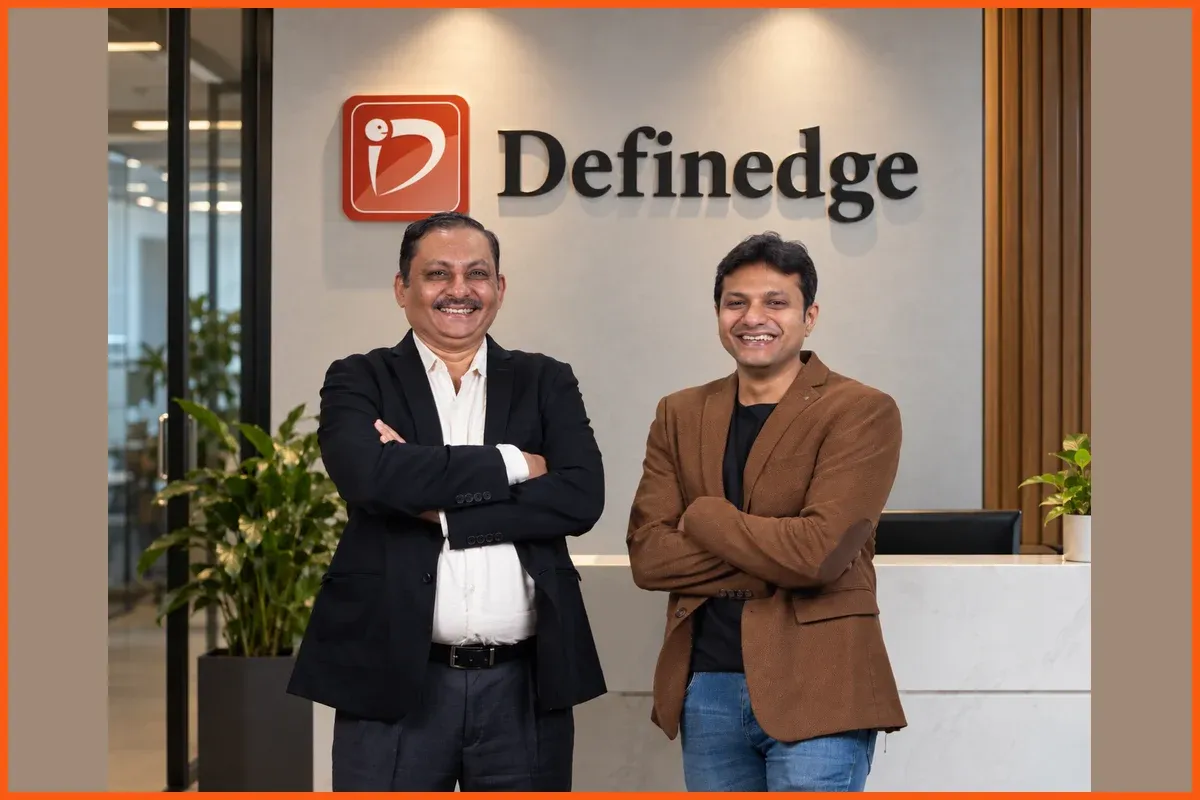
Most brokers start with a licence and then go looking for customers. Definedge did it the other way round, spending years building trading tools and an education community before it became a broking firm at all.
The Pune company has raised ₹22 crore in a Pre-Series A round, taking the total it has raised to ₹30 crore. Existing backers Nitin Agarwal and D. Prasad returned, joined by new investors Anant Jain and Sachin Kasera. The round is entirely equity.
Prashant Shah and Rajesh Badiye founded the company, which now runs more than a dozen platforms including Opstra for options analytics, Zone for technical analysis, Algostra for no-code algorithmic trading, Momentify for rule-based investing and Gurukul for education.
The second round is nearly three times the first
Work the two disclosed numbers against each other. If the total stands at ₹30 crore and this round is ₹22 crore, the first institutional and angel round, which closed in November 2025, was about ₹8 crore.
Returning investors are the part worth noticing.
Ten months later the company has raised close to three times that in one go, with both original backers coming back in. An angel who writes a second and larger cheque has seen the numbers between the two rounds, which an outsider has not.
₹1,000 crore of AUM is not ₹1,000 crore of revenue
Definedge says Momentify has crossed ₹1,000 crore in assets under management in roughly 15 months, and that it is targeting ₹5,000 crore within 24 months.
It is worth being precise about what that figure is, because assets under management get read as company size and they are not. The ₹1,000 crore belongs to the users. It is their money, sitting in their accounts, following the platform's rules. What accrues to Definedge is a fee on that money, which in rule-based investing products is typically a small percentage. A platform can run a very large AUM number alongside a modest revenue line, and both statements are true at once. The distinction matters most when comparing companies, because a business with ₹1,000 crore of assets under management and one with ₹1,000 crore of revenue are not remotely the same size.
The target implies five times growth in two years, after the first ₹1,000 crore took about fifteen months. That is the number to hold the company to, and it comes with a date attached rather than being a vague ambition.
Why a broker raises equity at all
Buried in the use of funds is margin funding, which is the least glamorous item on the list and possibly the most consequential.
When a broker offers margin funding it lends its own money to clients against their securities. That is not a software cost that scales cheaply, it is a balance sheet that has to be funded, and every rupee lent to a trader is a rupee the firm has to have. It is one of the clearest reasons a broking business needs equity in a way a pure software company does not, and ₹22 crore supports a book of a particular size and no larger.
The rest of the money goes to low-latency execution infrastructure, scaling Zone and Opstra, building Algostra out as a no-code algorithmic trading platform, and extending Momentify, alongside marketing, distribution and AI work.
"Unlike most startups, we didn't begin with a brokerage license; we began by building trust, knowledge and community. Our mission is to democratize access to professional-grade trading tools and education for Indian traders and investors," said Prashant Shah, Co-founder and CEO of Definedge.
Growth without a marketing budget
The company says its user base has grown 125% in the last 14 months and ten times over three years, entirely through word of mouth.
There is precedent for that claim in this industry, which is partly why it is credible. Zerodha became the largest broker in the country without advertising, with a substantial share of its users arriving through referrals. Trading is an unusually social activity, people discuss tools and strategies constantly, and a product that genuinely works gets recommended in a way a savings account never does.
The flip side is that word of mouth is not a channel you can buy more of when you need to. It is why the marketing and distribution line in this round matters, because Definedge is now testing whether paid acquisition works for a business built entirely without it.
The company sits in a market where discount brokers compete hard on price, and its answer is to compete on tools and education instead. That positioning only holds as long as the analytics stay meaningfully better than what a free trading app gives away.
Common questions
How much has Definedge raised?
₹22 crore in this Pre-Series A, taking total funding to ₹30 crore. The round is entirely equity, and follows a first institutional and angel round that closed in November 2025.
What does Definedge do?
It is a Pune-based brokerage and fintech firm running more than a dozen platforms, including Opstra for options analytics, Zone for technical analysis, Algostra for no-code algorithmic trading, Momentify for rule-based investing and Gurukul for education.
What is Momentify's AUM?
The company says it has crossed ₹1,000 crore in assets under management in roughly 15 months and is targeting ₹5,000 crore over the next 24 months. That figure is client money on the platform, not company revenue.
Round size, investor names, AUM figures and quotes come from the company's announcement of 22 September 2026.