
Eternal to Focus on Third-Party Brands as Blinkit Rules Out Private Labels
Eternal, the parent company of Blinkit and Zomato, has ruled out selling its own-brand products on its quick-commerce platform and will instead focus on third-party brands. Heavy investment is required by private labels, said CEO Albinder Dhindsa.
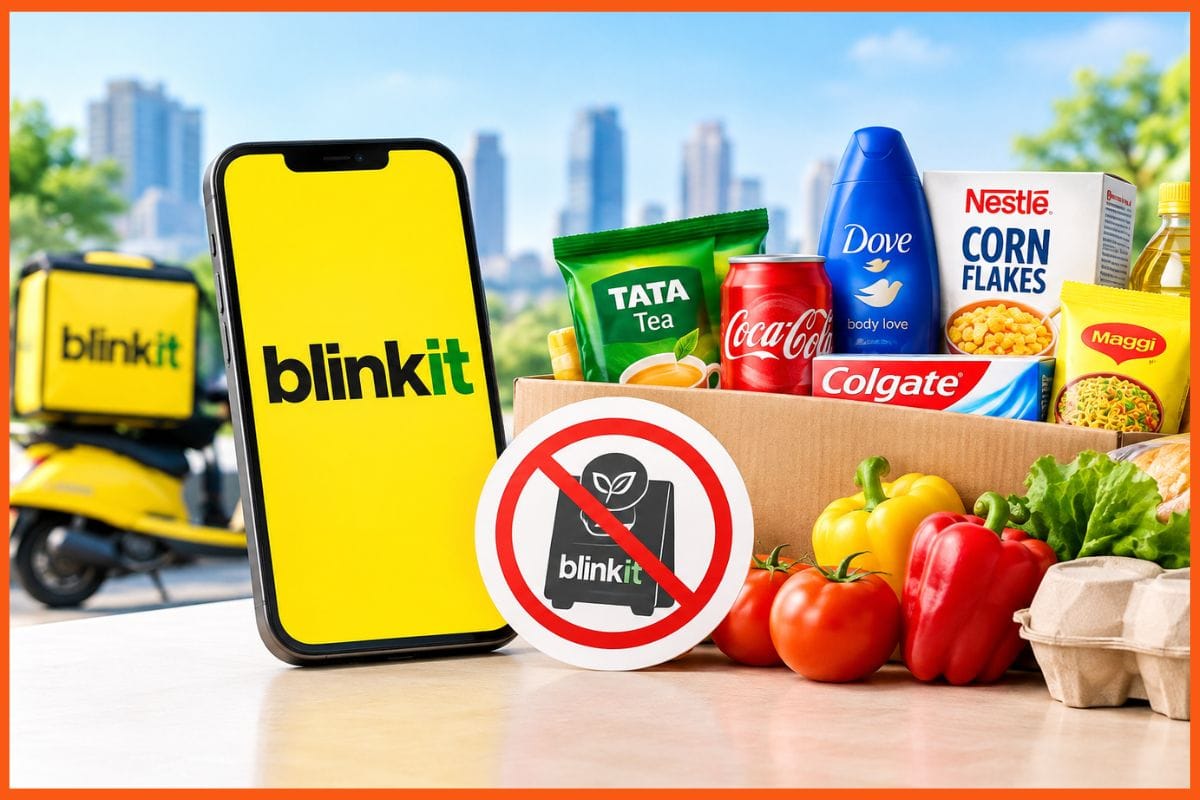
The Blinkit parent company, Eternal Ltd, which also owns Zomato, has decided against introducing private-label products on the platform. Instead of trying to outdo other firms on its quick-commerce platform, the brand has announced its intention to assist them in growing. Eternal CEO Albinder Dhindsa made reference to the private-label plan in a letter sent to shareholders in the second quarter of FY27.
The company concluded that it failed to achieve both of its primary objectives in its evaluation: increasing demand by addressing product gaps and enhancing profit margins on current demand. A shop or platform may sell things under their own brand, which is called a private label. If Blinkit were to introduce its own line of snacks or home goods, for instance, they would go up against well-known brands that users might find on the app.
Why Blinkit Not Building Private Labels?
Private label success, according to Dhindsa, necessitates spending on research and development, production, quality assurance, inventory management, marketing (to get people to sample the items), and sampling. Since these areas are not Eternal's strong suit, Dhindsa claims that brands are in a better position to cultivate them. Instead of bearing the extra expenses and burdens of developing its own consumer-facing products, the corporation thinks it can make more money by assisting other brands.
Through Blinkit, Eternal intends to distribute and find products for thousands of brands, including startups. Instead of promoting its own items, the corporation thinks third-party brands might benefit from the space and exposure on store shelves. These companies may increase their advertising budgets to boost product exposure as they grow on the platform. According to Dhindsa, Eternal has no interest in becoming a rival to the brands that sell on its platform. Having a private label could be a great way for the company to boost growth and profits; therefore, they might rethink their stance.
Swiggy’s Stance May Change Eternal’s Decision in Future
Coinciding with Eternal's move, competitor Swiggy is looking to broaden its private-label offerings on Instamart. These offerings go beyond food to include things like toys, consumer electronics, and home and kitchen goods. In addition to collaborations with about 400 third-party companies through its Switch offering, Swiggy's Instamart already provides proprietary brands such as NOICE and Nectr.
In contrast to Nectr, which is centred on perishable goods, NOICE is devoted to food items. The early success of NOICE has encouraged Swiggy to broaden its private-brand offerings, the company said. The business announced in June that 9 million customers had used NOICE products and that 10% of Instamart baskets included NOICE items. Additionally, it found that NOICE clients had a better rate of customer retention and order frequency when compared to the platform average.