

Eternal’s District Plans Live-Event Venue Strategy to Cut Concert Costs, Tackle AI Risks
Eternal’s District is looking into specialised live-event spaces as a way to lower concert expenses, and protect its business against AI-driven booking disruption. The company is in discussions with governments and possible partners to build event infrastructure in major Indian cities.
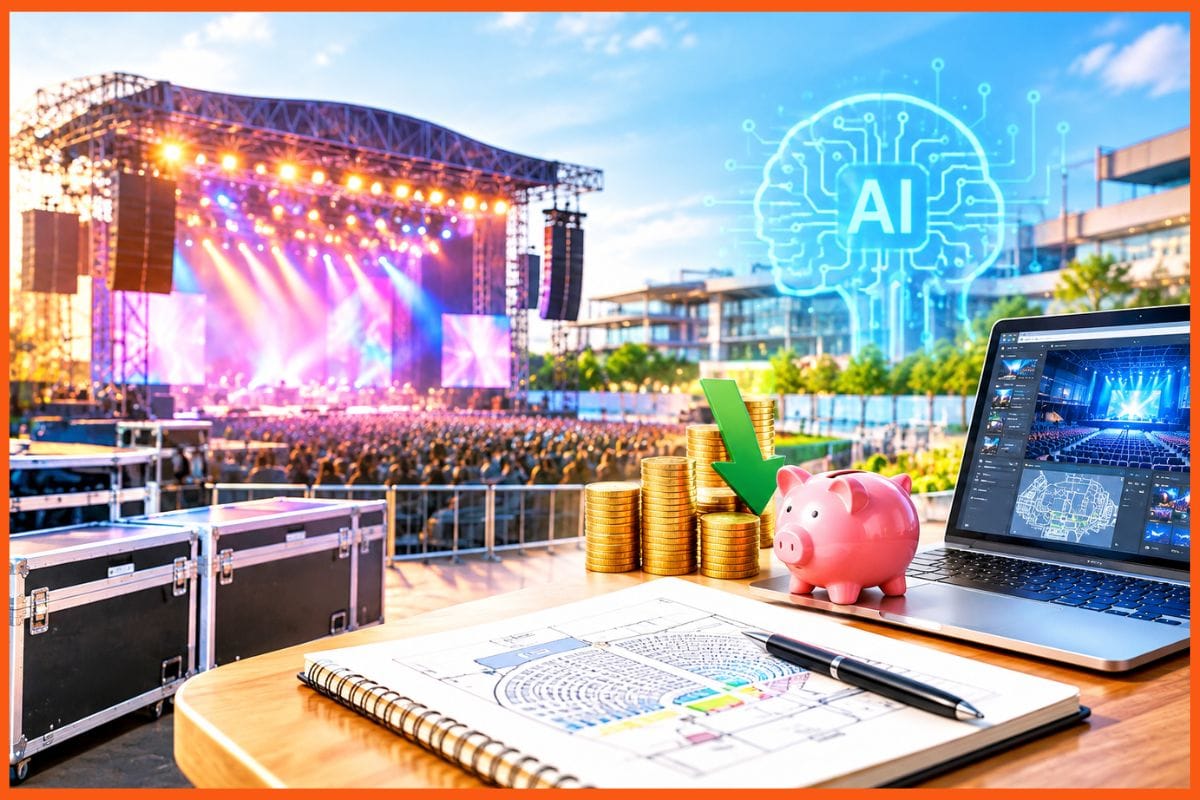
Investing in specialised live-event venues is being considered by Eternal's District. Thus, the company is placing its bets on the idea that physical infrastructure may make concert staging affordable. Also, with AI agents threatening to derail online bookings, the out-of-home consumption platform will have a stronger foothold in the market.
Concerning long-term initiatives, the business is now in talks with prospective partners and governments. In an interview with a media outlet, Rahul Ganjoo, chief executive of District, indicated that such an approach includes public-private partnerships.
District’s Business Strategy For Sustainable Growth
One spends a lot of money setting up a venue just to take it down within a day, according to Ganjoo; therefore, it's hard to develop a sustainable business without dedicated live-event locations. According to him, some temporary concert venues might cost more than $1 million to construct and then take hours to disassemble. Terraform, a 16-acre outdoor entertainment venue in north Bengaluru that District acquired in September 2025, is its first investment. Its plug-and-play design eliminates the need to construct infrastructure from the ground up for every performance by providing amenities for performers, production teams, and spectators.
It will take time to build new venues, though. Ganjoo stated that substantial network expansions within the next 12 months are extremely unlikely. 'It will be a lengthy procedure, he said further. Meanwhile, he said, the company is looking into options and collaborating with partners to find possible locations. At the outset, the district intends to zero in on five or ten large cities where the demand for events and the supply of venues can sustain consistent programming. It is also consulting with relevant parties in ten to fifteen cities to gauge potential profitability.
District Changing its Game-Plan
According to Ganjoo, the concert infrastructure industry in Mumbai is still very competitive. The business is also looking at more intimate spaces for regular events, where acts and formats may gain a following before taking their shows on bigger stages. Ganjoo chose not to divulge details. The plan is part of a larger effort to meet the needs of customers who are looking for a wider range of entertainment options, from nostalgia-driven concerts to midweek adventures.
According to Ganjoo, who spoke with Livemint, the main point is that people are looking to spend more on diverse experiences rather than repeating the same thing. However, constructing a network of venues is just half the battle. The venue approach is in response to Eternal's warnings about the threat that artificial intelligence agents pose to District's business model, since these agents may one day enable customers to find and book events independently of the platform. For agent-led commerce, Eternal categorised District as being in the "medium-to-high risk zone" in its Q2FY27 shareholder letter.
Restaurant reservations and non-exclusive concert tickets are two examples of District's offerings that do not reside on the platform and may be accessed through other means. This is in contrast to fast commerce and food delivery, where the fulfilment infrastructure is fundamental to the business. In light of this risk, Eternal believes that District's long-term success will depend on its physical infrastructure and its ability to provide customers with unique experiences.