Finance Ministry Panel Clears INR 1.25 Lakh Crore for India Semiconductor Mission 2.0
The Expenditure Finance Committee of the Finance Ministry has granted INR 1.25 lakh crore for India Semiconductor Mission 2.0, subject to final approval of the Cabinet. The extended initiative is aimed at boosting the semiconductor ecosystem in India.
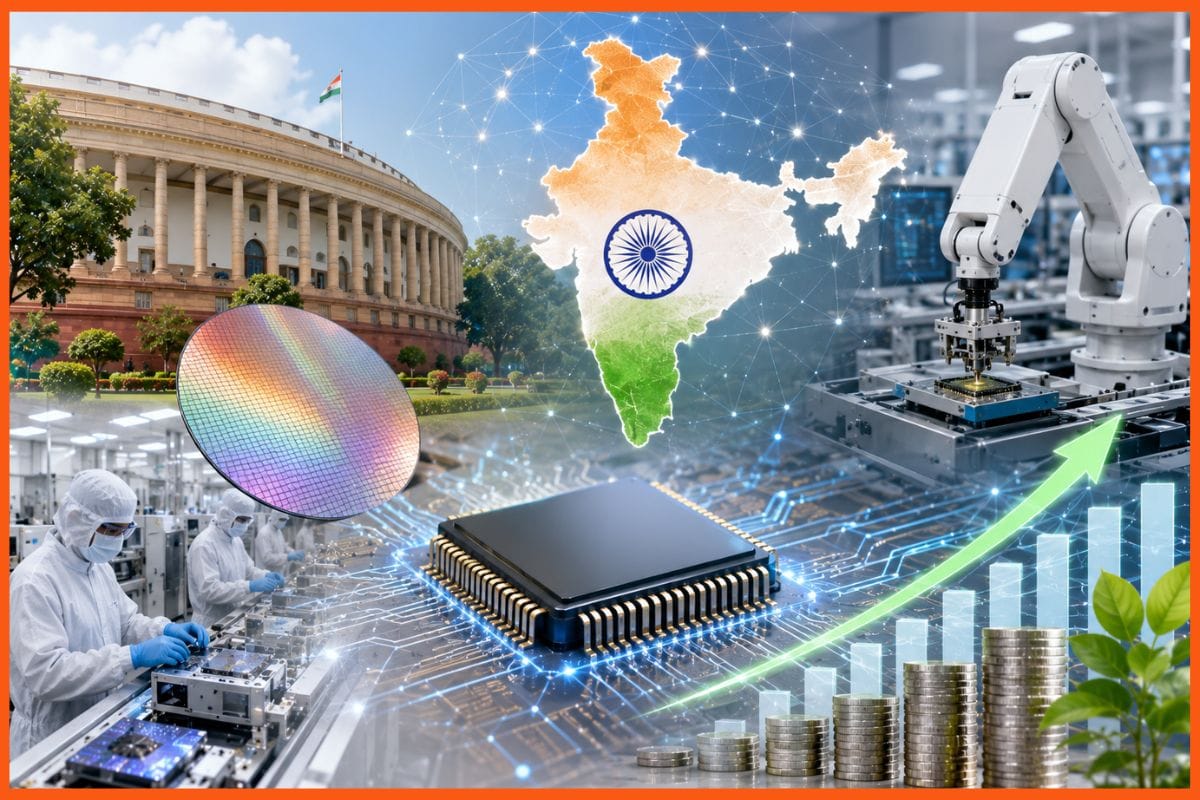
The Expenditure Finance Committee (EFC) of the Ministry of Finance has sanctioned a budget of INR1.25 lakh crore for the India Semiconductor Mission 2.0. This will allow the country to move on to the next stage of its chip manufacturing push. The plan has already been approved by the EFC and is now awaiting final approval from the Union Cabinet.
Compared to the INR 76,000 crore allotted under ISM 1.0, the planned expenditure is substantially higher. Ten semiconductor facilities involved in chip production, assembly, and design were authorised by the government under this programme.
How Semiconductor Mission 2.0 will Support Chipmaking Ecosystem?
It is believed that the broader ecology will benefit from the extended program. In order to fortify India's semiconductor supply chain, this will encompass industrial gases, speciality chemicals, capital equipment, MSMEs, and ancillary suppliers. With the improved scheme, the Indian government hopes to satisfy as much as 75% of its own need for semiconductors by 2030. This will help the country achieve its goal of becoming a major player in the electronics manufacturing industry while also decreasing its reliance on imports.
The government was reportedly planning to spend between INR 1 lakh crore and INR 1.2 lakh crore on an enlarged semiconductor incentive scheme, according to previous media reports. Discussions between government agencies were continuing at the time, and the Ministry of Communications and Technology was waiting for approval from the Ministry of Finance. According to Ashwini Vaishnaw, the Union Minister for Electronics and IT, the India Semiconductor Mission 2.0 will put an emphasis on developing expertise, designing and producing chips domestically, and attracting ecosystem partners.
Sprawling Network of Semiconductor Chip Manufacturing India
As far as design is concerned, the Design-Linked Incentive Scheme is financing twenty-four initiatives. Further, 23 design 'tapeouts' have been accomplished at various foundries, including at advanced nodes. Further, 105 businesses have been aided with advanced chip design tools, demonstrating India's increasing proficiency in semiconductor design. According to a senior official from India's IT Ministry, the country's progress in semiconductor manufacturing has been a "long-time dream" for the country. So far, 12 projects have received approval, and two of them have begun commercial production.
Later this week, another one, CG Semi, will probably be introduced. According to the official from the IT Ministry, the inauguration of CG Semi is set for July 4. Then, before the year comes to a close, there will likely be one or two more. At long last, the country's semiconductor industry can flourish, fulfilling a long-held goal of the ministry. More projects are expected to be announced, according to the ministry.