Supreme Court Orders Centre to Decide Timeline for Food Warning Labels in 10 Days
Supreme Court seeks Centre’s reply within 10 days on deadline for food warning labels on packaged products The proposed labels would highlight items rich in added sugar, salt and saturated fat as concerns about food safety and public health mount.

The Indian Supreme Court has given the federal government 10 days to devise a plan to include food safety warning labels on all packaged goods. The highest court in the land has increased the pressure on the government of New Delhi to carry out the health initiative.
Regulatory officials have raided restaurants around the country in an effort to tighten food safety standards, and the Supreme Court has added pressure on New Delhi to do just that in response to petitions from health non-profits.
Why Supreme Court Pushing for Labelling?
Red hexagonal warning labels would appear on products that exceeded limits in added sugar, salt, or saturated fat, as per the food regulator's suggestion last month for a two-stage labelling programme. It stated that stricter regulations would be implemented in a subsequent phase. In an order issued late on September 10th, the Supreme Court expressed concern that, without clear direction, the execution of Phase II could be delayed or shelved altogether.
According to the court, there must be more than justification for this time lag in order to determine customer acceptability or to allow the industry sufficient time for reformulation. According to a government source, the Food Safety and Standards Authority of India will review the order, but they are prepared to execute both parts simultaneously. Reuters stated last month that the government of India chose a less stringent labelling system, which has stoked the national debate over food safety.
The move follows lobbying efforts by Coca-Cola and other companies, including Nestle and PepsiCo, who claimed that warning labels were useless. On the other hand, many businesses in the European market have willingly adopted such policies. The food and drink sector in India is against the warning labels since they are useless and cause confusion.
India’s Packaged Food Market & its Challenges
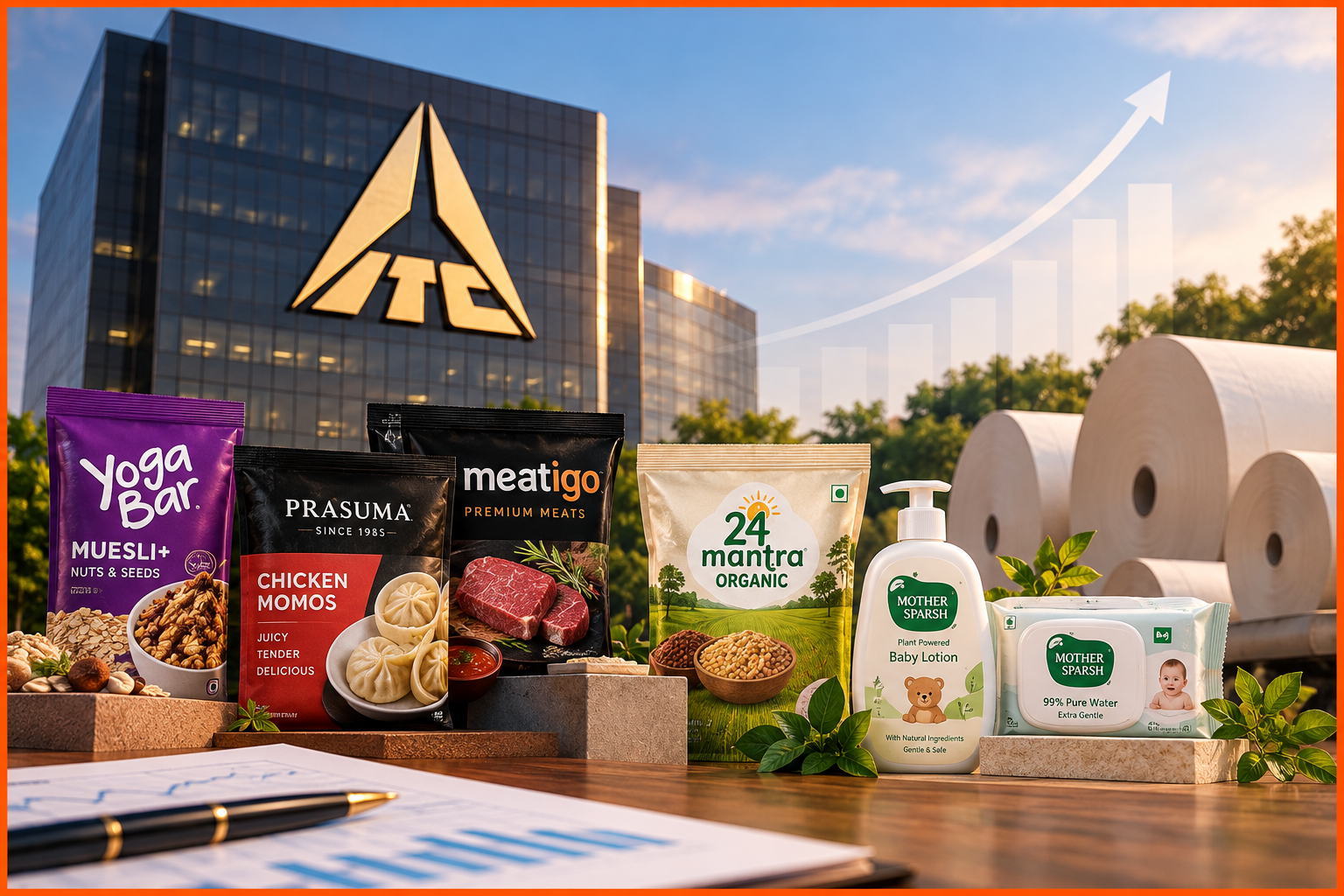
From $129.18 billion in 2025, the packaged food industry in India increased to $137.25 billion in 2026. Additionally, IMARC Group, a research organisation, projects that it will reach $238.83 billion by 2034. An estimated 80% of packaged foods sold in India could be marked as having a high sugar, salt, or fat content under the new labelling regulations, according to the All India Food Processors' Association.
Health advocates and social media influencers in India have recently stepped up their pressure for tougher labelling. Large Western food packaging companies have a century-long history in India. In 1912, Nestle began selling sugary condensed milk to a very impoverished local populace in a British colony. The "dalda" formulation of hydrogenated vegetable oil was introduced to the Indian market by Unilever in 1937. It was a fast mainstay in lower-class eateries, sweet stores, and kitchens due to its inexpensive price compared to regular ghee. Quickly, multinational firms started making things locally in an effort to keep prices low.