ITC's FMCG Acquisition Spree: Every Deal Since 2021
ITC has made eight FMCG acquisitions since 2021, not seven since 2023 as first reported here, including a baby-care stake that predates every other deal on the list. Corrected and expanded after a Tracxn cross-check.
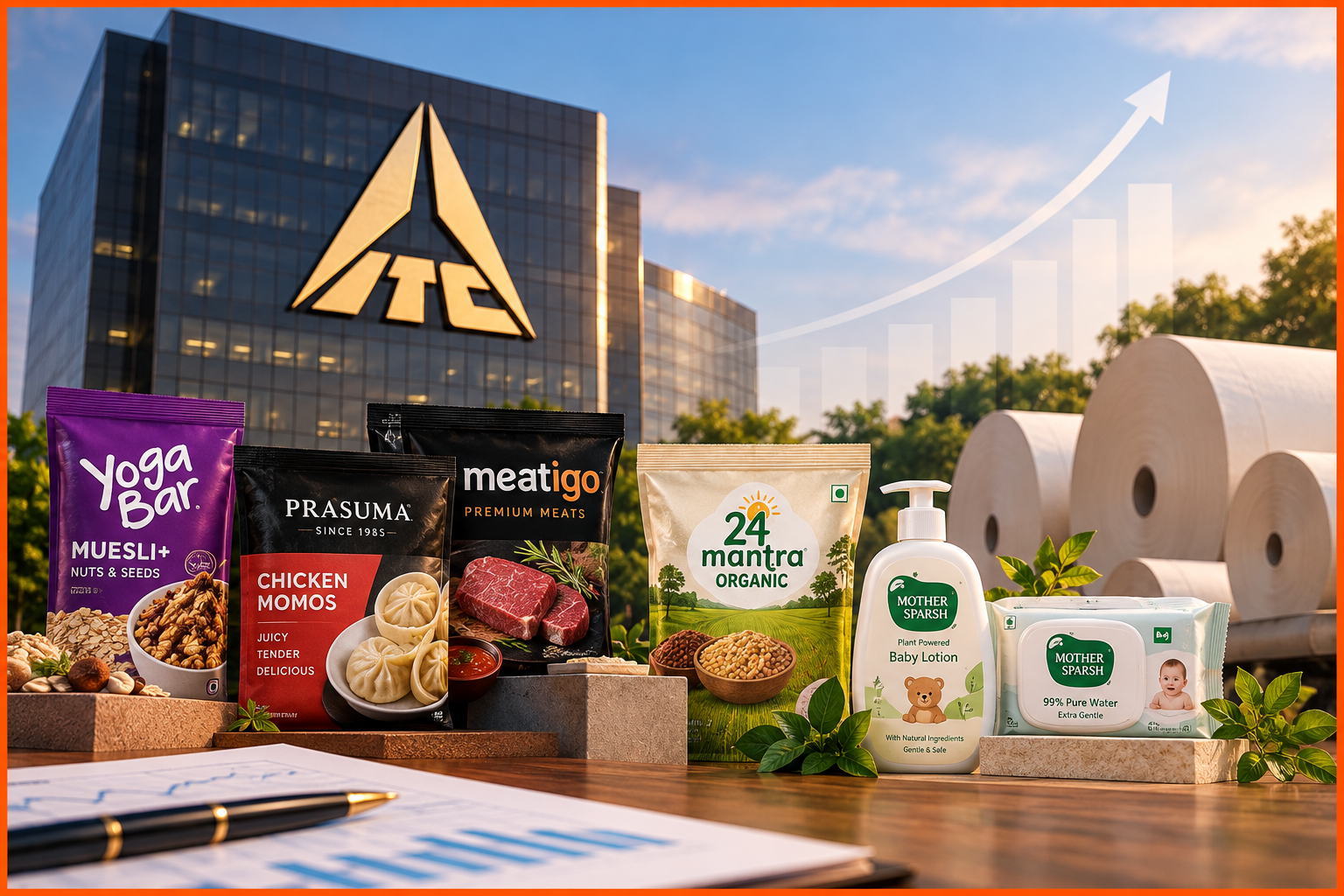
In August 2026, ITC completed the biggest acquisition in its history, a ₹3,498 crore purchase of Century Pulp and Paper, a deal it had actually signed 17 months earlier and spent that entire time clearing regulatory approval. It's also the one deal on this list that has nothing to do with what everyone actually associates with ITC's shopping spree: FMCG.
The other seven deals do. Together they show a company buying its way into categories it can't build fast enough on its own, one minority stake at a time, in some cases for years before it ever takes control.
Every ITC acquisition since 2021
| Date | Target | Category | Stake | Deal size |
|---|---|---|---|---|
| 2021 | Mother Sparsh (initial) | Baby & personal care | to 26.5% | Undisclosed |
| May 2023 | Sproutlife Foods (Yoga Bar) | Health snacking | 39.4% | ₹175 crore |
| March 2024 | Sproutlife Foods (follow-on) | Health snacking | to 44.7% | ₹50 crore |
| February 2025 | Ample Foods (Prasuma & Meatigo) | Frozen, chilled & meat | 43.8% (of planned 100% by 2028) | ₹131 crore |
| April 2025 | Mother Sparsh (follow-on) | Baby & personal care | to 49.3% | ₹81 crore |
| June 2025 | Sresta Natural Bioproducts (24 Mantra Organic) | Organic staples | 100% | ₹472.5 crore |
| April 2026 | Sproutlife Foods (control) | Health snacking | to 47.5% | Follow-on |
| August 2026 | Century Pulp and Paper (agreed March 2025) | Paperboards & paper | 100% | ₹3,498 crore |
Every FMCG deal on that list follows the same shape: ITC buys a stake, not full control, then comes back later to increase it once the brand proves itself. Yoga Bar took three separate transactions across three years to go from a 39% stake to actual control. Prasuma and Meatigo are on a slower version of the same schedule, structured to reach full ownership by 2028. Mother Sparsh is the slowest of all: ITC has held a stake since 2021, still hadn't crossed 50% as of this year, and has now committed to full acquisition only "in the next 2-3 years." Only 24 Mantra Organic was bought outright from day one.
Why these four categories
Each deal fills a specific gap in ITC's food and personal-care shelf, not a random adjacency:
- Yoga Bar gave ITC a real position in health-focused snacking, a category it had no credible brand in before.
- Prasuma and Meatigo, both owned by the same parent entity, build what the company calls a "full stack" frozen, chilled, ready-to-cook, and raw-meat business, layered on top of ITC's 2020 purchase of Sunrise Foods, a spices business it used the same playbook on five years earlier.
- 24 Mantra Organic buys ITC a 20-year-old organic staples brand instead of building consumer trust in the category from scratch.
- Mother Sparsh is ITC's oldest live bet on this list and its slowest: baby and personal care, a category with nothing else in ITC's portfolio, still running on a minority stake five years after the first check.
Century Pulp and Paper is the outlier, a scale play in ITC's existing paperboards business rather than a new-category bet, and it alone is nearly five times bigger than the other seven deals combined.
Whether the bet is paying off
ITC's FMCG (non-cigarette) revenue reached ₹24,210 crore in FY26, up from ₹14,730 crore in FY21, a 10.5% five-year CAGR. The Foods business alone crossed ₹20,000 crore for the first time. The company's stated target is ₹1 lakh crore in FMCG revenue by 2030, which means roughly quadrupling FMCG revenue in four years from where it stands today, a pace the last five years of organic growth alone hasn't come close to matching.
That's the real job these acquisitions are doing, and it's the same job every major FMCG player in India is chasing right now: category share that organic growth alone can't buy fast enough. ITC's own numbers say the two most mature bolt-ons are working: 24 Mantra Organic and Yoga Bar together grew around 60% year-on-year. Q4 FY26 FMCG revenue was up 25% YoY to ₹17,370 crore, with segment profit up 10% to ₹6,009 crore. Whether four more years of ₹100-500 crore bolt-ons can close a gap that large on their own, without a deal of Century Pulp's size landing inside the FMCG business itself, is the part ITC hasn't demonstrated yet.
What to watch
The minority-stake-first pattern is worth tracking closer than any single deal, and Mother Sparsh is the clearest warning sign in it. It reads like deliberate risk management, let a founder-led brand keep operating before ITC absorbs it, but five years and three separate stake increases without reaching majority control is a long time to call that patience rather than drift. I think that caution makes sense for a brand ITC picked up at 26.5%. It makes a lot less sense if ITC is serious about a four-year sprint to ₹1 lakh crore, where slow-walking control of your oldest bets is exactly the wrong kind of patient. Mother Sparsh's next 2-3 years, the window ITC itself has now put on full acquisition, is the real test of whether this pattern is strategy or just the pace ITC has found comfortable so far.
If you have information related to this story, contact us through StartupTalky's tips line. Anonymity is the default.