Flipkart Minutes Scales to 1,000 Stores to Challenge Quick Commerce Rivals
As competition heats up in India’s rapid commerce segment, Flipkart Minutes has widened its network of fulfilment hubs to 1,000 across 130 cities, and expects to expand to 1,500 outlets spanning more than 180 locations in the next months.
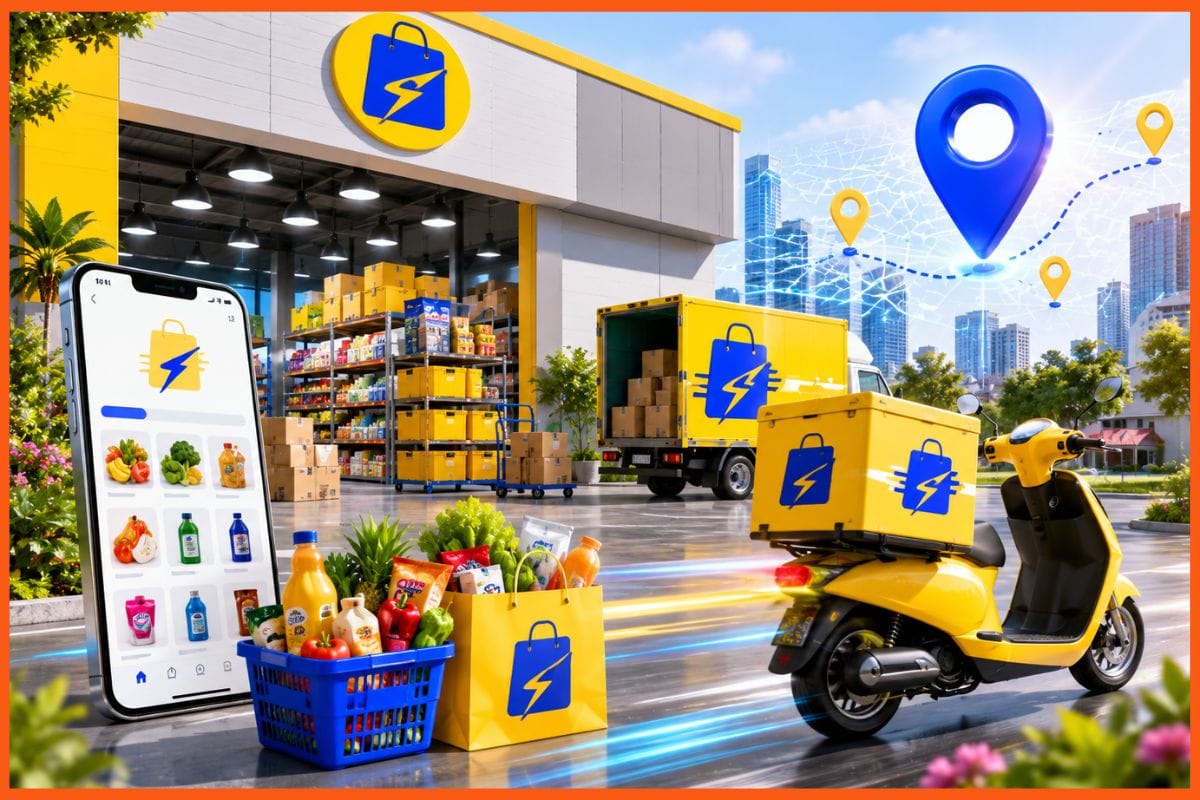
In under two years, Flipkart's Minutes division has grown to 1,000 fulfilment centres in 130 cities. This further demonstrates how cutthroat the rapid delivery industry is in India. As Blinkit, Zepto, and Instamart are pouring money into their stores, product selection, and customer acquisition, Amazon is rapidly growing into this space as well.
The company is around five times larger than it was at the same time last year, according to Kunal Gupta, senior vice president (SVP) and head of Flipkart Minutes. Further, he promised that going forward, the expansion will be vigorous. Approximately 1,500 outlets in more than 180 locations are on the company's radar for the next months.
Flipkart, which had approximately 750 Minutes stores in March of this year, has seen an acceleration in its expansion with this move. The company, which is owned by Walmart, is currently opening three to four stores per day, or approximately 100 outlets every month, according to top officials.
Rapid Commerce Becoming a Fierce Battleground
Flipkart's move, which followed the postponement of its IPO plan, coincides with Amazon Now's expansion, its main competitor. With the addition of two dark locations daily, Amazon Now boasts approximately 500 stores. With over a thousand micro-fulfilment centres spread out over the country, the company aims to service 100 cities. In terms of store count, it lags behind Swiggy Instamart and Zepto, which is set to go public.
At the end of FY26, Zepto had 1,139 dark stores, Instamart 1,143, and Blinkit 2,243. In contrast to its competitors, Flipkart is also expanding into less populous areas. According to executives, out of the 130 cities where Minutes is live, around 90 are in smaller areas. The firm is breaking into new markets in tier-2 and tier-3 cities, said Hemant Badri, senior vice president and head of supply chain for Minutes and ReCommerce.
Simultaneously, it aspires to disrupt value groceries by being competitive where others are not. Customers in smaller cities, according to Gupta, are behaving differently from those in metros, where impulsive and convenience-driven buying predominates. The average order value is higher in tier-2 and tier-3 cities than in metros, according to Badri. The practice of constructing larger baskets persists.
From Using Customer Base to Spacious Dark Stores: Flipkart Minutes
Flipkart is also counting on its current clientele for support. According to Badri, almost 80% of Flipkart's 230-250 million active users shop on the portal when Minutes is available in a city or operable area. He further mentioned that these consumers also contribute to larger transaction volumes on the primary Flipkart platform. Depending on the city, Minutes stores can range in size from 3,000 to 5,000 square feet. Stores with more space may accommodate up to 20,000 SKUs, which includes food, toiletries, phones, and electronics.
As part of its effort to expand Minutes beyond grocery stores, Flipkart is focusing on expanding the assortment. Badri suggested using Minutes as an extra go-to-market channel for festive sales like Big Billion Days. While he did say that Minutes is essentially a daily needs business, he did say that during this time they will provide mobiles and electronics in serviceable zones.