Food Companies Oppose Red Warning Labels, Urge Supreme Court to Reconsider
Food businesses have petitioned India’s Supreme Court to review proposed red warning labels on packaged meals, saying customers could mistake them for the mandated red mark for non-vegetarian products. The AIFPA has also challenged recommended nutrient levels for sugar, fat and salt.
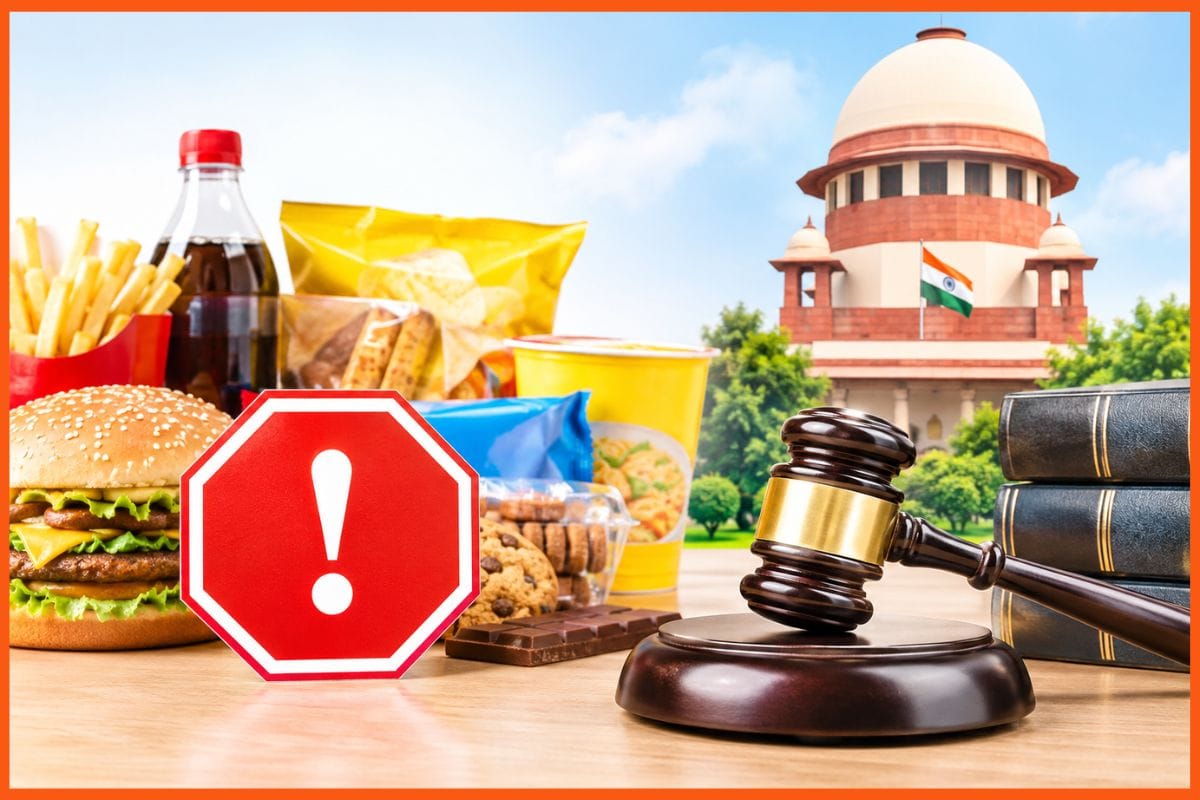
In response to the planned red warning labels on packaged goods, food industries have asked the Supreme Court to reevaluate the matter. Companies voiced concerns that consumers would mistake the shade for India's required non-vegetarian food label. In a court document dated September 24, the complaint was expressed by the All India Food Processors Association, which represents dozens of food corporations from India as well as abroad.
In their filing, the industry group claimed that most Indian consumers automatically associate the colour red with the non-vegetarian identification symbol that is required by law. According to the association, it has already voiced concerns to the food authority about the potential confusion that could result from adding another large red warning symbol.
Why Food Regulators Pushing for Labelling?
Products with high levels of salt, sugar, or fat should be marked with a red hexagon warning, according to India's food authority. On the heels of statewide raids against eateries in response to concerns over low hygiene and standards, India has stepped up its food safety procedures, including the plan. The public's outcry over the absence of such safeguards has also prompted the warning labels.
Claiming that scientific determination of thresholds is necessary, the industry association informed the Supreme Court that it was not opposed to warning labels on the front of packaging. It was against the current proposal to apply the thresholds without discrimination. When the percentage of solid products with added sugar and fat goes over 3% and 4.2%, respectively, in India, a red warning is being considered. Compared to many international marketplaces, these standards are more stringent, according to the industry. The industry also restated its belief that, instead of 100 grams, warnings should be based on consumption of a single serving.
India Food Regulations Going Through Transformation
There is a larger movement for more stringent food regulation in India, which includes the proposed warning labels. A prohibition on selling junk food to youngsters within 50 metres (164 feet) of schools or on school grounds is also being considered by the government. The steps will bring India one step closer to the more stringent methods of food regulation that have been implemented in Mexico and Chile. The planned warning labels have been the target of a multi-year campaign by the food business, which is worth over $100 billion.
Thousands of tiny Indian businesses offering traditional sweets and savouries compete with multinational consumer goods corporations like PepsiCo, Mondelez, and Nestle in India's booming market. On October 5th, the government's plan will be reviewed by the Supreme Court. The most recent submission from the business world follows a previous challenge to certain aspects of the proposed structure. Some in the food industry have voiced concerns about the nutrient thresholds and the process used to decide when labels should be included.