Hormuz Crisis: India Asks Local Refineries to Boost Cooking Gas Production
India has told public and private refineries to boost output of LPG as problems related to the Strait of Hormuz issue, thru which over 90% of the country's LPG imports pass, have hit supplies. Domestic refiners have already increased output from 36,000 tonnes a day to 54,000 tonnes a day.
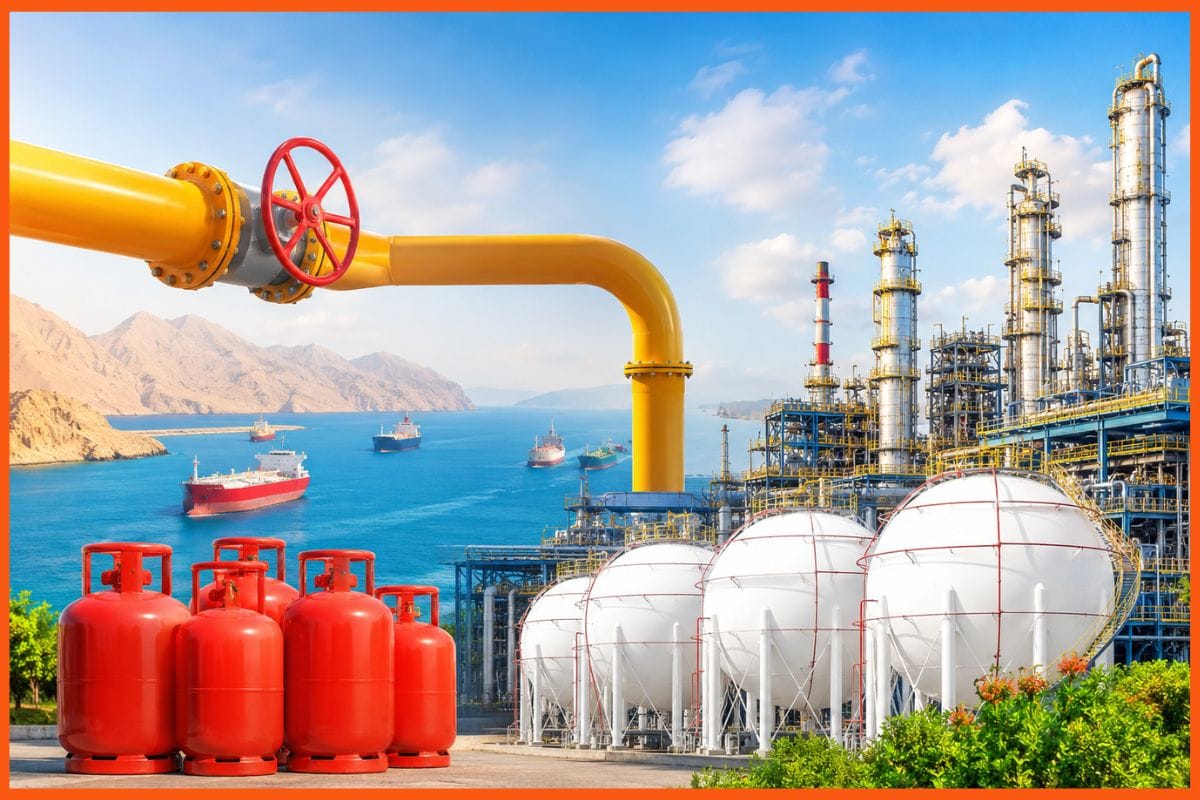
Preparations for a dramatic uptick in cooking gas production have been ordered by the Indian government to both public and private refineries. Thus, in an effort to shore up domestic supplies amid the ongoing uncertainty surrounding the Strait of Hormuz caused by the Iran war. Roughly 90% of the nation's liquefied petroleum gas imports pass over the Hormuz Strait.
The government issued a notice on August 13 ordering refineries and crude oil explorers to take all economically and technically viable steps to increase LPG production beyond the minimum producible levels. This encompasses the investigation of alternative applications for feedstocks, such as the conversion of naphtha into LPG.
Refineries Already Churning Beyond their Capacity
Since the US-Iran war disrupted traditional supply routes, India has been frantically trying to secure enough cooking fuel, as it depends on imports for almost two-thirds of its LPG usage. Because of the closure of the Strait of Hormuz, buyers have started to source from newer countries, such as Algeria, as well as the United States. In order to keep up with demand, domestic refiners have increased their production of LPG from 36,000 to 54,000 tonnes per day, up from 36,000 tonnes per day before the war.
According to the notice, the government is now aiming for the industry to reach a daily production capacity of up to 63,810 tonnes. Reliance Industries Ltd.'s domestic-market-focused unit has been given the greatest objective at 18,000 tonnes per day, and it has also set upper-limit production targets for individual refiners. In addition to the national gas pipeline utility Gail India Ltd., state-run explorers Oil and Natural Gas Corp. and Oil India Ltd. have also been requested to contribute approximately 10% of the statewide objective.
Govt Reviving its LPG Policies Since Beginning of US-Iran War
In response to the crisis in West Asia, the administration has implemented a number of emergency measures. Domestic LPG supply has been given priority, while supplies to some commercial and industrial users are being limited due to disruptions in imports. To avoid a repeat of the rationing and shortages that occurred during the last crisis, the new production framework is designed to prevent disruptions to foreign LPG supplies in the future.
The government has applied a standing framework to the country's refineries and upstream producers in order to maintain and, if needed, boost LPG output, learning from the lessons learned during the crisis. A daily output of 31,470 metric tonnes is required from 18 refineries that are owned and run by public sector oil corporations. The decree specifies that the Vadinar refinery, which is sponsored by Russia's Rosneft, should produce 4,480 tonnes per day. The refinery can process 20 million tonnes per year. A daily target of 6,460 tonnes has been set for upstream gas producers and processors such as GAIL and ONGC, who convert natural gas into LPG.