India Cuts Customs Duty on Electronics Parts to Accelerate Local Manufacturing
The Centre has extended customs tax exemptions on critical electronics components and lithium-ion battery manufacturing equipment till March 31, 2029, to boost India’s manufacturing ecosystem. This will lower the input prices for display modules, wireless charging systems etc.
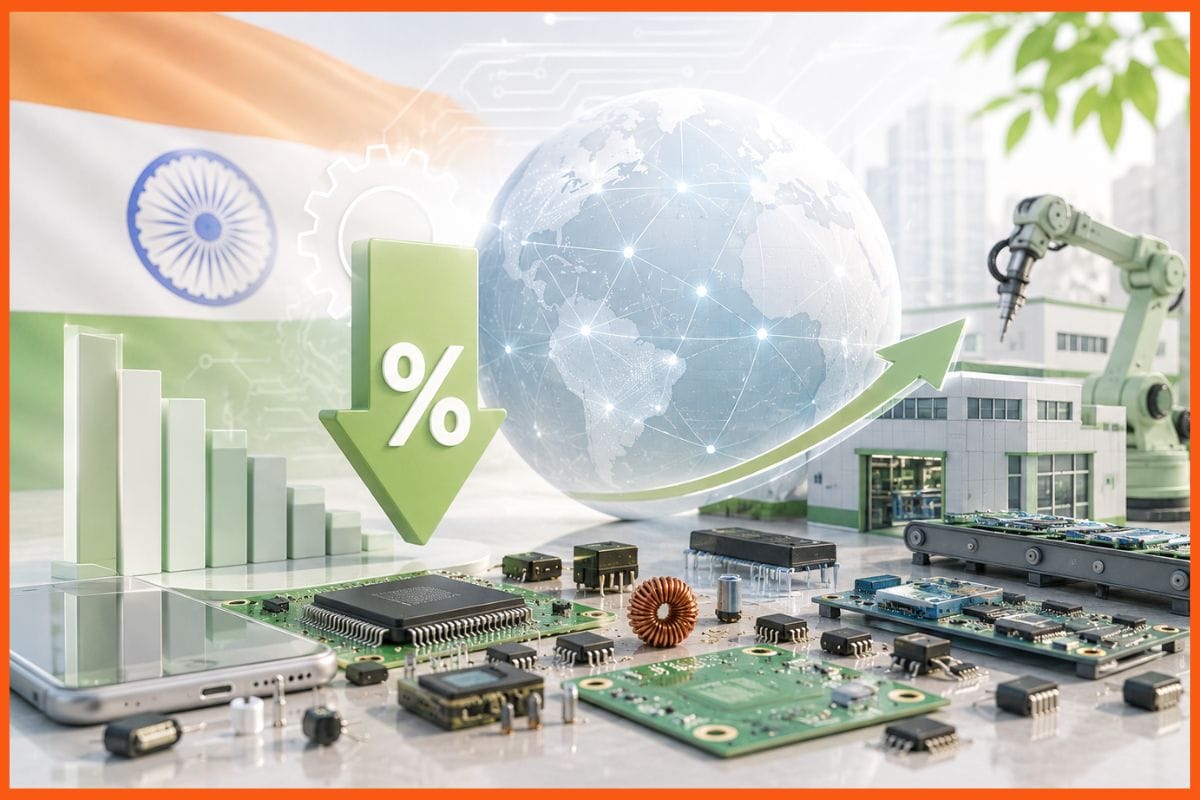
By extending customs duty exemptions on key critical components, the Centre has handed India's electronics manufacturing ambitions another boost. Display modules, wireless charging systems for smartphones, and lithium-ion batteries all require these components. Input costs for manufacturers are anticipated to be lowered by the tariff relief, which will be in effect until March 31, 2029. In addition, new investments in electronics manufacturing will be spurred nationwide.
The exceptions are immediately applicable. Manufacturers of display assemblies utilised in industrial, medical, and automotive equipment are among the most prominent beneficiaries. Important imported components such display cells, backlight units, FPCAs, frames, and anisotropic conductive film (ACF) are no longer subject to customs duties, according to the government.
Govt. Enhancing India’s Manufacturing Sector
Wireless charging modules for cellphones also benefit from government-extended customs duty discounts. A few examples of these components are neodymium iron boron (NdFeB) magnets, nanocrystalline assemblies, E-shields, PET liners, PC shims, and coils, all of which are used in conjunction with inductor coils. To further guarantee consistency in application, the CBIC has additionally published technical definitions for certain components.
The Centre has also greatly expanded the types of machinery that can qualify for the concessional customs tariff that is applicable to the production of lithium-ion batteries. From mixing and coating materials to welding, testing, inspection, and packing, the updated notification now encompasses 85 kinds of equipment, covering nearly every step of the battery production process. Equipment for treating wastewater, collecting dust, and recovering heat are all part of the supporting systems. Nevertheless, display assemblies intended for smartwatches, mobile phones, smart meters, interactive flat-panel displays, and televisions are not immune from this exemption.
Stakeholders in the medical device sector have sought duty concessions like this in the past. While the supply chain for medical electronics components in India is still in its early stages of development, stakeholders believe that this type of duty exemption will help local producers.
Why Govt. has Taken this Step?
The most recent steps are to lower the cost of producing high-tech devices in India in an effort to lessen reliance on imported finished goods. According to experts in the field, domestic supply chains might be fortified by reduced import prices for specialist gear and components. This would be especially true in industries associated with electric mobility, consumer electronics, and advanced manufacturing. Policymakers have been attempting to lure new investments into high-tech manufacturing while simultaneously deepening local value addition.
This approach is in line with the government's larger manufacturing strategy under its electronics and semiconductor push. The basic customs duty waiver was implemented through three consecutive notifications issued by the Finance Ministry. This policy moves in tandem with India's Production Linked Incentive plan, which encourages the local manufacture of electrical gadgets and components.