India Opens Government Power Projects to Four Chinese-Linked Equipment Manufacturers
India has given a two-year exemption to four Chinese-linked power equipment manufacturers – TBEA Energy, Nanjing Electric India, New Northeast Electric India and Taikai Electric (India) – to bid for major government power transmission projects.
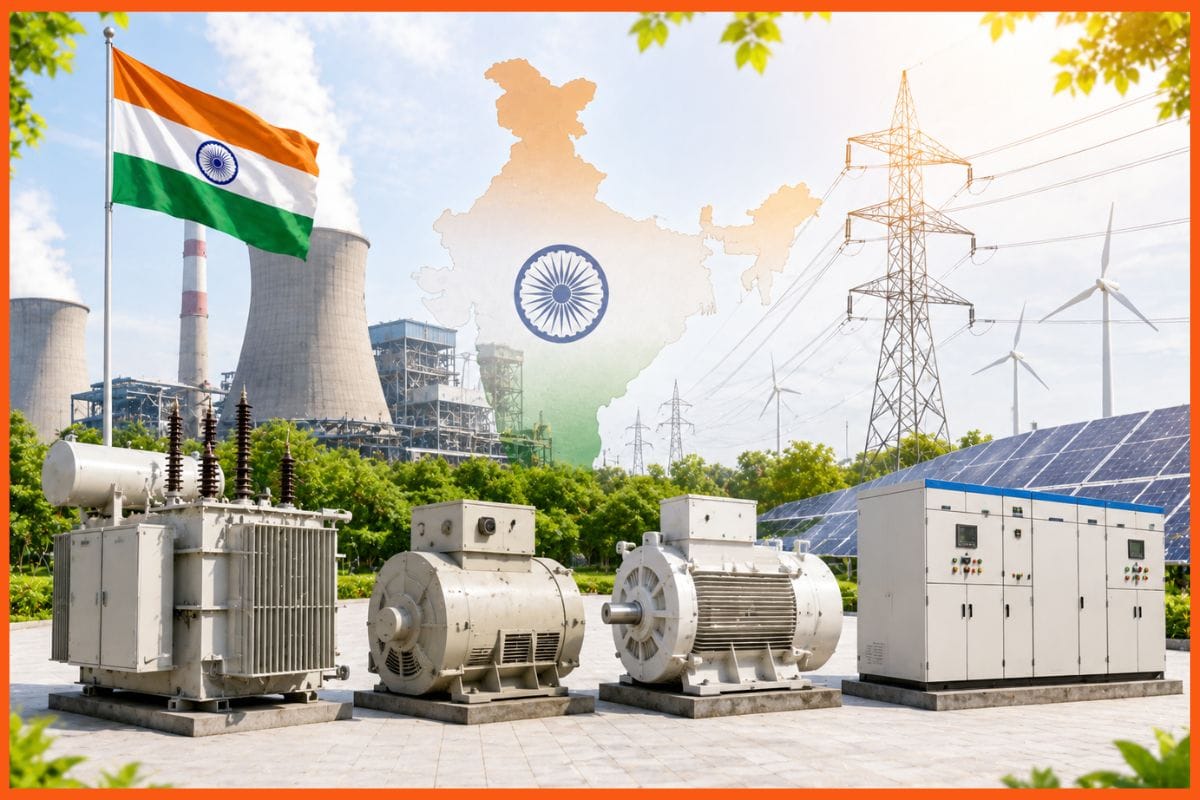
Four power equipment manufacturers with Chinese ties and Indian production facilities are now eligible to bid on vital power transmission projects in India. Consequently, following the 2020 border tensions between India and China, there will be a gradual easing of procurement regulations. To TBEA Energy, Nanjing Electric India, New Northeast Electric India, and Taikai Electric (India), the Ministry of Finance has given a two-year exemption.
This opened the door for them to compete for some government contracts. Only these businesses are eligible for the 24 June permission, which came after a proposal from the Ministry of Power. The government has made it clear that other businesses should not take this ruling as a model.
India Easing Ties with China
In response to soaring power demand and an increasing proportion of renewable energy sources, India is increasing spending on its electrical transmission network. Many in the industry have pointed out that specialised machinery is needed for the expansion and that there are some categories where local production is limited. India strengthened procurement standards for enterprises from nations sharing a land border with it following the 2020 Galwan Valley dispute.
Before competing in public tenders, Chinese businesses wishing to secure contracts from the government had to register and get political and security clearances. A sector-specific policy shift, rather than a broad reduction of limitations, is indicated by the current exception. Companies with ties to foreign countries are nonetheless subject to government scrutiny when it comes to investments in key infrastructure projects. On the other hand, vital projects could be postponed if limited access is allowed in areas where supplies are limited.
Domestic Players not Happy with the Move
Concerns about greater competition in government bids caused the stock of numerous listed power equipment manufacturers to decline, adding to the unfavourable market reaction to the development. The decision was seen by investors as having the ability to influence the order flows of domestic manufacturers in the gearbox equipment area. India plans to add a lot to its transmission network in the next years.
Thus, this exemption shows how the government is trying to strike a balance between supporting local industry and making sure the power infrastructure programme expands on schedule. Most importantly, the order has been released just as India is planning to increase its transmission networks and put greater emphasis on renewable energy sources to meet its growing electrical demands.
Central Govt Removes Chinese Apps
Following allegations of their abuse to deactivate e-rickshaws in Delhi, the centre has mandated the withdrawal of two mobile applications, BAT BMS and Epoch Li-ion, from the Android Play Store and the Apple App Store. Bluetooth-enabled battery management programmes like BAT BMS and Epoch Li-ion make it easy to remotely deactivate lithium-ion batteries.
Some people are using these apps as a "prank" to disable e-rickshaws that are in motion. Indian government agency MEITY has now mandated the removal of the two applications. In an interview with a news outlet, MeitY Secretary S Krishnan stated that the government will address this matter with app stores to prevent possibly dangerous apps from being released to the public.