
Nova Spectral AI Raises ₹21.15 Cr for India-Made SWIR Chip
The seed round backs an Indian quantum dot infrared chip with no public prototype data yet. onsemi has already bought a US rival, and another Indian startup raised on the same import-substitution case four days earlier.
Nova Spectral AI has raised ₹21.15 crore, about $2.25 million, to build a sensor chip that the company says is 18 months from a field-ready prototype.
The Bengaluru company is making shortwave infrared (SWIR) image sensors, the kind that let a drone see through smoke, haze, dust and light fog. Shastra VC led the seed round, with Equirus InnovateX Fund and unnamed angel investors taking part. The money builds the team at IISc Bengaluru, where the company says it has an in-principle go-ahead to incubate.
What the chip is meant to replace
SWIR cameras today mostly use indium gallium arsenide, known as InGaAs. The company says those sensors cost thousands of dollars and are largely imported, which keeps them in high-end defence, space and industrial equipment and has kept InGaAs lidar out of affordable cars. Nova Spectral wants to change the material: lead-free indium arsenide quantum dots deposited on standard silicon CMOS, a route it says could cut sensor cost by up to 100 times. That figure is a target, not a result. The company has not published prototype data, named a customer or disclosed a valuation, and the pitch arrives while the government fast-tracks the next round of the India Semiconductor Mission.
"India's armed forces should not have to rely on an imported sensor to see at night or through smoke," said co-founder and chief executive Anish Priyadarshi. The roadmap also covers making the quantum dot materials and the readout chip in India.
Quantum dots are not new, so sensitivity is the number to test
Quantum dot SWIR is already a commercial category. SWIR Vision Systems, a US company spun out of RTI in 2018, builds sensors on lead sulfide quantum dots, and onsemi acquired it in July 2024 on undisclosed terms, saying the combination would bring SWIR sensors at lower cost and higher volume. Exosens bought the imaging unit of Emberion, one of the early sellers of commercial quantum dot SWIR cameras.
What separates Nova Spectral is the material. Lead sulfide dots carry lead, indium arsenide dots do not, and Nanoco, where Priyadarshi worked before founding this company, describes indium arsenide as the more mature of the lead-free systems. Trade coverage of the onsemi deal also noted the trade-off: InGaAs still offers significantly higher quantum efficiency, which means better performance in low light.
I think the 100 times figure is the wrong one to anchor on. A cheap sensor only matters if it sees well enough in the dark, so the number to ask for is sensitivity against InGaAs at the same temperature and exposure. No one outside the company has seen it yet.
Four days earlier, another Indian startup raised on the same argument
SpectraGaze Systems, based in Ahmedabad, raised about ₹3.7 crore in a seed round led by GVFL, announced on 23 October. It was founded in 2023 by former ISRO scientist Arup Banerjee and makes infrared detectors and electro-optical payloads for space and defence. Reports say it has delivered an infrared detector and test system to ISRO and won an iDEX challenge from the defence ministry, and its founder has said the aim is to reduce India's reliance on imported detectors.
Nova Spectral's round is about 5.7 times larger, but SpectraGaze already has delivered hardware and a named customer. Nova Spectral has a design and a prototype target.
Two deeptech funds behind the round
Shastra VC, formerly Veda VC, launched a $100 million third fund this year to back early-stage deeptech, AI, space and defence, and climate companies, with cheques of $500,000 to $3 million. Its managing partners Vasant Rao and Ashis Nayak previously co-founded the auto-tech platform Autoninja, which ICICI Lombard acquired. "High-end infrared sensors remain among the most import-dependent parts of India's defence electronics," Nayak said.
The Equirus InnovateX Fund closed its debut ₹166 crore fund to back seed and pre-Series A companies in deeptech, SaaS and fintech, and has also led the seed round for Consuma AI. "A chip that is sovereign for India and priced for the world is a rare combination," said Krishna Jha, fund manager at Equirus InnovateX Fund. Sadhika Agarwal of the fund has also spoken to StartupTalky about its bets on AI infrastructure and cleantech. How the ₹21.15 crore splits between the two funds has not been disclosed.
The founders, as the company describes them
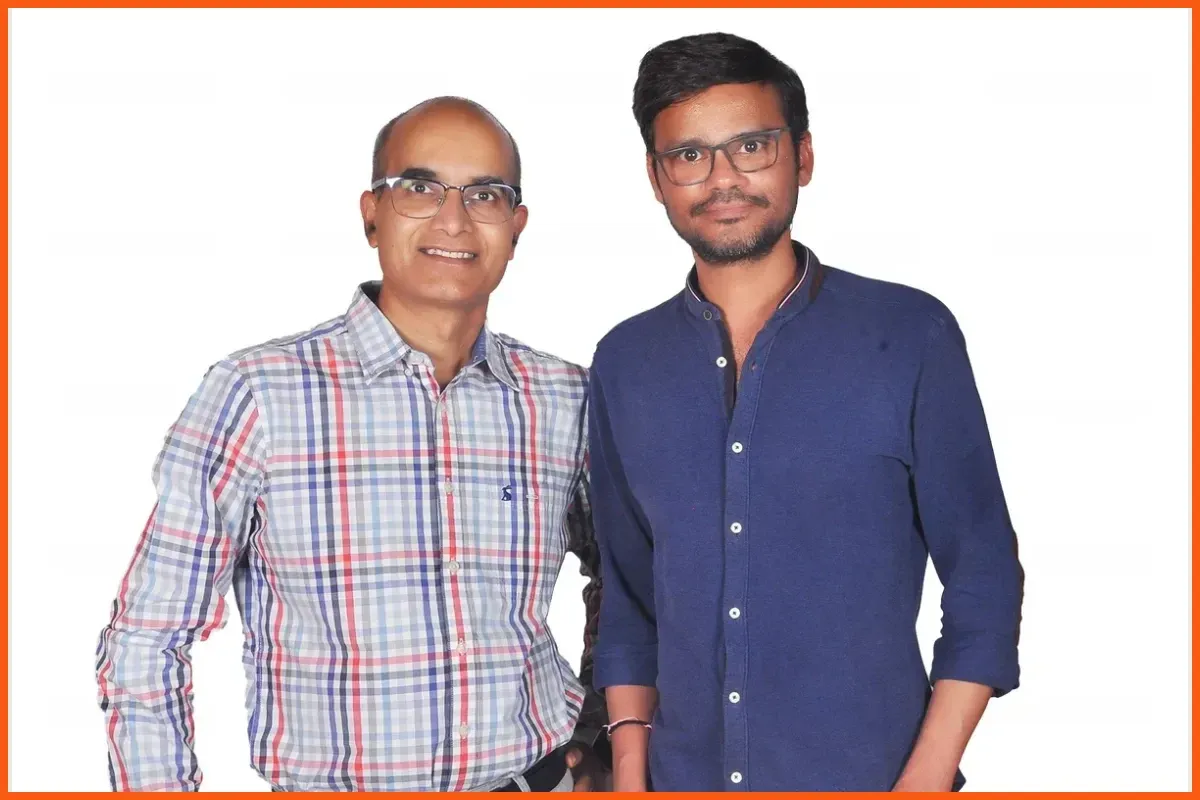
Priyadarshi studied at IIT Kanpur, holds a PhD from NTU Singapore and worked at Nanoco Technologies and GlobalFoundries before this venture, the company says. It adds that he built a complete quantum dot fabrication facility from the ground up and made working indium arsenide sensors for SWIR imaging. Co-founder Sanjeev Kumar, an IIT Kanpur and IIM Lucknow alumnus, is chief business officer. His plan is for defence to prove the chip at home and for mobile-phone economics to take it everywhere, into phones, wearables, robots and cars.
What the company has and has not shared
The disclosed items are limited to the round and the plan:
- A seed round of ₹21.15 crore led by Shastra VC
- An in-principle go-ahead to incubate at IISc Bengaluru
- A target of a field-ready prototype within 18 months
Prototype performance data, customers, valuation, the stake sold and the names of the angels have not been shared. The first of those is the one that decides whether the cost claim matters.
Frequently asked questions
How much has Nova Spectral AI raised?
Nova Spectral AI has raised ₹21.15 crore, about $2.25 million, in a seed round led by Shastra VC with participation from Equirus InnovateX Fund and angel investors.
What is Nova Spectral AI building?
A shortwave infrared image sensor chip built from lead-free indium arsenide quantum dots on standard silicon CMOS, aimed first at defence surveillance and drones, and later at phones, robots and cars. The company targets sensor costs up to 100 times lower than InGaAs sensors.
When will the chip be ready?
The company says it will deliver a field-ready prototype within 18 months, building its team at IISc Bengaluru, where it has an in-principle go-ahead to incubate.