Storia Foods, English Oven Penalised INR 1 Lakh Each by CCPA for Misleading ‘100%’ Claims
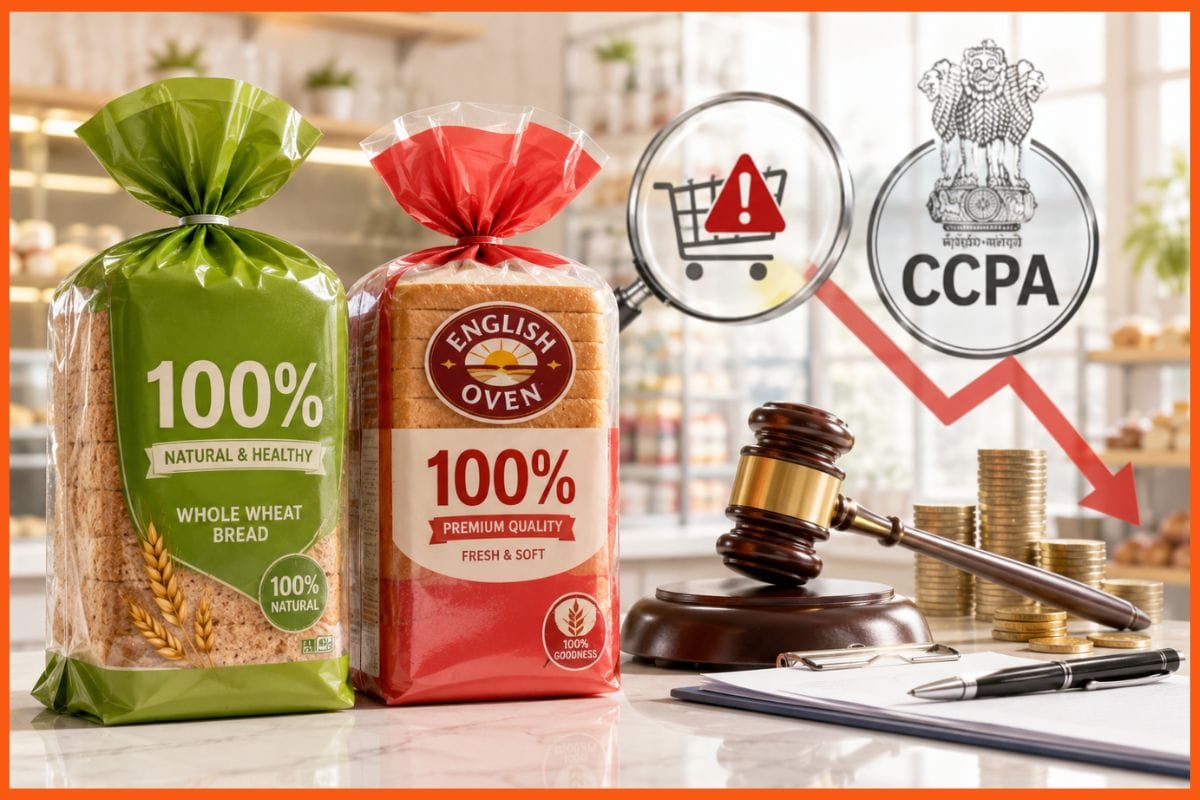
Storia Foods and Beverages Private Limited and Mrs. Bectors Food Specialities Limited, producers of English Oven bread, were fined INR 1 lakh each by the Central Consumer Protection Authority (CCPA). They were found guilty of misleading consumers about the ingredients in their food items by using the word "100%" in an inaccurate way.
Both companies have been ordered by the authority, which was headed by Chief Commissioner Nidhi Khare and Commissioner Anupam Mishra, to remove the claims from their product packaging, websites, and any digital platforms that display them. The 2019 Consumer Protection Act and the 2022 Guidelines for the Prevention of Deceptive Advertisements and Endorsements guided the course of action.
Findings of the CCPA
The investigation revealed conflicting information in the main product's ingredient list. Reconstituted to be "equivalent" to 100% coconut water, the beverage was really produced using water and 9.6% coconut water concentrate. The ingredient panel did not clearly disclose the word "reconstituted" alongside the headline claim; it was only included in fine text.
A concurrent claim of "100% Natural" was deemed entirely unsustainable by the CCPA due to the presence of the Class II preservative INS 202 in the product. English Oven ads that appeared in newspapers, on the company's website, on Instagram, on YouTube, on LinkedIn, and on product packaging were all reviewed by the CCPA. Slogans like "The taste of 100% Wholesome Happiness" and claims like "100% Atta Bread" and "100% Whole Wheat Bread" were featured in the advertising. As of April 23, 2026, the total number of views for videos containing these claims was more than 50 lakh.
The CCPA could not accept the "100%" claim when the corporation acknowledged during the proceedings that the bread items only included 87% whole wheat flour. The usage of the terms "Zero Maida" and "100% Whole Wheat Bread" on the same package was also brought to the attention of the authorities. Therefore, it should be noted that the mixture gave the impression that the product was made solely of whole wheat flour, which was not the case.
That the two representations seemed "redundant in nature" was something that Mrs. Bectors herself admitted to throughout the hearing. According to Mrs. Bectors, the term "100% Atta" was solely meant to indicate that wheat flour was the only grain source utilized and not to suggest anything about the overall composition.
|
Some Interesting Facts of the Story |
|
1.The regulator emphasized that claims relating to
composition, nutrition, and quality must be truthful, verifiable, and
non-misleading. 2.The case highlights increasing scrutiny of food
labelling and marketing practices in India. 3.CCPA warned that it will continue taking strict
action against companies making deceptive claims that influence consumer
choices. |
CCPA Gave Stringent Warning to Firms
The defence was flatly rejected by the CCPA. It ruled that ads should be evaluated with an eye toward what a reasonable consumer would think. Further, it noted that advertisers' attempts to offer post-facto or technical explanations cannot trump the impression they give to consumers. No amount of good faith on the part of the advertisement can protect them from deceptive claims.
The CCPA reaffirmed that all claims relating to composition, quality, nutrition or health advantages must be genuine, verifiable and non-deceptive, and stated it would continue enforcement action wherever consumers are misled about the nature or composition of products. The Consumer Protection Act of 2019 and the Guidelines for the Prevention of Deceptive Advertisements of 2022 were the legal basis for the two decrees.
|
Quick Shots |
|
•CCPA imposed a INR 1 lakh penalty each on Storia
Foods and Mrs. Bectors Food Specialities (English Oven). •The action was taken over misleading use of “100%”
claims on product labels and advertisements. •Both companies have been directed to remove such
claims from packaging, websites, and digital platforms. •Storia’s coconut water was made from water and 9.6%
coconut water concentrate, not pure coconut water. |