Tata Electronics Gets Clean Chit as TNPCB Ends Proceedings Over Hosur Plant Water Quality
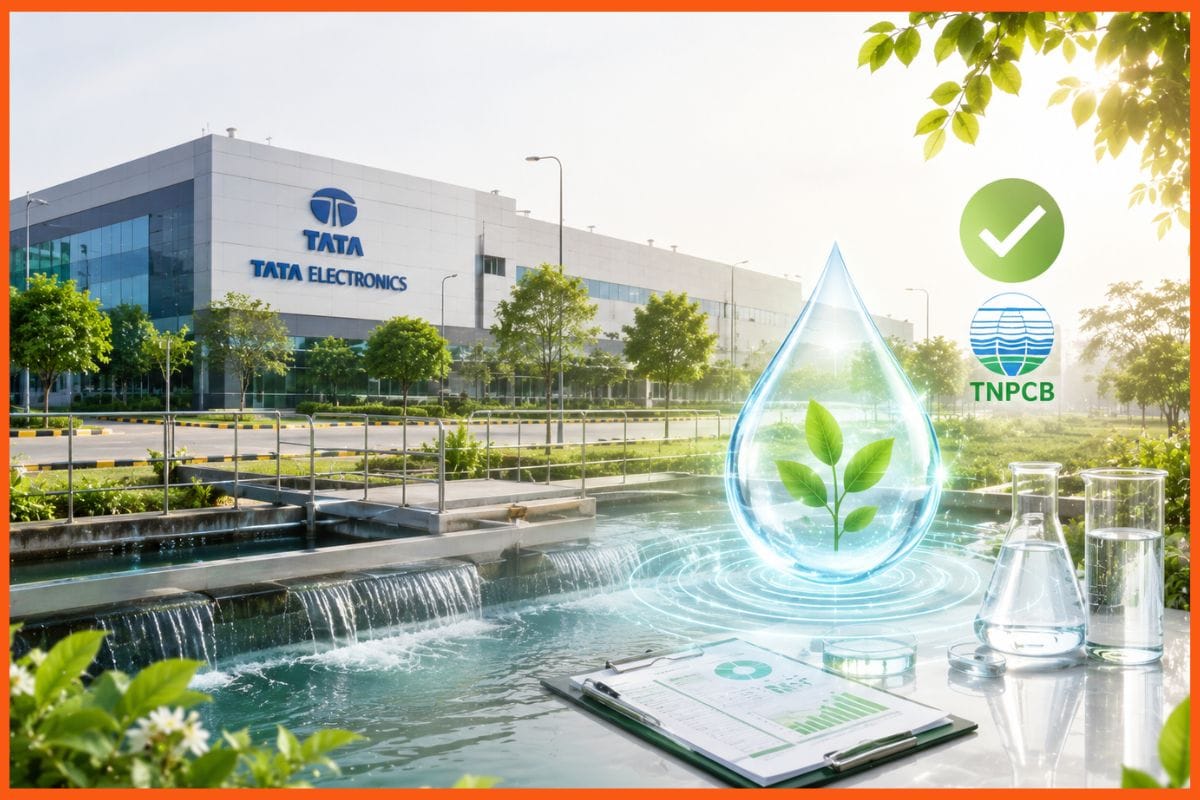
Tata Electronics' Hosur factory was found to be in compliance with environmental standards, and the Tamil Nadu Pollution Control Board (TNPCB) has thus ended its proceedings against the company. Additionally, TNPCB said that there was no indication of contamination in the water quality tests.
This comes after the pollution watchdog had previously served a show-cause notice as part of its regulatory supervision of the plant. The corporation claims that following a review of its answer and the results of the water sample analyses, the TNPCB has decided to discontinue further actions.
Findings of TNPCB
The regulator concluded that the Hosur plant's water met all necessary environmental standards after testing it for Total Dissolved Solids (TDS), Chemical Oxygen Demand (COD), and Biological Oxygen Demand (BOD). There was no evidence of contamination, according to Tata Electronics. In addition, the business said that it had commissioned an independent evaluation through an accredited laboratory in a timely manner in response to the notification.
All tested metrics were likewise found to be within the specified norms, according to the study. Subsequently, Tata Electronics informed the TNPCB of its results and provided an explanation about its adherence to environmental rules. This incident came to light because environmental policies at Tamil Nadu's major manufacturing projects have been under increased scrutiny. This is especially true given the state's efforts to entice investors to put a lot of money into the electronics and semiconductor industries.
|
Some Interesting Facts of the Story |
|
1.Tata Electronics highlighted its community
initiatives in the Hosur-Krishnagiri region, including healthcare, education,
and employment programs. 2.The closure of proceedings removes a regulatory
overhang for Tata Electronics as it expands its manufacturing operations. 3.Environmental compliance is becoming increasingly
important as India positions itself as a global electronics manufacturing
hub. |
Earlier Allegations of TNPCB
Tata was previously accused of discharging wastewater into a rainwater harvesting pond within the site, according to the pollution control board. The report went on to say that the open wells in the neighbouring farmlands had their groundwater contaminated since the pond overflowed. Concerns raised by farmers prompted the investigation. Issues have plagued Apple's supply chain in India, with the Tata notice being the most recent in a string of them.
In September 2024, production of iPhone components was temporarily halted due to a fire at Tata's Hosur facility, while in September 2023, production was slowed down for days due to a fire at the iPhone plant of former supplier Pegatron. Indian pollution regulators have taken disciplinary measures against other businesses as well.
Following the discovery of violations of environmental laws by authorities in 2024, Mercedes-Benz took measures to better manage wastewater and air pollution at its sole vehicle assembly plant in the nation. TATA said that it had independently confirmed its environmental performance and had cooperated completely with the regulator during the examination process.
Its infrastructure, operational procedures, and environmental protections would be monitored continuously to ensure compliance with statutory criteria, as it has previously said. The community initiatives of Tata Electronics in the Hosur-Krishnagiri region were also emphasised. These initiatives included healthcare, education, and job creation programmes.
|
Quick Shots |
|
•TNPCB has closed proceedings against Tata
Electronics over the Hosur plant's water quality. •The regulator found the facility to be compliant
with environmental standards. •Water quality tests showed no evidence of
contamination. •The company commissioned an independent assessment
through an accredited laboratory |