

Tesla to Phase Out Cybertruck Production to Accelerate Cybercab Rollout
Tesla plans to cease Cybertruck production at its Texas Gigafactory by mid-2027 to focus on making its self-driving Cybercab vehicle. The move was revealed by CEO Elon Musk, purportedly to reverse years of dismal Cybertruck sales.
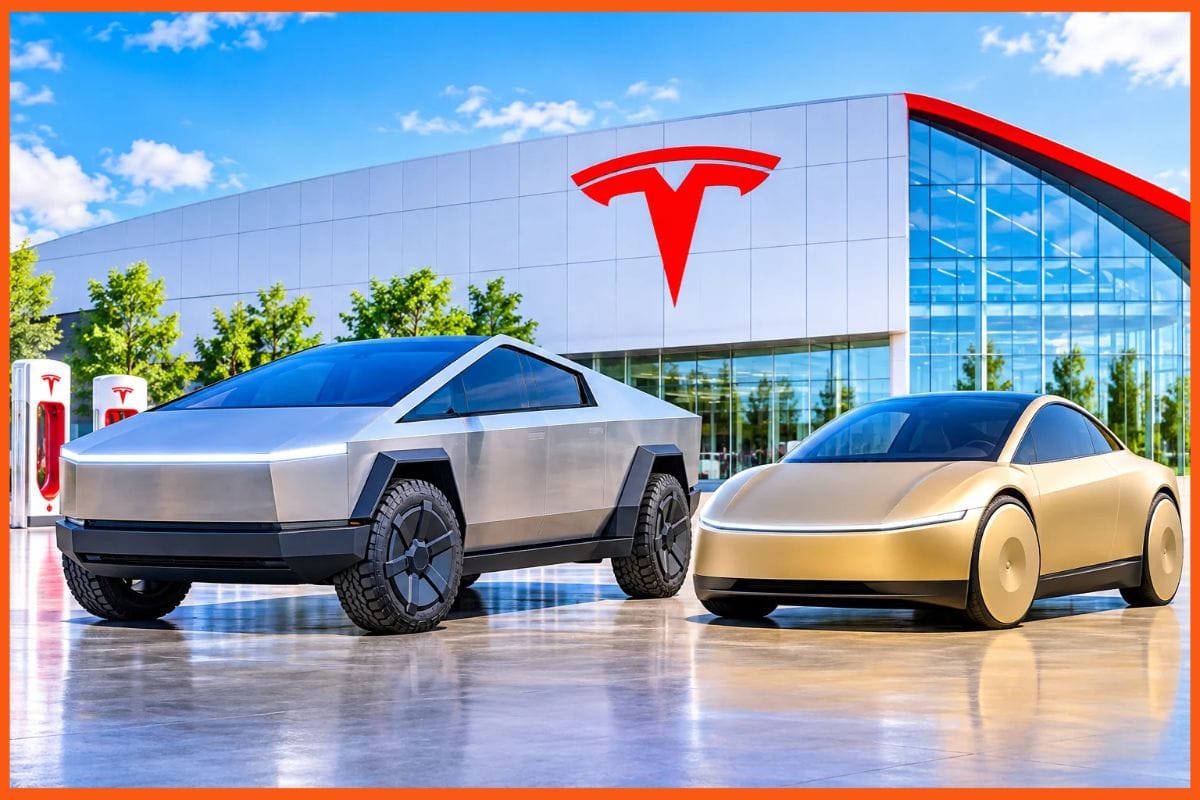
Midway through next year, Tesla plans to stop making the Cybertruck at its Gigafactory in Texas. The company will now shift its production focus to its driverless Cybercab vehicle. On the social media site X, the cancellation was verified by the company's CEO, Elon Musk.
He said that in order to make more Cybercabs, production of Cybertrucks will wind down. The decision is reportedly the result of years of poor sales, although it is yet unclear if production will transfer to a new location or stop altogether.
The Cybertruck order rate far exceeds our production rate. We will try to make as many as possible before shutting down the line in about 8 months, but will have to return deposits for a lot of people.
— Elon Musk (@elonmusk) November 9, 2026
This is not a case of Cybertruck being unprofitable, as has been misreported… https://t.co/rGmNKV3ILs
Journey of Tesla’s Cybertruck
In response to the X update, Musk said that Cybertrucks would be around "for a long time". The operational shift on X was also noted by Wes Morrill, Tesla's main Cybertruck engineer. The Cybertruck, according to Morrill, was a fantastic platform for developing technology, and it continues to exist today through Cybercab. The all-electric pickup, which debuted as a prototype in 2019 and was characterised by a stainless-steel appearance and sharp angles, went on sale in the US market in late 2023.
Along with the Model Y, Model 3, Model S, Model X, Semi, and Roadster, the truck is part of Tesla's larger passenger and commercial lineup. The manufacturer's third-quarter results for 2026 will be published at the same time as the manufacturing adjustment. During that time, it produced 464,391 automobiles, shipped 486,532 of them, and put 13.7 GWh of energy storage components into service.
Tesla’s Financial Outlook
With respect to the company's finances, in the third quarter of 2026, Tesla's net income attributable to common stockholders dropped 42.7% year-on-year to $787m, from $1.37bn in the previous-year period. Diluted EPS fell 43.6% from $0.39 to $0.22, while basic EPS fell 44.2% from $0.43 to $0.24. Total operational expenses increased by 39.2% to $4.78 billion from $3.43 billion, resulting in a decline in earnings.
The majority of the output was still coming from high-volume models. There were 457,387 units built and 478,237 units delivered by the Model 3 and Model Y, with 1% of those units being accounted for through operating leases. Among the 8,295 deliveries and 7,004 units produced by other vehicle lines, 4% were accounted for through operating leases. Among the 486,532 automobiles delivered, 1% were accounted for through operational leases.
Tesla, Samsung Warn Against Fresh US Tariffs on Vietnam
Due to their reliance on global supply chains and manufacturing, tech companies Tesla and Samsung have spoken out against more US tariffs on Vietnamese goods. The announcement came as the Trump administration is drawing near the end of its probe into Vietnam's IP practices, which has a deadline of November 29.
Along with other businesses, these two are lobbying Washington to refrain from imposing further levies. While a media house evaluated comments, it was found that American manufacturers of steel, solar panels, seafood, and wood products have requested sanctions. Both sides are weighing in on the potential trade war with Vietnam, a key supplier to the US market for apparel, electronics, and consumer products.