UPI Payments Above INR 2,000 May Attract Merchant Charges Soon
The 22-member UPI & Services Steering Committee under NPCI is anticipated to take a decision on MDR charges for some UPI transactions exceeding INR 2,000. The suggested fees are aimed at helping UPI remain financially sustainable and invest in its infrastructure, cybersecurity and fraud prevention.
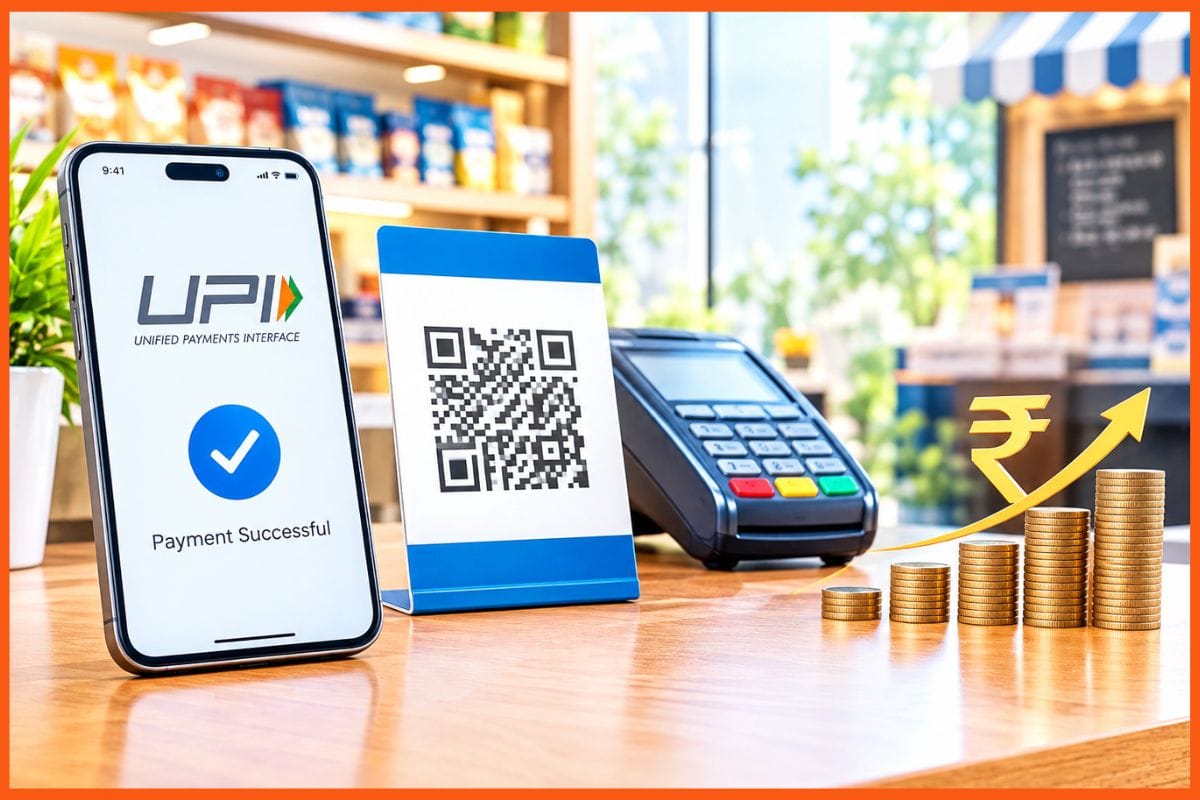
The UPI Merchant Discount Rate (MDR) will shortly be determined by a panel that includes bank and payment service provider officials as well as members from different groups. For reasons including self-sufficiency and expanding the market, fees will be levied on purchases made to merchants over INR 2,000.
The 22-member UPI & Services Steering Committee reports directly to the National Payments Corporation of India (NPCI). Two of its members are the Payments Council of India and the Indian Banks' Association.
MDR Rates Yet to be Decided
The 2007 Payment and Settlement Systems Act, Section 10A, was amended, and this notification is in response to that alteration. For notified electronic payment mechanisms like UPI, this law lays the groundwork to impose an MDR. During the Monsoon Session, which ended on August 13, 2026, Parliament passed the bill that makes the amendments. After it was passed, the government announced that the UPI & Services Steering Committee would be in charge of determining the MDR rates.
Media sources indicate that considerations such as self-sufficiency and market expansion would likely lead the committee to a decision regarding minimum required deposit (MDR) for UPI transactions over INR 2,000. In contrast to China's 0.40% merchant fees, Brazil's PIX ecosystem charges roughly 0.33%. To justify the introduction of fees, the government has cited the need for ongoing and substantial expenditures in infrastructure, cybersecurity, and fraud prevention due to the exponential growth in transaction volumes.
Why Govt Imposing Fees on UPI Transactions?
More competition is necessary to entice more businesses to grow, and the government has acknowledged that fees are necessary for market expansion and self-sustainability. For the next surge of growth, the administration said, subsidies alone would not be enough. To keep UPI strong, inclusive, and prepared for the future, the government said that a balanced framework is necessary. Consumers would continue to not be charged for using UPI, according to Finance Minister Nirmala Sitharaman.
Additional categories of merchant transactions would be exempt from any future charges, she said. According to the minister of finance, most merchant transactions, even those with low values, would still be free. Only certain types of merchant transactions over a certain level will be subject to any future MDR. The biggest real-time payment system in the world, according to Sitharaman, is India's UPI. Just in July 2026, 2,366 crore UPI transactions totalling INR 29.9 lakh crore were handled by the country.
UPI Witnessing Exponential Growth
NPCI, a joint venture between the RBI and the Indian Banks' Association, runs UPI. It lets people pay each other in real time and lets shoppers pay businesses directly. With its debut on August 25, 2016, UPI revolutionised the way digital payments are done in India.
From FY17's transaction value of INR 0.07 lakh crore to FY26's value of almost INR 314 lakh crore, it increased substantially. This is an increase of nearly four thousand times in just ten years. Uzbekistan is the newest addition to the list of 11 nations that accept UPI. Additional nations include Singapore, the United Arab Emirates, France, Mauritius, Nepal, Bhutan, Qatar, Sri Lanka, Cambodia, and Greece.