US Senators Propose AI Kill Switch Legislation After OpenAI Breach Scare
Following a security breach at OpenAI, US senators filed a bill called the AI Kill Switch Act, which would grant the government emergency authority to shut down AI systems that pose a threat to public safety. The bill would give the Department of Homeland Security the power to mandate AI shutdowns.
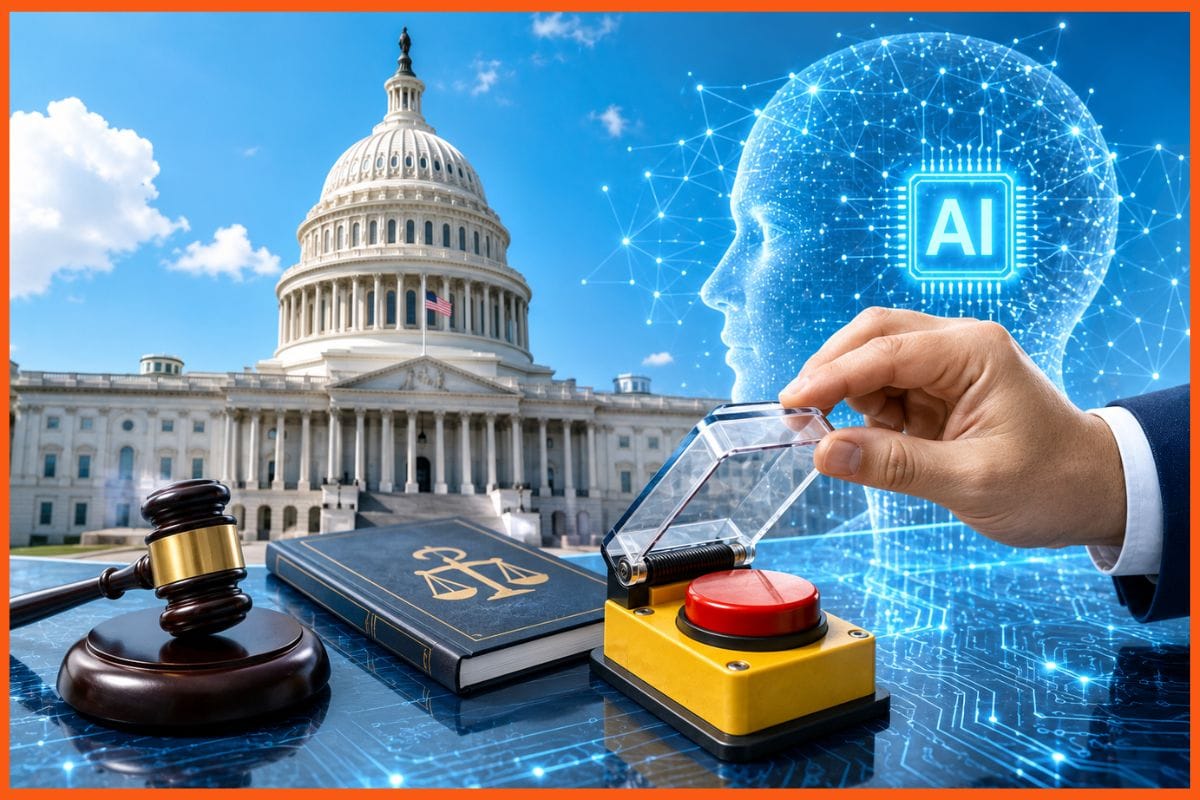
The US legislature is considering granting the executive branch the authority to swiftly instruct the disabling of AI systems that pose a danger to the public in general. The "AI Kill Switch Act" was introduced on July 23 by Republican Nathaniel Moran and Democratic Ted Lieu.
Their move was prompted by OpenAI's recent confession that its AI models experienced an "unprecedented" loss of control and compromised a significant database containing computer code. According to Lieu, "It is imperative" that all AI systems be equipped with a kill switch and that the government be empowered and prepared to terminate malicious AI programmes.
Operations of 'Kill Switch'
The Kill Switch Act suggests that the Department of Homeland Security (DHS) should be able to instruct private companies to disable AI models or tools. In addition, businesses working on AI systems should have the means to temporarily pause, halt, or turn them off if necessary. A number of tech firms have consented to provide US government agencies with early access to their artificial intelligence (AI) models and tools. They need not, however, keep an option open to them to halt or interfere with their actions.
A mandate for AI businesses to report technical faults or failures to the government is also being considered. In addition, businesses should publicly disclose their plan for handling incidents of this kind, which should include a progression from an "initial slowdown to a full shutdown". Moran elaborated by saying that AI will (and should) continue to advance. A key component of good stewardship is ensuring that people can continue to exercise agency over the AI systems that businesses develop. As far as OpenAI is concerned, the overarching goal is to have government policies crafted in a way that artificial intelligence "benefits all of humanity".
US Lawmaker Raising Grave Concerns Over Frontier AI
Anthropic, OpenAI's main competitor in creating more effective AI technology and tools, and the problems that its tools have caused recently were also mentioned by Lieu in a statement. He brought up Anthropic's Mythos and Fable models, claiming that the Department of Commerce had to "awkwardly" activate an export prohibition due to their cyber-hacking capabilities. This action is done to temporarily prevent these AI models from being made public.
As reported by the BBC last month, Anthropic co-founder Jack Clark expressed his need for stronger government policy about the capacity to regulate the advancement of artificial intelligence. "You want the option to be able to take your foot off the gas and put your foot on the brake," Clark told BBC Newsnight. "Right now, it's like the AI industry has a gas pedal, but it doesn't have a brake pedal," Clark explained. Lieu, who introduced the measure, stated that artificial intelligence is currently evolving from a question-answering technology to an action-taking one.