Why Is the Government Really Ending Free UPI?
The government says UPI's new fee is about sustainability. Congress says US pressure. A BJP-aligned group says the same. Trade experts blame Walmart and Google. Five competing theories, each attributed to who's actually making the claim.
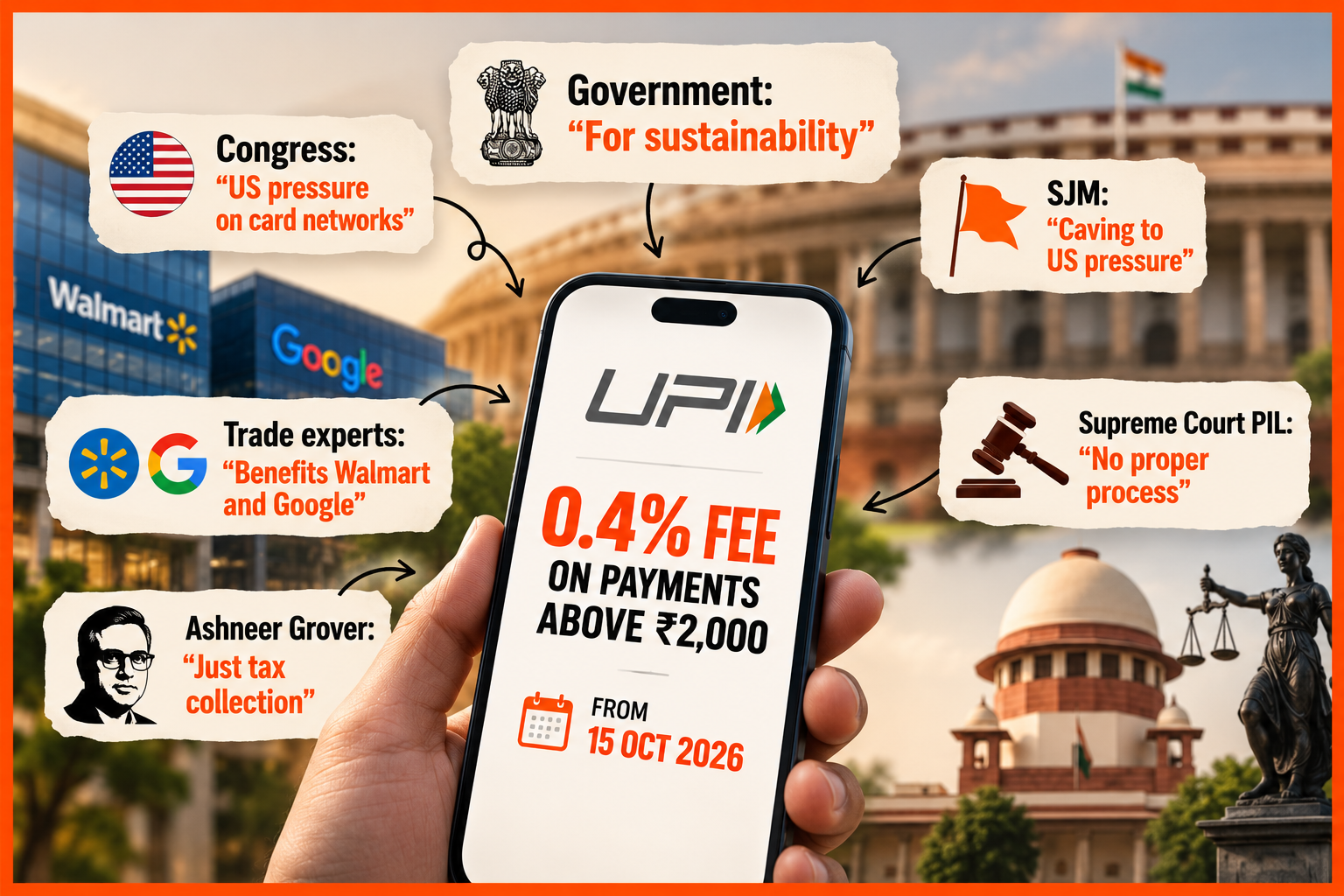
Ask the government why UPI is getting its first-ever transaction fee on 15 October, and the answer is consistent: sustainability. Ask five other people, and the theories diverge sharply, running from foreign trade pressure to plain revenue extraction to a story about who really owns India's two biggest payment apps. This piece lays out each claim next to who's making it and what the government has said in response, without picking a winner.
The official reason, and the reason beneath it
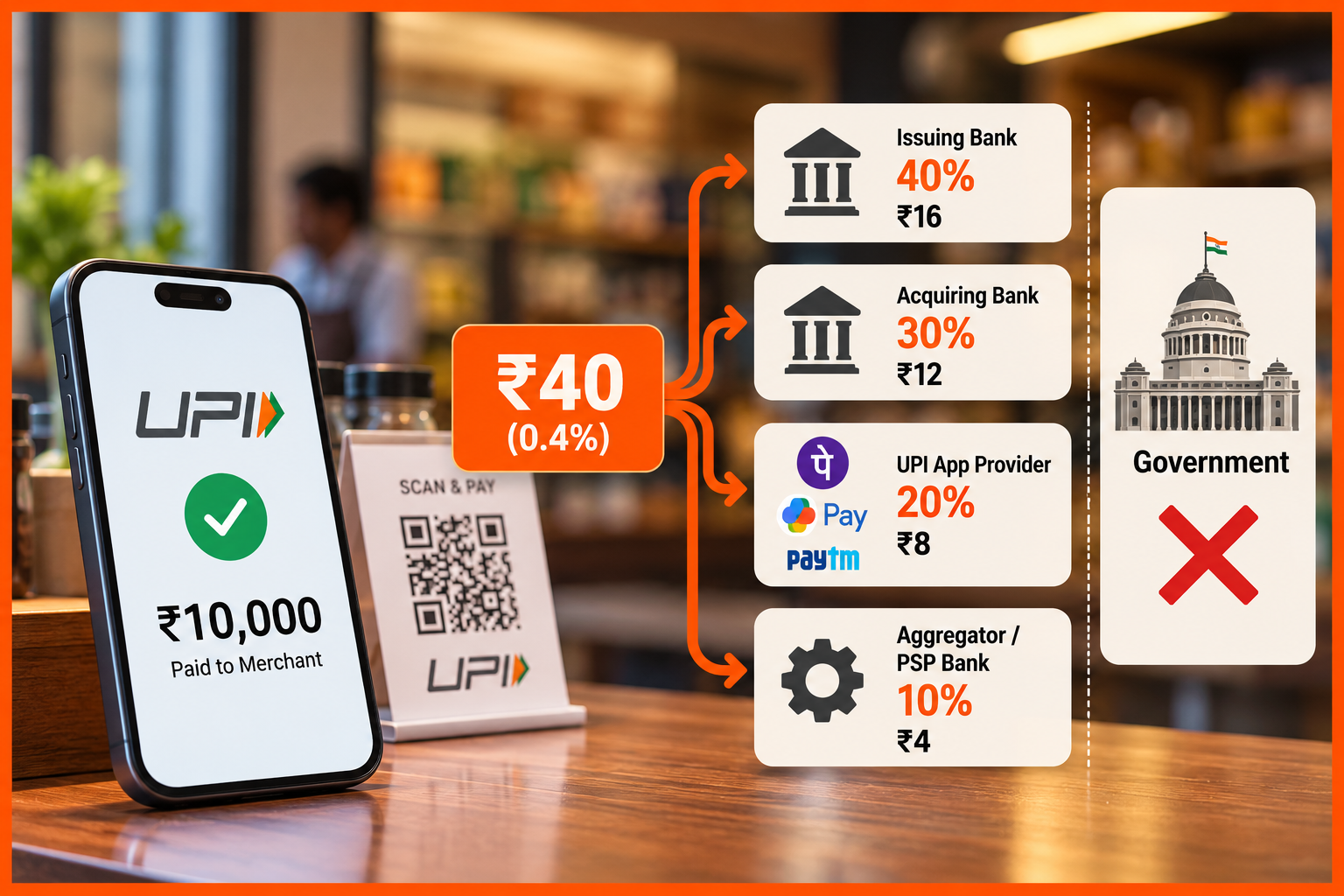
NPCI's own framing is that UPI is moving "from public subsidies to a commercial revenue model." Communications Minister Jyotiraditya Scindia called it a coming-of-age story: a system that's received education and experience should start contributing back, like a grown child. Behind that is a real budget commitment: since the zero-MDR mandate took effect in January 2020, the Centre has paid banks a budgeted incentive to cover the MDR they couldn't charge, about ₹8,276 crore cumulatively since FY22. NPCI's case is that MDR revenue replaces that with fraud-prevention and cybersecurity funding, plus a 5% carve-out for small-merchant onboarding in underserved regions. The Finance Ministry has separately said the goal includes creating "a steady source of income for smaller companies working in the UPI system."
A second, less-discussed number makes "sustainability" concrete: UPI has been a loss-making business for the companies that built consumer apps on it, for six straight years. PhonePe, the market leader, posted a net loss of ₹1,727.4 crore in FY25, better than ₹1,996.1 crore the year before, but a loss all the same, after a decade of scaling to hundreds of millions of users on a rail that, by law, couldn't charge anyone anything. Google Pay faces a version of the same math. Both the subsidy bill and the industry's unprofitability are real and documented, and don't require a theory to explain. They also sit awkwardly next to who the fee actually pays.
The tension the government's own rationale creates
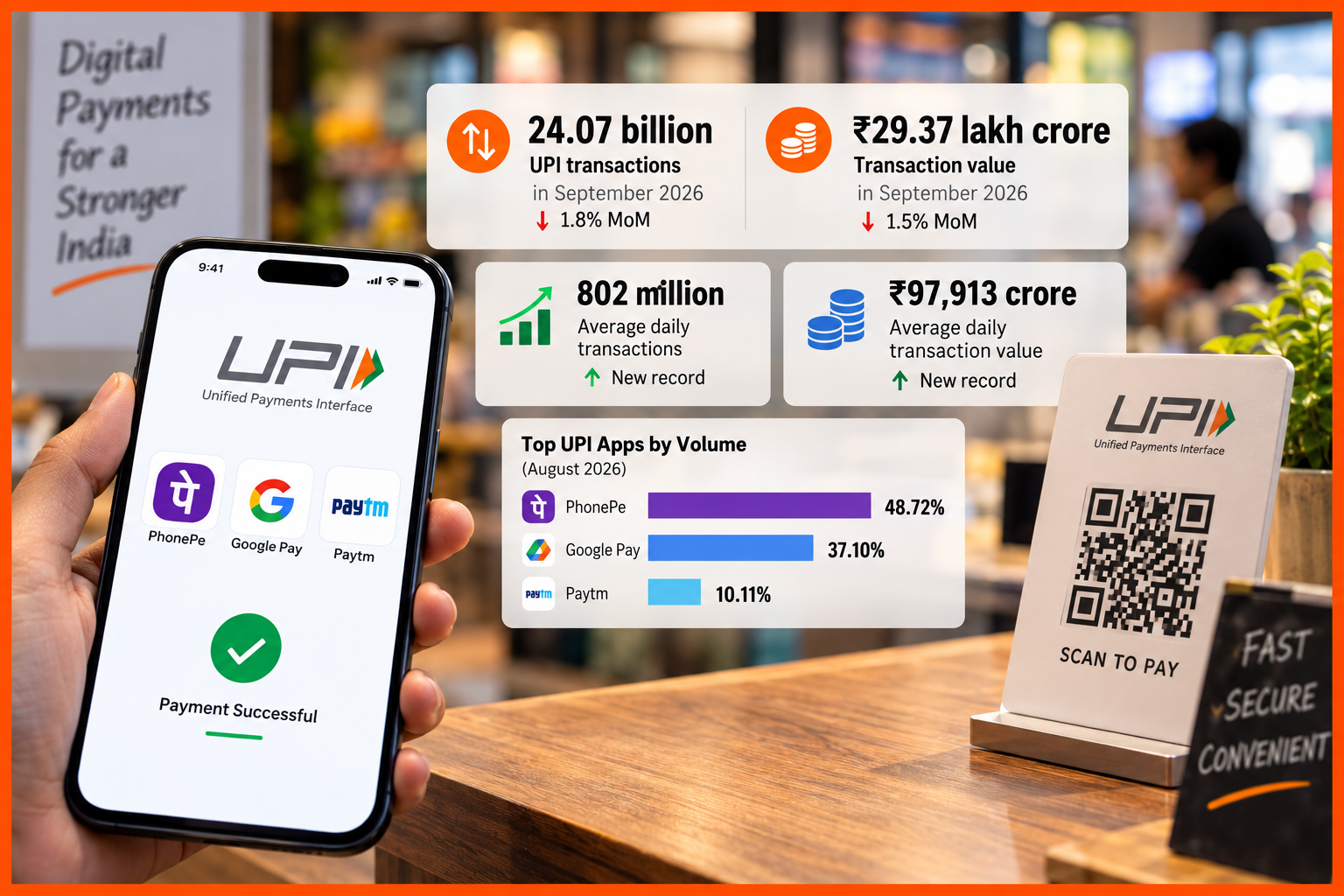
The Finance Ministry says MDR revenue will help smaller UPI players compete. The market says otherwise: PhonePe holds about 46.2% of UPI transactions and Google Pay about 32.7%, so two apps control close to 79% of the ecosystem MDR will now be paid on, against 47 total third-party apps splitting the rest. Smaller apps generally have weaker leverage with the banks that distribute MDR, so the biggest players can negotiate the best shares and fund the cashback spending that keeps their lead intact. Analysts estimate PhonePe and Paytm could each earn close to ₹700 crore a year from MDR, Google Pay around ₹500 crore, concentrated in exactly the players the stated policy goal wants to help compete against. Nothing found for this piece claims that concentration was deliberate; it's a documented tension, not evidence of motive.
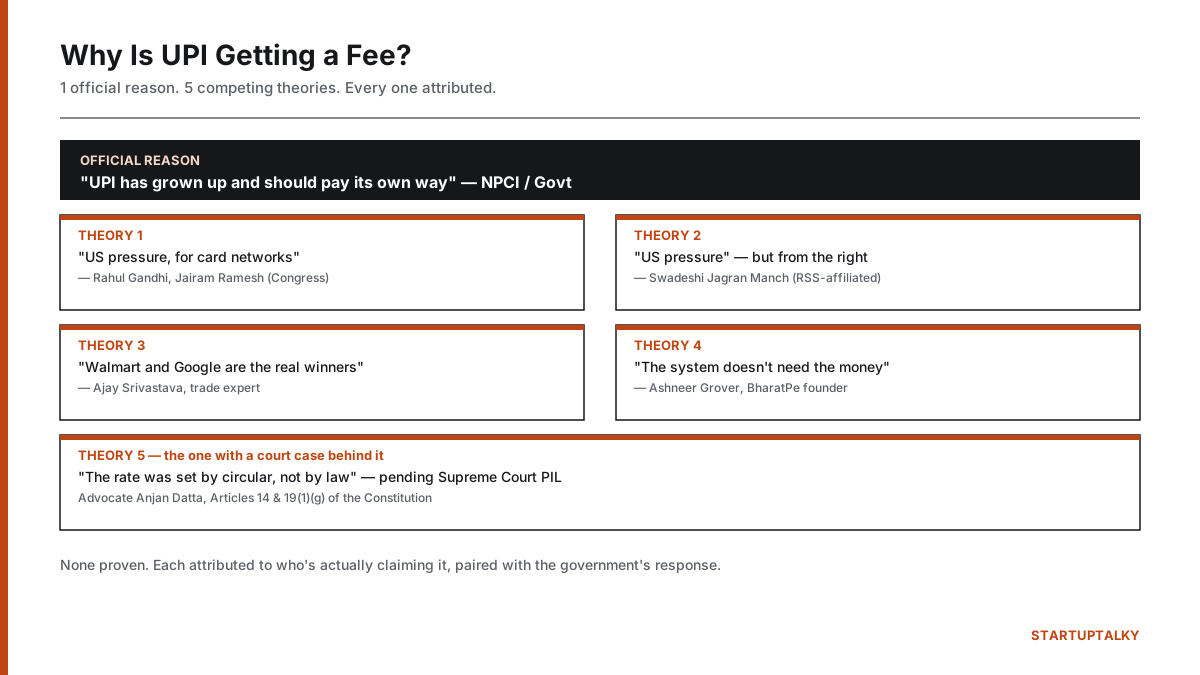
The theories, and who's making each one
1. "It's US pressure on behalf of card networks." Leader of the Opposition Rahul Gandhi has accused the government of imposing a "UPI tax" under pressure from Washington, tying it to Modi's willingness to accommodate US President Donald Trump. Congress general secretary Jairam Ramesh has asked whether the MDR lets international card networks, historically squeezed out by UPI's zero-cost model, compete on more even terms. Scindia rejected this, saying Rahul Gandhi "sees 'bhoot' [ghost] of America everywhere," and the Finance Ministry issued a formal statement on 16 September denying any foreign influence.
2. "It's US pressure, but from a right-wing group, not Congress." Separately, and from the opposite end of the political spectrum, the Swadeshi Jagran Manch (the RSS-affiliated economic wing generally aligned with the ruling party) has accused the government of caving to the US Trade Representative. SJM national co-convenor Dr. Ashwani Mahajan said American card companies "have lost hugely to UPI," and that "imposing MDR is demeaning an achievement of Bharat," arguing it "should not be done because of pressure or concerns raised in such reports." This matters less for whether it's correct and more for what it shows: the theory isn't confined to one political side.
3. "The real winners are Walmart and Google, not Indian institutions." Made by trade and finance commentators rather than politicians, this argues the MDR's practical effect is to hand the largest new revenue stream to foreign-owned platforms. Trade expert Ajay Srivastava has said PhonePe (majority-owned by Walmart) "could be the biggest beneficiary," asking why Indians should effectively "pay to raise PhonePe's valuation." It leans on the same market-share data above but frames it as a question of ownership, not just size.
4. "The system doesn't need the money, this is just a tax." BharatPe founder Ashneer Grover has been the most direct critic, arguing the subsidy the government has been paying is trivial next to UPI's scale: "subsidising the few thousand crores that it costs to run the UPI is small change... the argument that the system can't continue to subsidise UPI is basically rubbish." He published his own breakdown of NPCI's finances to argue the ecosystem was never at real risk. BharatPe, his former company, has publicly distanced itself from these remarks.
5. "The government chose a route that avoids scrutiny." The most legally grounded theory, since it's the basis of a pending Supreme Court petition. The 14 September Gazette notification (S.O. 5067(E)) only removes zero-charge legal protection above ₹2,000, it doesn't contain the 0.4% rate, the ₹300 cap, or the sector-specific ₹5 charge, those live only in an NPCI circular and a Finance Ministry press release. Advocate Anjan Datta's petition, filed under Articles 14 and 19(1)(g), argues that fixing a nationwide charge this way sidesteps the disclosure a formal rule would require. It doesn't allege corruption; it asks to quash the notification or force a published impact assessment.
What's actually settled, and what isn't
The subsidy numbers, the loss figures, the market-share concentration, and every quote above are checked against primary or close-to-primary sources. What isn't settled is motive: nobody outside the government's own process can say with certainty why this rate, threshold, and implementation route were chosen over the alternatives. The Congress and SJM theories rest on the same fact, that American card networks have lost share to UPI's zero-cost model, but draw a causal line the government explicitly denies. The Supreme Court petition is the one thread here with an actual mechanism to produce a real answer, through discovery or a court-ordered impact assessment, rather than dueling statements. It's pending, and nothing here should be read as predicting its outcome.
If you have information related to this story, contact us through StartupTalky's tips line. Anonymity is the default.