UPI's Zero-Fee Era Ends: The New 0.4% Charge, Explained
From 15 October, UPI payments to merchants above ₹2,000 carry a 0.4% fee, capped at ₹300. Consumers are excluded, but traders, a Supreme Court petitioner, and even a group aligned with the ruling party disagree with the move, each for different reasons.
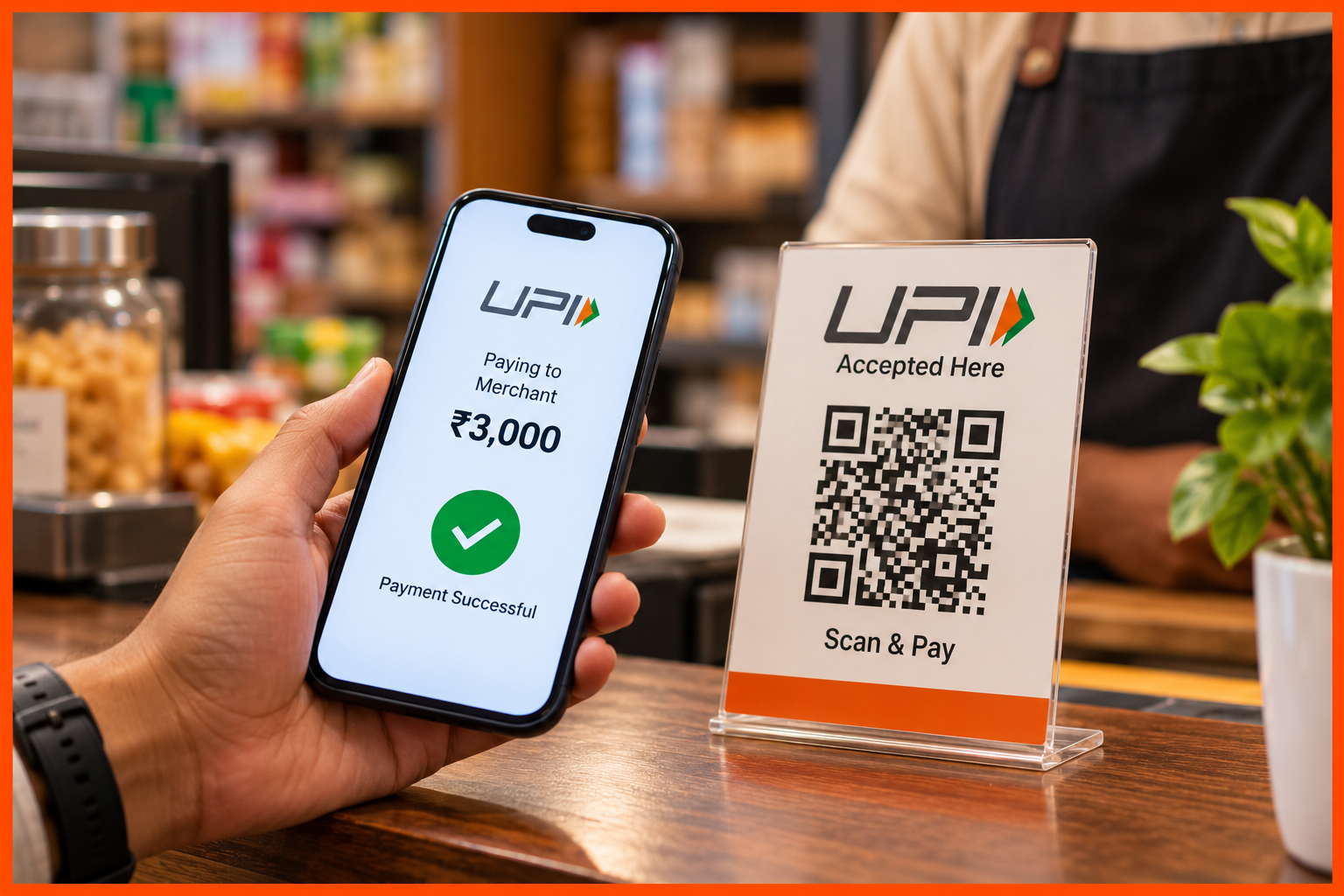
Since January 2020, UPI has run on a simple promise: free for everyone, always. That promise ends, partially, on 15 October 2026.
NPCI issued a policy circular on 15 September 2026, a day after a Ministry of Finance Gazette notification, setting a Merchant Discount Rate (MDR) of 0.4% on person-to-merchant (P2M) UPI transactions above ₹2,000. It is the first time since UPI's zero-MDR mandate (Section 10A of the Payment and Settlement Systems Act, 2007, and Section 269SU of the Income-tax Act, 1961) that any UPI payment will cost something to process.
What actually changes
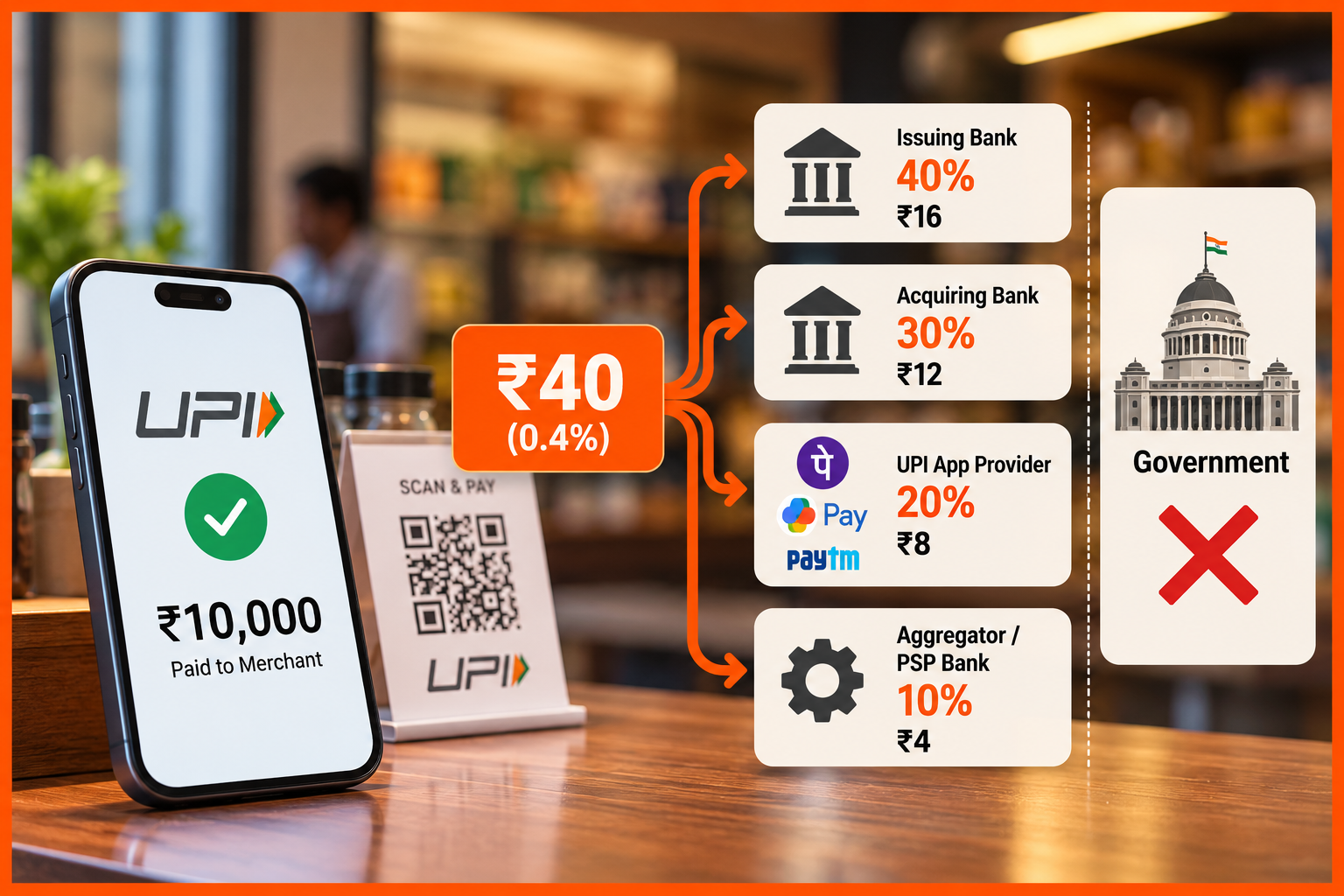
The fee applies only to merchant payments above ₹2,000. A ₹3,000 payment carries an MDR of ₹12; a ₹50,000 payment carries ₹200; anything ₹75,000 and above is capped at a flat ₹300.
Three carve-outs matter: payments up to ₹2,000 stay free, covering roughly 95-96% of P2M transactions by volume; small merchants receiving up to ₹1 lakh a month via UPI QR are exempt entirely; and railways, telecom, insurance, and fuel get a flat ₹5 MDR instead of 0.4%, a concession that's drawn its own complaints from petrol pump associations. Consumers pay nothing extra, and the government has said UPI apps and merchants cannot pass the charge on as a hidden fee. A Finance Ministry monitoring mechanism is meant to police that.
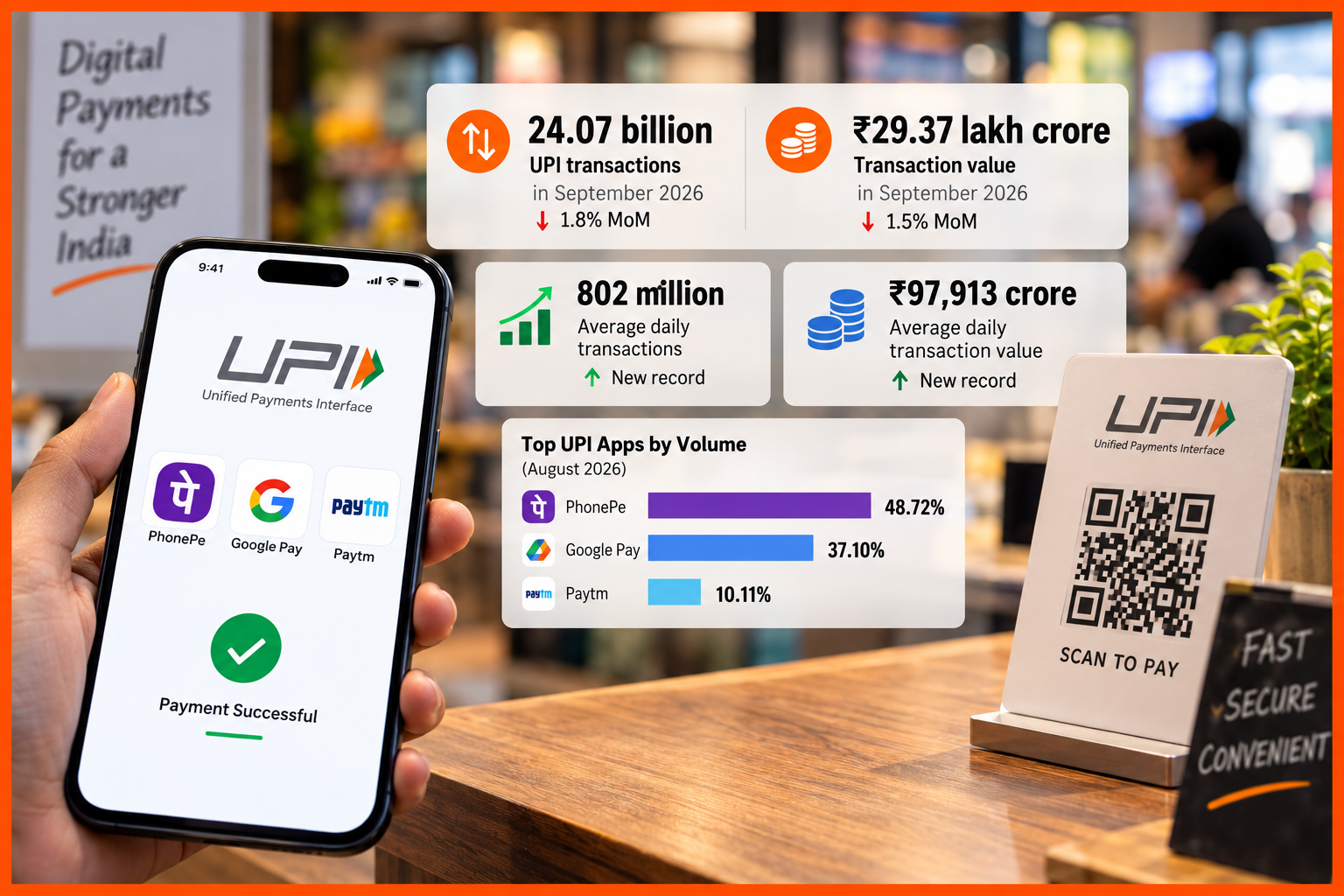
By volume, this barely touches UPI. But volume isn't value: P2M made up about 29% of total UPI value in FY26, and roughly 67% of that was for payments above ₹2,000. Multiply those two figures and about 19.5% of everything moved over UPI in FY26, nearly ₹61 lakh crore out of a ₹314 lakh crore total, now sits inside the MDR bracket. That's the number that decides how much money actually changes hands, not the transaction-count figure NPCI has led with.
The case being made for it
Communications Minister Jyotiraditya Scindia framed it as UPI growing up and paying its own way: "When a technology, a system, is to be completely independent, then it should also be on its feet. Just like every child, after receiving education, after receiving experience, also contributes to their family."
Behind the analogy is a real budget line. Since 2021, the government has subsidised zero-MDR UPI through an incentive scheme paid to banks: ₹1,389 crore in FY22, ₹2,210 crore in FY23, ₹3,631 crore in FY24, roughly ₹1,500 crore budgeted for FY25, about ₹8,276 crore cumulatively. NPCI's case is that MDR revenue replaces that dependency with self-sustaining funding for technology upgrades, fraud prevention, and cybersecurity, relevant given rising UPI fraud complaints, plus a 5% carve-out for onboarding small merchants in Tier III-VI towns, the North-East, Jammu & Kashmir, and Ladakh.
Industry has largely backed the move. PhonePe CEO Sameer Nigam told CNN-News18 that UPI's scale has created infrastructure costs the industry can no longer absorb indefinitely, and markets agreed: shares of Paytm, Axis Bank, and Yes Bank rose two to eight percent the day after the policy was announced.
The case being made against it
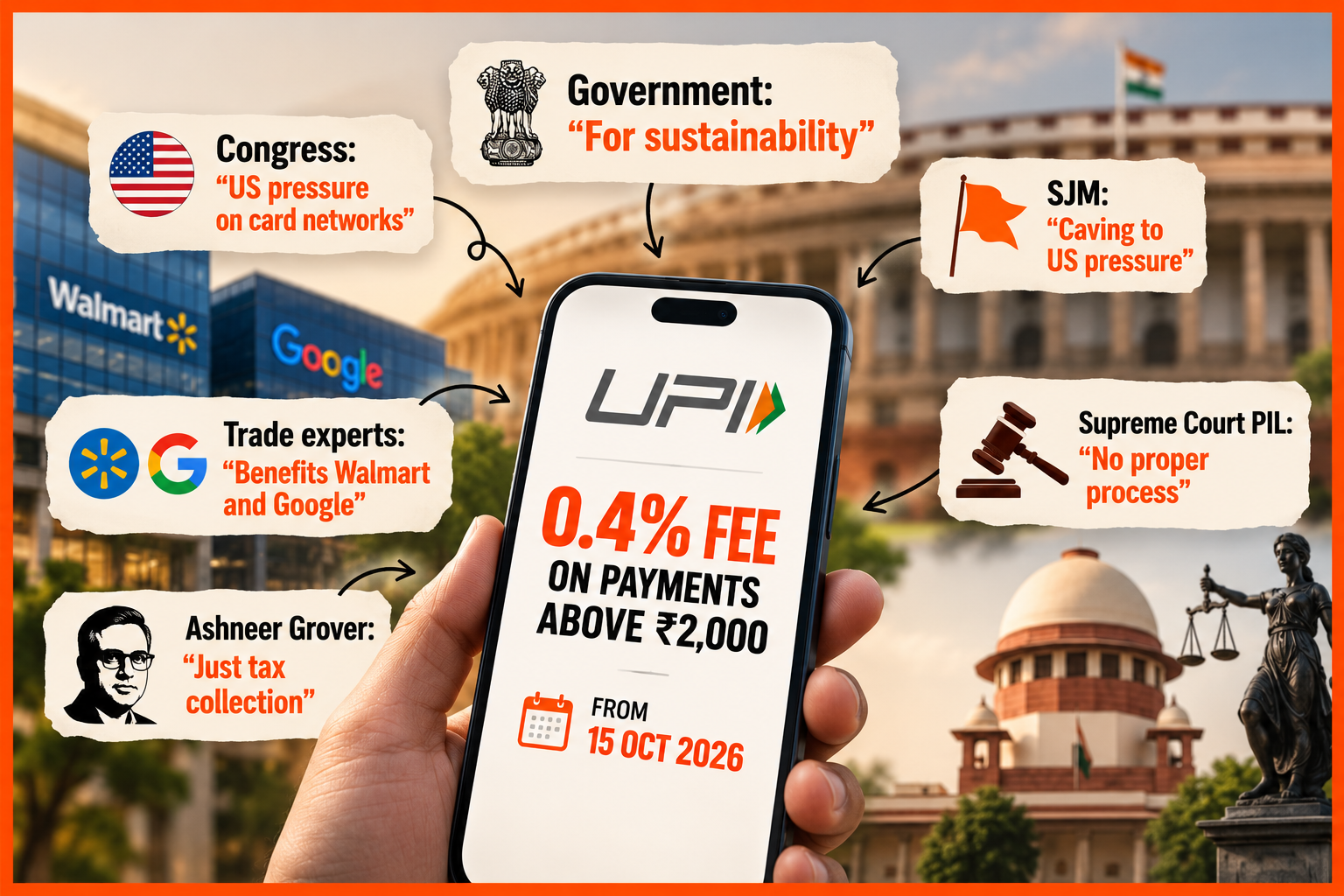
The loudest opposition is from traders. The Confederation of All India Traders (CAIT) says merchants already carry income tax and GST and shouldn't absorb a new cost on top; CAIT Odisha has written to the Finance Minister seeking withdrawal, and traders in Dehradun and Ghaziabad have warned of a shift back to cash-only signage.
A specific cost has fed that anger: the MDR itself attracts 18% GST, since it's a service fee. GST-registered merchants can claim full input tax credit against it, neutralising the cost, but unregistered merchants can't. The government has called broader claims of a "new GST on UPI transactions" a rumour; the narrower claim, that GST applies to the MDR component, is accurate.
Ashneer Grover, BharatPe's former MD, called the MDR "just tax collection" and published his own breakdown of NPCI's finances arguing the ecosystem doesn't need new revenue. BharatPe, his former company, publicly distanced itself from the remarks.
The most substantive challenge is in court. Advocate Anjan Datta has filed a PIL in the Supreme Court against the Union government, RBI, NPCI, and the UPI & Services Steering Committee, invoking Articles 14 and 19(1)(g) of the Constitution. Its argument is procedural, not that a fee is illegitimate: the Gazette notification of 14 September (S.O. 5067(E)) removes zero-charge protection above ₹2,000, but the 0.4% figure, the ₹300 cap, and the sector-specific ₹5 rate appear only in an NPCI circular and a Finance Ministry press communication, not in the Gazette itself. The petition also asks why RuPay debit cards keep uncapped zero-MDR protection while UPI above ₹2,000 doesn't, and seeks to quash the notification or force a published impact assessment.
What's still unresolved
The government has ruled out a rollback despite the trader pushback and the pending PIL, and 15 October hasn't moved. What's genuinely open is whether the court case slows anything down, whether the anti-pass-through monitoring holds once the rate is live, and whether CAIT's threatened boycotts go beyond scattered local protests.
There's also a second fight running in parallel, over why the government made this move at all, with claims ranging from fiscal necessity to foreign pressure to plain revenue-seeking. That's a separate story.
If you have information related to this story, contact us through StartupTalky's tips line. Anonymity is the default.