

One Tap, Faster Help: How Yatri’s SOS Feature is Boosting Women’s Confidence in Mumbai Trains
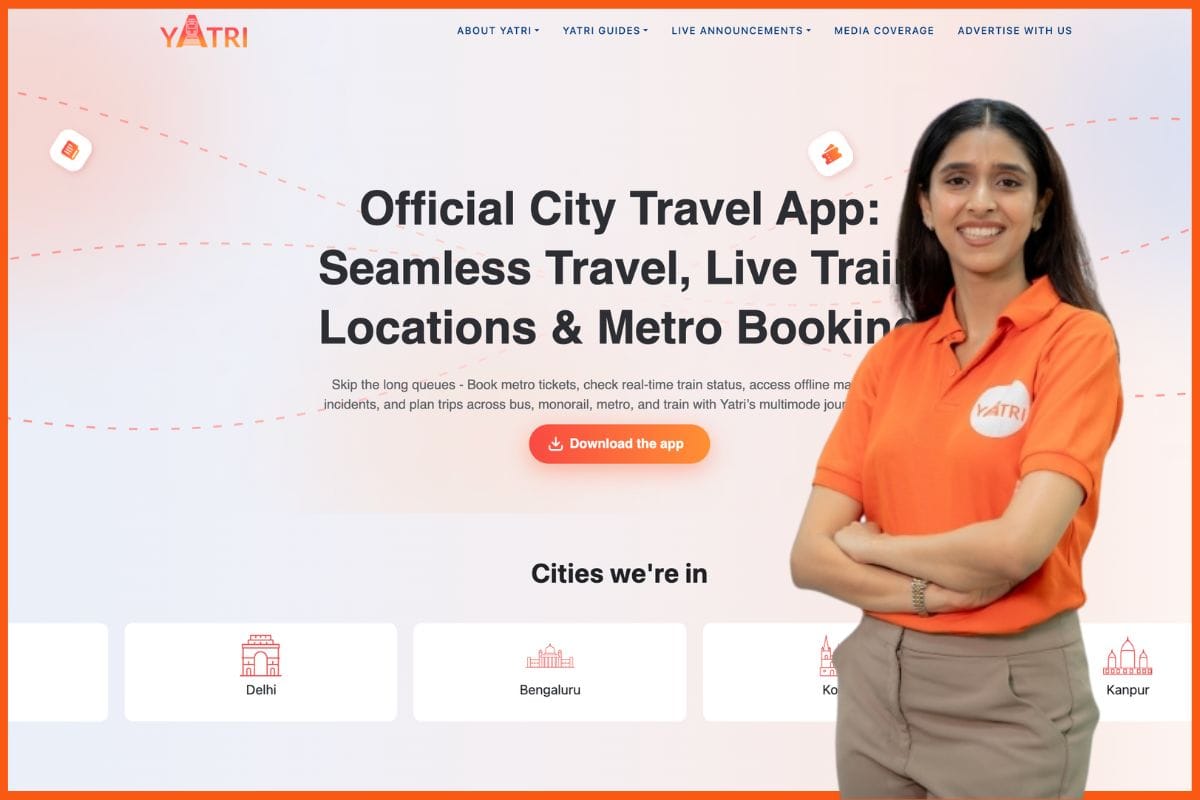
Mumbai's suburban railway is the lifeline of the city, carrying millions of commuters every day. While it is considered one of India's safest public transport networks, ensuring quick assistance during emergencies remains a critical priority, especially for women travellers. Addressing this challenge, Yatri, the official Mumbai local train app, has introduced a dedicated SOS feature in collaboration with Central Railway and the Railway Protection Force (RPF). The feature enables women commuters to alert authorities with a single tap, securely sharing their live location and train details to help responders reach them faster.
In this interview, the Yatri team discusses the inspiration behind building the SOS feature, the technology powering it, how the partnership with Central Railway and RPF came together, and how this initiative aligns with the company's broader vision of creating a smarter, safer, and more connected urban mobility platform for commuters across India.
Can you tell us a bit about Yatri and what inspired the team to build a dedicated SOS feature for women commuters?
Yatri is the official Mumbai local train app, launched in 2021 with a vision to make public transport smarter, more connected and commuter friendly. The app provides GPS-based live train tracking powered by Yatri's proprietary GPS infrastructure installed across Mumbai's local train network and real-time updates on delays and cancellations directly from the Railway Control Room, along with estimated train arrival times that help commuters plan their journeys with greater certainty. It also enables seamless metro ticket booking and allows users to plan end-to-end journeys across multiple modes of transport while accessing schedules for local trains, buses, metros, monorails and ferries. Today, Yatri has expanded its presence across six cities as we continue to build a more connected public transport ecosystem. Community-driven features such as User Incident Reporting and Yatri Chat allow commuters to share real-time updates and support one another during disruptions, making everyday travel more reliable, convenient and accessible.
At Yatri, every feature begins with a real commuter problem. Working closely with Central Railway and the Railway Protection Force (RPF), we identified a key challenge in emergency response valuable time is often spent locating a commuter on a moving train. We developed the SOS feature to bridge this gap. When a woman triggers an SOS, her live location and train details are securely shared with RPF, enabling faster response. Central Railway's operational expertise, combined with RPF's on-ground capabilities and Yatri's real-time technology, ensures responders spend less time identifying a woman commuter's location and more time reaching and assisting her.
The SOS feature was launched in collaboration with Central Railway and RPF. How did this partnership come about, and what role did each stakeholder play?
This initiative was born from a shared belief that technology and public infrastructure can work together to make emergency response faster and more effective. Through our discussions with Central Railway and RPF, we identified a key opportunity, using technology to help responders quickly identify a commuter's location on trains and station premises, reducing response time and enabling them to reach her faster during an emergency.
Central Railway played a pivotal role in driving the initiative, facilitating collaboration across stakeholders, sharing operational insights, and helping shape the overall solution. RPF brought deep on-ground expertise, guiding us on real-life emergency scenarios and response protocols. Yatri’s role was to translate these insights into technology. Over more than 10 months, we worked closely with RPF personnel to rigorously test the feature across numerous scenarios, refining it continuously until it was ready for real-world deployment. The result is a solution built, combining operational expertise with technology to deliver faster assistance to women commuters.To a commuter, pressing the SOS button takes only a second. Behind that single tap lies a much more complex engineering. One of the core technologies powering the system is geofencing, creating virtual boundaries around every station and the surrounding railway environment. The SOS capability is designed to work only within the railway ecosystem, including station premises and areas within approximately 150 metres of the railway tracks. This ensures that emergency alerts originate from genuine railway locations, allowing the system to remain focused on incidents where railway responders can intervene quickly while also reducing misuse.
Location alone, however, isn't enough. A GPS coordinate may indicate where someone is, but it doesn't reveal whether she is travelling on the Up or Down line, which direction the train is moving or which service she has boarded. Solving that challenge requires combining live location with railway mapping and operational intelligence to associate the commuter with the correct train in real time. Instead of simply receiving a point on a map, responders receive context, information that helps them understand exactly where the commuter is within a fast-moving railway network.
What kind of impact do you expect this feature to have on women’s mobility in Mumbai? Are there any early metrics or feedback?
Mumbai's suburban railway has long been regarded as one of the safest public transport networks in the country. Our objective isn't to change that perception, but to strengthen it by adding another layer of safety through technology. As women co-founders, this is something we relate to personally. In a distressing situation, it's natural to panic or go blank. Remembering helpline numbers or trying to explain your exact location on a moving train can become incredibly difficult. We wanted to remove that burden by making it possible to seek help with a single tap, so women can focus on their safety while technology takes care of sharing the information responders need.
We believe the biggest impact will be in building women's confidence to use public transport, especially during late hours. When women know that emergency assistance is more accessible and that RPF can locate and reach them faster if needed, they are more likely to feel comfortable travelling for work, education or personal commitments. The feature also strengthens the railway's emergency response by enabling responders to act more quickly and efficiently during critical situations. Since the launch is recent, it's still early to measure long-term impact through data. Our immediate focus is on creating awareness, so women know the feature exists and understand how to use it. We will continue to monitor adoption, gather commuter feedback, and work closely with Central Railway and RPF to further refine the experience based on real-world usage.
How does this initiative fit into Yatri’s larger vision as a mobility platform?
At Yatri, our vision is to make urban mobility seamless by bringing together everything a commuter needs in one place. Today, intracity public transport is fragmented, with users switching between multiple apps for journey planning, live updates, ticketing, and even different cities. We want to change that by building a single platform where commuters can plan journeys, track transport in real time, book tickets and access essential travel information without having to shuffle between apps for different features or cities.
For us, mobility is about much more than schedules or ticketing it's about supporting the entire journey, from planning a trip to reaching your destination safely and confidently. That's why, alongside journey planning, live train tracking, metro ticketing, User Incident Reporting and Yatri Chat, we've introduced the SOS feature as another important pillar of the commuter experience. As we continue expanding across cities and transport modes, our goal is to become India's trusted urban mobility platform, making public transport more connected, convenient and safer for everyone.