Inside Mumbai’s Real Estate Future: Pakshal Sanghvi on Redevelopment, Growth & What’s Next for MMR
Pakshal Sanghvi, Director of Sanghvi Realty, shares insights on Mumbai’s real estate market, redevelopment opportunities, changing homebuyer needs, sustainability and the future of MMR.
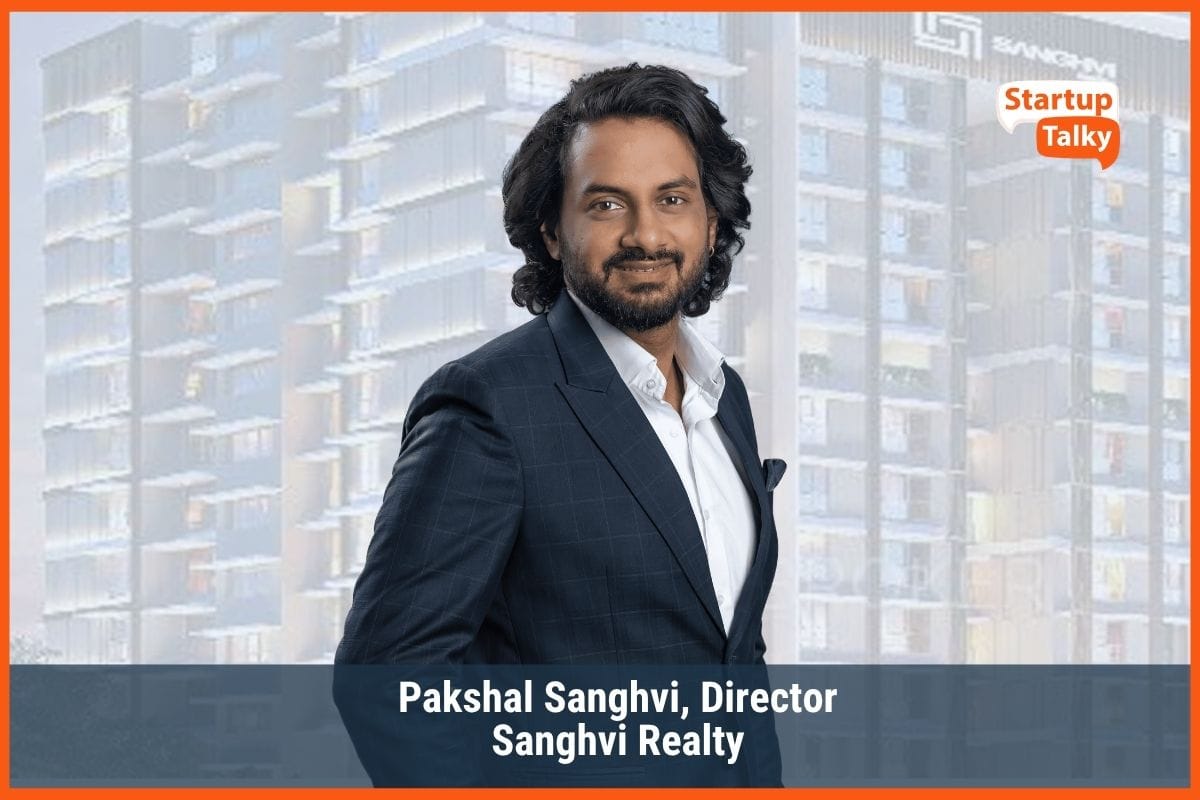
Mumbai’s real estate market continues to be one of India’s most important and competitive property markets, supported by strong housing demand, infrastructure development and redevelopment opportunities. The Indian real estate market is projected to grow at a strong CAGR over the coming years, with residential, commercial and redevelopment segments expected to benefit from urbanisation, rising incomes and improving connectivity. Mumbai and the wider Mumbai Metropolitan Region (MMR) are also expected to see continued growth as Metro expansion, road infrastructure and emerging employment hubs reshape residential demand.
In this interview, Pakshal Sanghvi, Director of Sanghvi Realty, shares his perspective on the evolving Mumbai real estate market, the opportunities in redevelopment, changing homebuyer expectations, affordability, sustainability and the future growth of the Mumbai Metropolitan Region. As a second-generation entrepreneur, he also discusses how Sanghvi Realty is balancing its legacy with a modern approach to real estate development.
StartupTalky: Could you take us through your journey at Sanghvi Realty and how your role in the business has evolved over the years?
Pakshal Sanghvi: My brother Shankesh and I are the second generation in the business so real estate has been a part of our lives from the beginning. When we started getting involved professionally, a lot of our journey was about learning from the first generation, understanding not just the business but also the importance of relationships, credibility and taking the long-term view.
Since we started working for the company years ago our role has naturally grown from learning specific parts of it to being more responsible for bigger projects and choices. We are fortunate to have a strong foundation and we can continue to learn and add our own unique perspective to Sanghvi Realty's next chapter.
StartupTalky: As a second-generation entrepreneur, how have you balanced the company’s existing legacy with your own ideas and approach to building the business?
Pakshal Sanghvi: We do not see legacy and evolution as opposing ideas. The values on which Sanghvi Realty was built integrity, credibility, relationships and a long-term approach remain constant. What needs to evolve is how we apply those values to a changing market.
Today's customers are more informed, regulations are more structured and expectations around design, sustainability, technology and transparency have changed significantly. Our role is not to replace what has been built, but to understand it respect it and build upon it.
Being the next generation comes with responsibility rather than entitlement. We have inherited a strong foundation and our job is to strengthen it keep it relevant and carry it forward.
StartupTalky: Mumbai remains one of India’s most complex and expensive real estate markets. What are the biggest challenges developers face today when launching and delivering projects in the city?
Pakshal Sanghvi: Mumbai is hard to understand because there isn't a lot of land available, it's expensive, there are rules to follow and people are becoming more picky. Because of this, it is very important to get the project costs right from the start.
Timelines are another important thing to think about. Delivery times can be changed by things like building, getting approvals and coordinating with stakeholders. Delays can cost money because they affect financing and cause costs to go up. Buyers also want better style, amenities, quality and connectivity but they also want to stay within their budget.
So, developers need to be disciplined at every step, from spotting a chance and figuring out what people want to plan realistically and consistently carry out their plans. There are a lot of great opportunities in Mumbai but developers who think ahead and don't make mistakes will be rewarded.
StartupTalky: Redevelopment is becoming increasingly important in Mumbai. What makes redevelopment projects fundamentally different from greenfield developments, and where do you see the biggest opportunities in this segment?
Pakshal Sanghvi: Redevelopment is fundamentally different because the developer is not starting with a vacant site. There is an existing community, existing residents, established relationships and expectations that need to be considered throughout the process.
As a result, the responsibility extends beyond building. The capacity to fulfill obligations, open communication, and trust all become crucial. Development potential, rehabilitation needs, building expenses, funding, schedules and market demand must all cooperate from a feasibility standpoint.
We see a huge opportunity because Mumbai has a substantial portfolio of old buildings in established neighbourhoods where demand is still strong. These towns can be revitalized through redevelopment without denying residents access to jobs, social services and educational opportunities.
When done properly, it may maintain the positive aspects of an existing neighborhood while enhancing amenities, safety and living standards. Because of this redevelopment is a significant component of Mumbai's urban change as well as a real estate opportunity.
StartupTalky: How have homebuyer expectations in Mumbai changed in recent years? Beyond price and location, what factors are influencing purchase decisions today?
Pakshal Sanghvi: Mumbai's homebuyer has become considerably more informed. Price and location remain fundamental but decisions are increasingly based on the overall living experience.
Connectivity has become particularly important. Buyers are thinking about travel time to workplaces, schools, transport hubs and everyday conveniences rather than simply looking at distance. They are also paying greater attention to natural light, ventilation, efficient layouts, construction quality and amenities that genuinely suit their lifestyle.
Trust is another important factor because customers can research developers, projects and neighbourhoods extensively before making a decision. There is also greater focus on long-term value how a location may evolve, how infrastructure could improve and whether the property will remain relevant over time.
The decision is therefore moving beyond simply purchasing an apartment. Buyers are increasingly choosing the lifestyle, community and larger ecosystem that come with the home.
StartupTalky: With land and construction costs continuing to rise, how can developers make housing more accessible while maintaining quality and commercial viability?
Pakshal Sanghvi: Affordability is one of the industry's most important challenges, particularly in Mumbai. We do not believe the answer is to compromise on quality. The greater opportunity lies in improving efficiency across the development lifecycle.
It starts with careful land acquisition and a reasonable view of what can be done. It is very important to have a good understanding of development potential, costs, and demand. Then, inefficiencies can be cut down by better planning, buying, building, and project management.
Time is particularly important because delays increase financing and construction costs. Technology can also help when it improves productivity, reduces wastage or enables better project monitoring but it should be adopted for the value it creates rather than simply as a marketing feature.
Commercial viability and affordability do not have to be opposing objectives. If projects are planned and executed more efficiently, real estate developers have greater scope to deliver quality homes without passing every inefficiency on to the buyer.
StartupTalky: Sanghvi Realty is looking to expand across the Mumbai Metropolitan Region. Which markets or development segments do you see offering the strongest growth opportunities over the next few years?
Pakshal Sanghvi: We see the Mumbai Metropolitan Region increasingly developing as one interconnected urban ecosystem. Improvements in roads, Metro and rail infrastructure, along with emerging employment centres, are changing how people evaluate residential locations.
The strongest opportunities, in our view, will be where improving connectivity comes together with sustainable residential demand and the potential for supporting social and commercial infrastructure. Redevelopment will remain important in established markets where land is scarce but ageing housing stock needs renewal.
Different parts of the MMR will naturally cater to different customer segments. Some markets will be driven by premium housing, while others will be shaped by affordability, connectivity or emerging employment corridors.
Our approach is therefore not simply about entering more markets. It is about identifying locations with strong fundamentals and sustainable demand and creating projects that remain relevant through different market cycles. For us measured and thoughtful growth is more important than growth for its own sake.
StartupTalky: Sustainability and smart living are becoming more prominent in real estate. Which practices or technologies do you believe can create meaningful value for homebuyers rather than simply becoming marketing propositions?
Pakshal Sanghvi: We believe that sustainability should be judged by how much good it does for people not by how often it's used in ads. Making things that use less energy putting in better lighting and cooling systems that use green energy and handling water well can really help by using fewer resources and maybe even cutting costs.
When it comes to smart home technology, the same rule holds. Features that make a home safer, more energy efficient or more convenient can really add value. But technology by itself doesn't always make a home better.
Sustainability should also be considered at the planning stage. Orientation, natural light, ventilation, landscaping and efficient resource use can have a meaningful impact without relying entirely on complex technology.
Ultimately, the best sustainable solutions are those residents experience every day through better comfort, efficiency and quality of life. If the benefit exists only in a brochure, we have missed the larger purpose of sustainability.
StartupTalky: From RERA and changing regulations to interest rates and rising costs, the sector has undergone significant shifts. How have these changes affected the way developers operate, and what further reforms does the industry need?
Pakshal Sanghvi: Over the last ten years the industry has become much more organized and open. RERA has made people more responsible and made disciplined planning, communication and execution more important. We think that's a good thing because being honest builds trust and pushes people to be more professional.
There is still room to make the process of regulation easier. Having a lot of different approvals and officials can make timelines less clear and development costs go up. A big difference could be made if agencies worked together better, set more stable dates for approvals and kept digitizing.
It would also be useful to recognise that redevelopment, greenfield development and affordable housing have different challenges and may require more differentiated frameworks.
Interest rates and construction costs will always fluctuate, and developers have to manage those risks responsibly. Regulatory predictability, however, can be improved structurally. The goal should be to create a space where responsible developers can make plans with more confidence, and where homebuyers are safe because of openness and responsibility.
StartupTalky: Looking at the next decade, how do you expect Mumbai’s real estate landscape to evolve and what role do you envision Sanghvi Realty playing in that transformation?
Pakshal Sanghvi: Over the next ten years, Mumbai's real estate market will become more connected, focused on infrastructure and concerned with the general quality of life.
The definition of a prime location is already evolving. Better connectivity will allow people to consider a wider geography, while infrastructure and employment growth will create new centres of residential demand. Redevelopment will also play an important role in renewing older parts of the city and improving the quality of existing housing.
For Sanghvi Realty our responsibility is to participate in this transformation while remaining grounded in the foundation built over generations. Our growth should not simply be measured by the number of projects or markets we enter but by the quality, relevance and long-term value of what we create.
Our group has been given a legacy, and it is our job to strengthen it and pass it on. Mumbai will keep changing, and we want Sanghvi Realty to change with it. But we want them to stay true to the values of trustworthiness, quality, responsible performance, and the long-term relationships that have made the business what it is today.
 Vivek Dev Jacob