
SME IPOs in India: How Growing Businesses Can Turn Public Listing Into a Growth Opportunity
Explore how SME IPOs can help growing businesses raise capital, strengthen governance, and scale. Learn how Zelio E-Mobility is navigating EV growth, investor expectations, financial discipline, and its expansion plans.
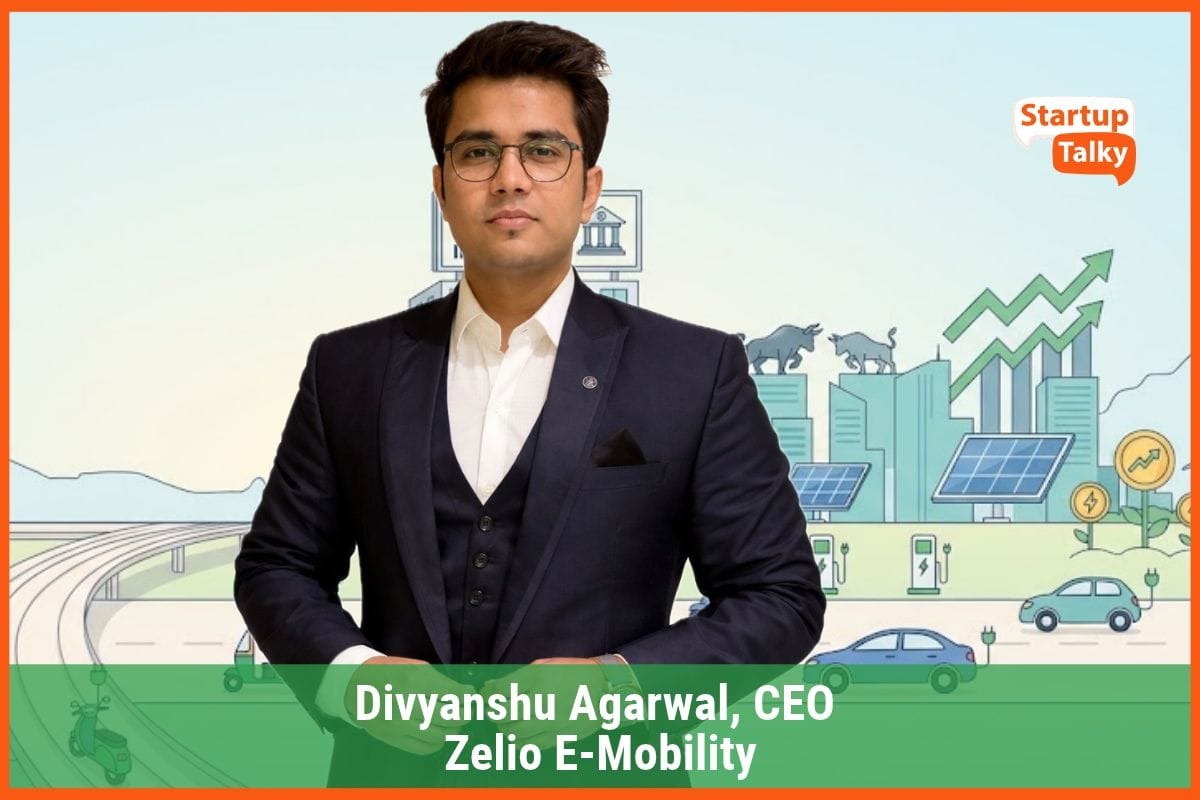
This article has been contributed by Mr. Divyanshu Agarwal, CEO, Zelio E-Mobility
India’s electric mobility market is entering a stronger growth phase, with electric two-wheelers emerging as one of its fastest-growing segments. The India electric two-wheeler market reached around 1.23 million units in 2025 and is projected to reach 12.26 million units by 2034, growing at a CAGR of 28.2% between 2026 and 2034.
The shift is already visible in consumer adoption. Electric two-wheelers accounted for 9.9% of the segment in FY27 YTD, nearly doubling from 5.5% in FY24, while 43% of surveyed consumers said they were actively considering an electric two-wheeler for their next purchase.
In this StartupTalky interview, Divyanshu Agarwal, CEO of Zelio E-Mobility, shares his perspective on leading a listed electric mobility company at a young age, preparing for an IPO, managing investor expectations and building Zelio's business in a competitive EV market. He also discusses the company's expansion plans, financial discipline and his views on SME IPOs versus mainboard listings.
Moving From IPO Preparation to Everyday Life as a Listed Company
StartupTalky: At Navi you were closely involved in the DRHP process and you now lead a company that is already listed. How different is preparing a company for an IPO from running one after listing, and what surprised you most in the move?
Divyanshu Agarwal: Preparing for an IPO means getting the business ready to open its books to public scrutiny. You need sound processes, strong governance, reliable financial and operational data, and a clear explanation of how the business works. Once listed, that scrutiny becomes part of everyday management.
Every quarter, every major decision and every shift in performance has to be understood and communicated to shareholders, analysts, regulators and the board. What surprised me most was the need to balance the speed of decision making with transparency and governance. In a private company, you can often make a decision and adjust as you go.
A listed company requires you to think just as carefully about how that decision is governed and communicated. Navi helped me understand how investors think. Leading a listed business has reinforced one lesson. The market ultimately looks for consistent delivery, not just a convincing story.
Zelio's Post-Listing Performance Reflects Changing Investor Expectations
StartupTalky: Zelio listed on the BSE SME platform with an IPO subscribed about 1.5 times, and the stock has since more than doubled. What does that gap between subscription demand and post-listing performance tell you about how the market values smaller EV companies?
Divyanshu Agarwal: Subscription demand tells you how investors viewed an opportunity at the time of the IPO. What happens after listing reflects changing expectations, business performance and broader market sentiment.
I think investors are becoming more discerning about smaller EV companies. The opportunity in electric mobility is significant, but the sector alone is not enough to justify a company's valuation.
Investors also want to see revenue growth, profitability, sensible expansion and the ability to compete in a crowded market. At Zelio, we recorded revenue of ₹313.68 crore in FY2025–26, an 81.8% increase over the previous year, while remaining profitable since inception. We don't comment on share price movements. Our focus is on building the business, and over time, execution should speak for itself.
Building Credibility as a Young CEO of a Listed Company
StartupTalky: You became CEO of a listed company at 26. How do you build credibility with public shareholders, analysts and a board, and how much does your Chartered Accountant background help in those conversations?
Divyanshu Agarwal: I don't think credibility comes from age or designation. It comes from understanding the business deeply, being transparent about the numbers and consistently doing what you say you will do. Being a relatively young CEO does mean people may initially have questions about experience.
My approach is to address that through preparation and substance, rather than trying to compensate for my age. I try to understand the business at a granular level, from financial statements and unit economics to manufacturing, products, customers and competition. My CA background definitely helps when speaking with investors, analysts and the board.
It gives me a strong grounding in financial statements, capital allocation and governance, and helps me understand what is actually driving the numbers. But being a CEO requires more than financial understanding. You have to know your customers, people, operations and strategy. Ultimately, trust comes from consistency, transparency and execution.
 StartupTalky News

Explaining the Offer for Sale Alongside Zelio's Fresh Issue
StartupTalky: The IPO included an offer for sale alongside the fresh issue. From a CEO's perspective, how do you explain to public investors why existing shareholders sold at listing while the company is still in a growth phase?
Divyanshu Agarwal: I would start by separating the two parts of the issue. Money raised through a fresh issue goes to the company for its stated purposes, while proceeds from an offer for sale go to the shareholders selling their shares.
An existing investor selling part of their holding does not necessarily mean they have lost faith in the business. Shareholders have different investment horizons and financial considerations. What investors should look at is whether the company has the resources and the business fundamentals to pursue its growth plans.
At Zelio, we continue to invest in manufacturing, distribution and our electric two wheeler and three wheeler portfolio. Our expansion plans are based on the opportunity we see in the market and the capabilities we need to serve it. As management, our responsibility is to be clear about how the business is performing, how capital is being used and what we are building for the long term.
Managing Battery Costs and Competition in the Electric Two-Wheeler Market
StartupTalky: Electric two-wheelers depend heavily on battery costs and competition from much larger players. How do you communicate these external risks to public-market investors without undermining confidence in the business?
Divyanshu Agarwal: I don't think acknowledging risks should undermine investor confidence. If anything, investors should be able to see that management understands what could go wrong and has a plan to deal with it.
Battery costs influence pricing, and larger manufacturers bring considerable resources and brand recognition. These are real challenges. But a business cannot build its future around favourable policies or assume that competition will remain limited. At Zelio, we have focused on affordability, practical products and a strong dealer presence, particularly in Tier 2 and Tier 3 markets.
Remaining profitable since inception has also reinforced the importance of controlling costs and expanding with discipline. We cannot control every external factor, but we can control how we manage operations, work with suppliers and respond to customers. That is where I believe a business earns lasting investor confidence.
Sanvi Barjatya
Financial Discipline Is Shaping Zelio's Expansion Strategy
StartupTalky: What changes after listing in how a company runs its finances, including quarterly reporting, working capital discipline and capital allocation, and how has this shaped Zelio's expansion decisions?
Divyanshu Agarwal: After listing, financial discipline becomes more visible because there is greater accountability for how the business performs and how capital is used. Quarterly reporting requires us to look closely at revenue, margins, inventory and cash flow, and understand what is driving the numbers rather than simply reporting them.
Working capital is particularly important in manufacturing, where money can get tied up in inventory, production and distribution. This has shaped how we approach expansion at Zelio. For instance, our plan to add more than 150 dealerships across South India by FY27 is not just about increasing our network.
We have to ensure that each new market has the right distribution support, inventory planning and after sales capabilities to generate sustainable business. We are conscious of balancing the pace of expansion with the returns it can deliver.
Zelio's Mainboard Migration Will Depend on Business Readiness
StartupTalky: Is a migration from the SME platform to the mainboard on Zelio's roadmap? What scale, governance or liquidity milestones would the company need to reach first?
Divyanshu Agarwal: I would not want us to pursue a mainboard migration simply because it is the next visible milestone after an SME listing. The more important task is to build a business that is ready for that step and has a clear reason to take it.
That means growing revenue while protecting profitability, strengthening governance and internal controls, and maintaining the quality of our financial reporting as operations become larger. Shareholder participation and trading liquidity are also relevant, alongside the applicable regulatory and exchange requirements. At Zelio, we are expanding manufacturing, building our dealership network and developing opportunities across electric two wheelers and three wheelers.
These are substantial priorities in themselves. Any decision on migration must make sense for the business and its shareholders, rather than being driven by appearances. We will focus on getting the fundamentals right and assess the appropriate path as the company evolves.
Choosing Between an SME IPO and a Mainboard IPO
StartupTalky: Having worked on a large fintech DRHP and now leading an SME-listed manufacturer, what advice would you give founders deciding between an SME IPO now and a mainboard IPO later?
Divyanshu Agarwal: I would not look at an SME IPO simply as a smaller version of a mainboard IPO. The decision should depend on where the business is in its lifecycle and what the company actually needs from the capital markets. For a founder, an SME IPO can be a very powerful milestone. It can provide access to capital, improve credibility with customers and suppliers, bring greater financial discipline and create a platform for the next phase of growth.
But listing also brings greater compliance, disclosure requirements and public accountability, so the organisation needs to be ready for that transition. If the business is still building its product market fit, business model or governance systems, I would focus on strengthening those fundamentals first rather than rushing towards a listing.
If the business has a strong operating track record, a clear growth opportunity, sound governance and a genuine need for capital, an SME IPO can be an excellent stepping stone. My biggest advice to founders is not to treat an IPO as the destination. Treat it as a financing and governance milestone in the journey of building a much larger company. Whether that journey starts with an SME IPO or goes directly to the mainboard should depend on the business, not the prestige of the listing.
Disclaimer from CEO: This article contains forward-looking statements based on management’s current expectations. Actual results may vary due to market conditions, competition, costs, regulations, and other risks. These views are not investment advice. Investors should refer to Zelio E-Mobility Limited’s disclosures filed with BSE Limited before making investment decisions.
Apoorva Bajj