

How Sukriti Mendiratta Built Panda’s Box to Bring Screen-Free, Culturally Rooted Learning to Children
👨💻StartupTalkersSukriti Mendiratta, founder of Panda’s Box, shares how the brand is creating screen-free, culturally rooted learning experiences for young children through mantra toys, books, and storytelling products while addressing modern parenting concerns around screen time and early development.
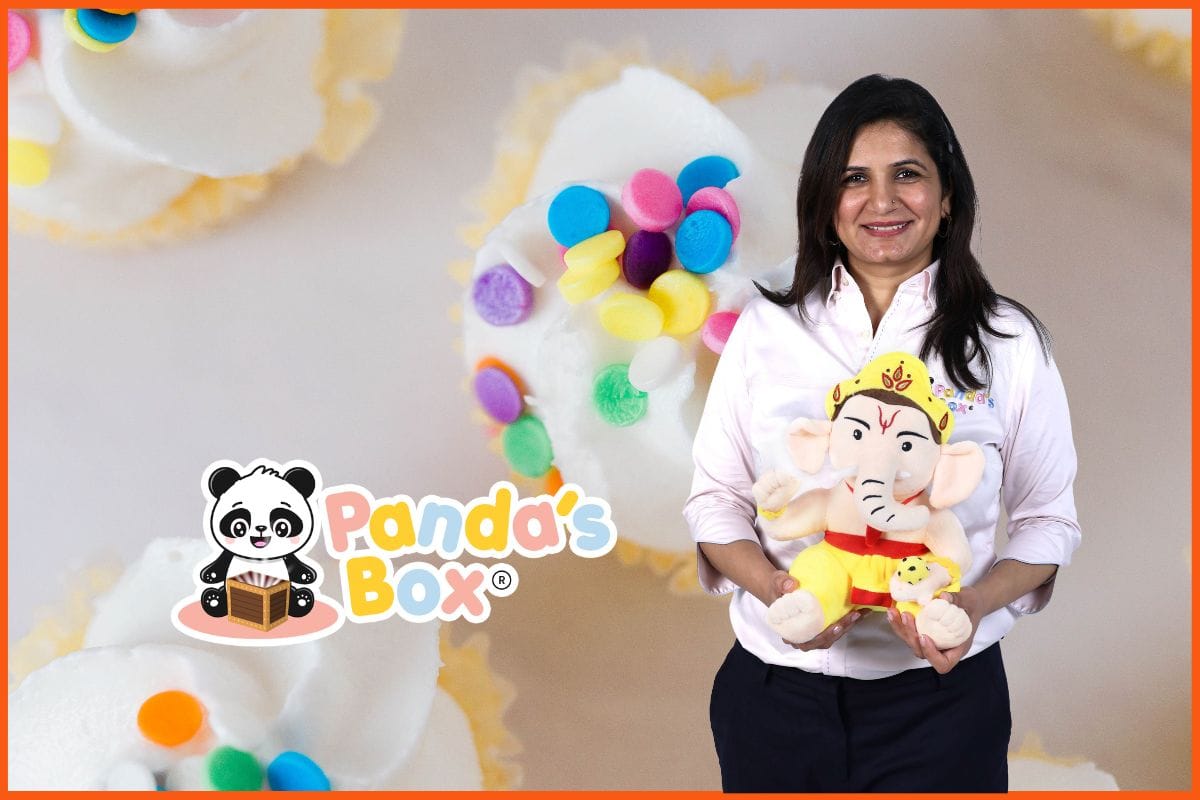
The early childhood education and toy market in India is rapidly evolving as parents become more aware of screen time, emotional development, and mindful learning. The Indian toys and games market is expected to grow from USD 4.07 billion in 2025 to USD 5.89 billion by 2034, while the educational toys segment is projected to expand at a 14% CAGR.
As conversations around mindful parenting and women-led innovation gain momentum around International Women’s Day, founders like Sukriti Mendiratta are building solutions that combine screen-free play, cultural grounding, and early childhood development. Through Panda’s Box, she aims to create meaningful learning experiences that help children connect with culture while supporting healthy development.
Building Panda’s Box from a Personal Parenting Insight
StartupTalky: Panda’s Box was born from your personal parenting journey. What specific gaps did you observe in early childhood learning that convinced you to build a culturally rooted, screen-free brand?
Sukriti Mendiratta: Like many other working parents, we faced the same struggle, the recurring guilt of constantly questioning ourselves: how much screen time is too much? Screens typically provided the quickest solution, but never felt like the right answer.
We wanted our son to have the same kind of natural relationship with Indian culture that we experienced as children through storytelling, sounds/mantras we heard growing up, and the values we developed rather than taught. Yet, we found limited options for providing him with that kind of experience. Schools don't provide enough early exposure to culture. Digital apps were often more of a distraction than anything meaningful, and toys tended to create more stimulation than any kind of emotional bond.
This gap kept floating around in our thoughts since the day he was born. Then we started asking ourselves: What if children could have a natural way to connect to Indian culture without screens or stress? That idea led us to bring Panda's Box to the world in April 2022.
Addressing the Shift Toward Screen-Free Learning
StartupTalky: India’s early childhood and parenting market is evolving rapidly, especially with rising concerns around excessive screen time. How do you see Panda’s Box addressing this behavioural shift while strengthening cultural grounding among young learners?
Sukriti Mendiratta: Parents today are far more mindful about screen exposure. They are not rejecting technology entirely, but they are actively seeking balanced, meaningful alternatives.
Panda’s Box offers tactile, emotionally engaging experiences that don’t rely on screens. Through mantra-chanting plush toys, musical mantra books, and storytelling companions, we create moments of calm and connection. The focus is not just learning, but building routines, comfort, and cultural familiarity in a gentle way. It allows children to engage through touch and sound, while strengthening parent-child bonding.
Designing Products Around Child Development and Parent Insights
StartupTalky: Your product portfolio, from mantra books to divine plush toys and musical storytelling companions, focuses on tactile and emotionally engaging experiences. What child development research or consumer insights shaped this product strategy?
Sukriti Mendiratta: Children aged 0 to 6 respond strongly to rhythm, repetition, texture, and sound. However, our approach has been molded by paying great attention to parents, which goes beyond developmental knowledge.
Numerous families informed us that they were searching for calming rather than over-stimulating products. Soft textures, soothing chants, and meaningful storytelling are therefore given top priority in our designs. The goal is to foster cultural knowledge and emotional stability at the same time, without having it feel instructional.
Creating India’s Mantra-Chanting Toy Category
StartupTalky: As one of the pioneers of mantra-chanting toys in India, how did you identify this niche opportunity, and what operational or market challenges did you face while building awareness in a relatively new category?
Sukriti Mendiratta: The concept came from our own home. Mantras and chants are common in many Indian households, but there was no child-friendly format in the toy sector. The larger challenge was operational. The Indian soft toy market is heavily fragmented. Small cottage producers struggled with scale, but larger manufacturers were not adaptable enough for short manufacturing runs.
Even making 200 items at the desired workmanship level seems practically unattainable. After nearly six months of knocking on doors, enduring rejection, and conducting trial runs, we finally found a vendor willing to take that initial risk with us. We were also creating an entirely new category. Parents required reassurance that this was not about religious education, but rather about rhythm, comfort, and emotional stability. When the first products arrived at customers' homes, the feedback was overwhelmingly positive. Children are naturally connected with them.
Growth After Shark Tank India
StartupTalky: After securing investment on Shark Tank India, how has the funding and national visibility influenced your growth strategy, distribution expansion, and long-term brand positioning?
Sukriti Mendiratta: Being featured on Shark Tank India marked a great turning point for us. We obtained a collaborative investment of INR 1.2 crore, providing us with both necessary funding and increased national exposure. This validation greatly enhanced consumer confidence in our brand. Presently, our monthly revenue stands at about INR 1.5 crore, indicating consistent demand.
Our newly introduced mantra books have also contributed to this momentum, with 2,000 copies sold within the first two weeks, followed by another 4,000 in the subsequent three weeks, totaling around 6,000 books in nearly a month. We are using the investment to boost product innovation, widen our distribution networks, and enhance our digital footprint, all while remaining true to our foundational philosophy.
Building Trust in the Parenting Ecosystem
StartupTalky: Building a trust-driven brand in the parenting space requires credibility and consistency. How have you approached quality control, community building, and customer retention in an increasingly competitive D2C environment?
Sukriti Mendiratta: Credibility is key in parenting. Across every product, we are personally invested in quality, safety, and durability because parents are putting their children's formative years in our hands. Community has been equally significant, with over 2 lakh children now playing with Panda's Box products and parents regularly sharing bedtime routines, chanting moments, and daily rituals around our toys, which has allowed us to listen, improve, and evolve with repeat engagement and trust.
Scaling While Staying True to the Brand’s Philosophy
StrtupTalky: Looking ahead, as Indian parents become more conscious about emotional intelligence, mindfulness, and cultural literacy, how do you envision Panda’s Box scaling while staying authentic to its original philosophy?
Sukriti Mendiratta: We believe early childhood is about emotional grounding as much as cognitive development. As parents increasingly prioritise mindfulness and cultural literacy, we see a strong opportunity to expand, but thoughtfully.
Scaling for us is not about diversifying endlessly. It is about deepening our impact within screen-free, culturally rooted learning. Whether nationally or internationally, our commitment remains the same to offer calm, meaningful, hands-on experiences that help children build a strong emotional and cultural foundation.
 Sakshi Jadhav