Which State Collected the Most GST in June 2026? A State-Wise Analysis
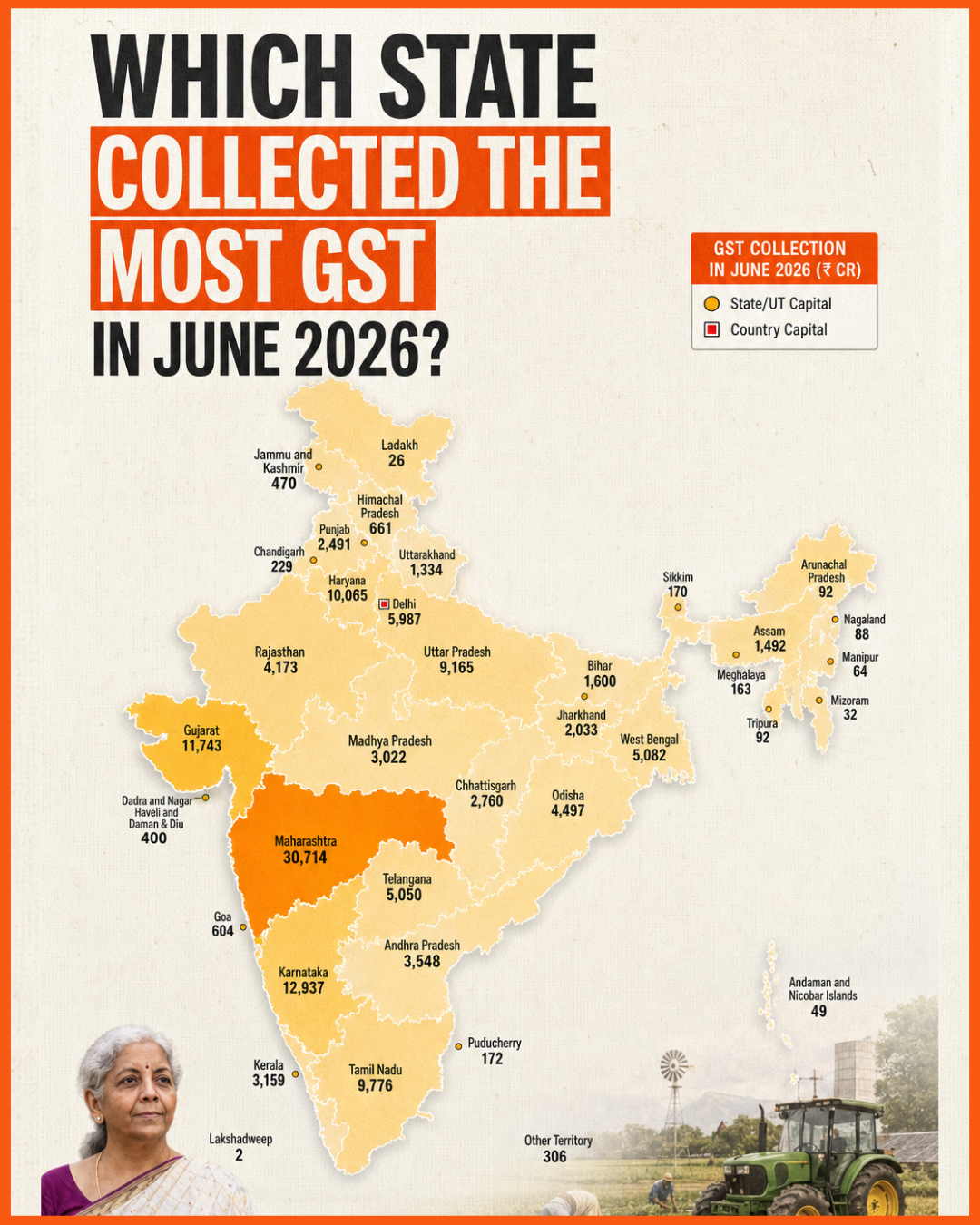
Maharashtra topped state-wise GST collection in June 2026 with Rs 30,714 crore, followed by Karnataka and Gujarat. Here is a full state-by-state breakdown of India's GST numbers for the month.
India's states collected a gross domestic GST of Rs 1,34,774 crore in June 2026, up 6.5% from Rs 1,26,506 crore in June 2025. This growth shows that consumption and business activity across the country continued to hold steady, even as some states saw their collections fall compared to last year.
Here is a simple breakdown of how each state performed, based on provisional data released by the CBIC.
Overall GST Collection Trend
The total GST collection figure for June 2026 covers only domestic transactions. It does not include GST collected on imports, and it is measured before refunds are paid out. This is the standard way state-wise collection numbers are reported each month.
Maharashtra Leads State-Wise GST Collection
Maharashtra remained the top contributor by a wide margin, collecting Rs 30,714 crore in June 2026. This is more than double the collection of the second-place state. Karnataka and Gujarat followed, both crossing the Rs 11,000 crore mark. Together, these three states made up nearly 42% of the total domestic GST collected across the country.
Top 10 States by GST Collection
These ten states together accounted for a large share of the country's total GST collection, reflecting where most of India's industrial and commercial activity is based.
Uttar Pradesh Shows Strongest Growth Among Large States
Among the bigger states, Uttar Pradesh recorded the fastest growth at 19%, rising from Rs 7,675 crore to Rs 9,165 crore. Punjab also grew well, up 14%, and Assam saw a healthy 17% rise. Smaller states and union territories such as Manipur (up 62%), Andaman and Nicobar Islands (up 53%) and Lakshadweep (up 59%) posted the sharpest percentage gains, though their actual collection amounts remain small.
States That Saw a Decline in Collection
Not every state saw growth this June. A few states actually collected less GST than they did a year ago.
Sikkim recorded the steepest fall, down 53%, followed by Puducherry and Himachal Pradesh. It is worth noting that these are small base figures, so even a modest drop in rupee terms can look like a large percentage fall. Among bigger states, Tamil Nadu and Rajasthan saw mild declines, which is a point worth watching in the coming months.
Why Some States Grow Faster Than Others
State-wise GST collection largely reflects local economic activity, consumption patterns and the presence of manufacturing or trading hubs. States like Maharashtra, Karnataka and Gujarat have large industrial and services bases, which keep their collection numbers high. On the other hand, smaller states and hill states often have lower collections in absolute terms, though their growth rates can swing sharply due to the smaller base.
It is also worth remembering that GST collected in a state is not the same as GST settled to that state. A separate settlement process divides up the IGST collected on inter-state trade and gives states their fair share based on consumption. That is a different number from the collection figures shown here.
What This Data Tells Us
The 6.5% overall growth in June 2026 suggests steady, if unspectacular, economic activity across India. Large states continue to dominate collection numbers, while a mix of small and mid-sized states showed weaker performance this month. The government will likely watch states with declining collections, such as Rajasthan, Madhya Pradesh and Tamil Nadu, more closely in the months ahead.
For businesses and policy watchers, these monthly figures offer an early signal of consumption trends, well before other economic indicators are released.
 Muskaan Kapoor