Best AI Tools for Automated Creative Testing
AI tools for automated creative testing help marketers generate, test, and compare ad creatives at scale. Explore popular tools, key features, benefits, and limitations.

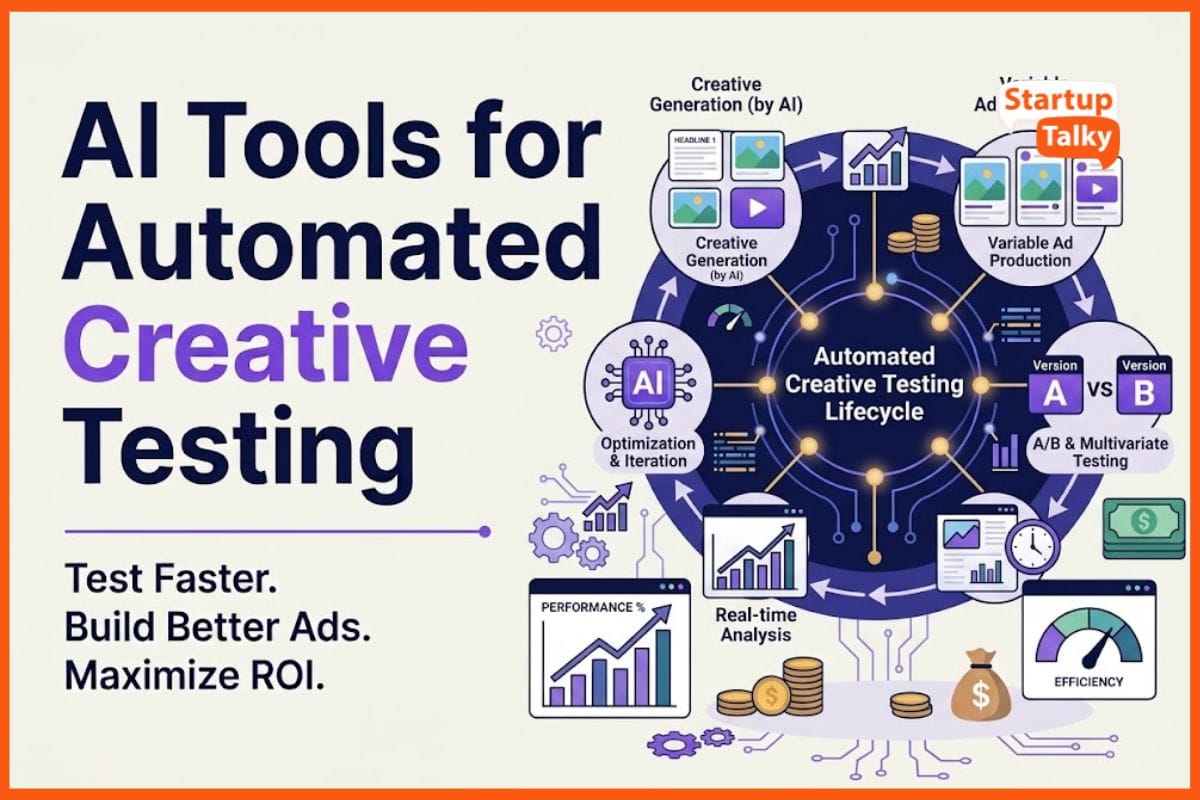
AI tools for automated creative testing help teams find stronger ads, images, videos, and messages faster. They test many creative versions, track audience response, and reveal what drives clicks, sales, or sign-ups.
Instead of relying on guesswork, marketers can use clear data to improve headlines, visuals, calls to action, and layouts. These tools also reduce manual work and speed up campaign learning.
Brands can spot weak ideas early, invest more in winning content, and adapt quickly as audience needs change. The result is smarter creative decisions, better campaign results, and a faster path from idea to impact.
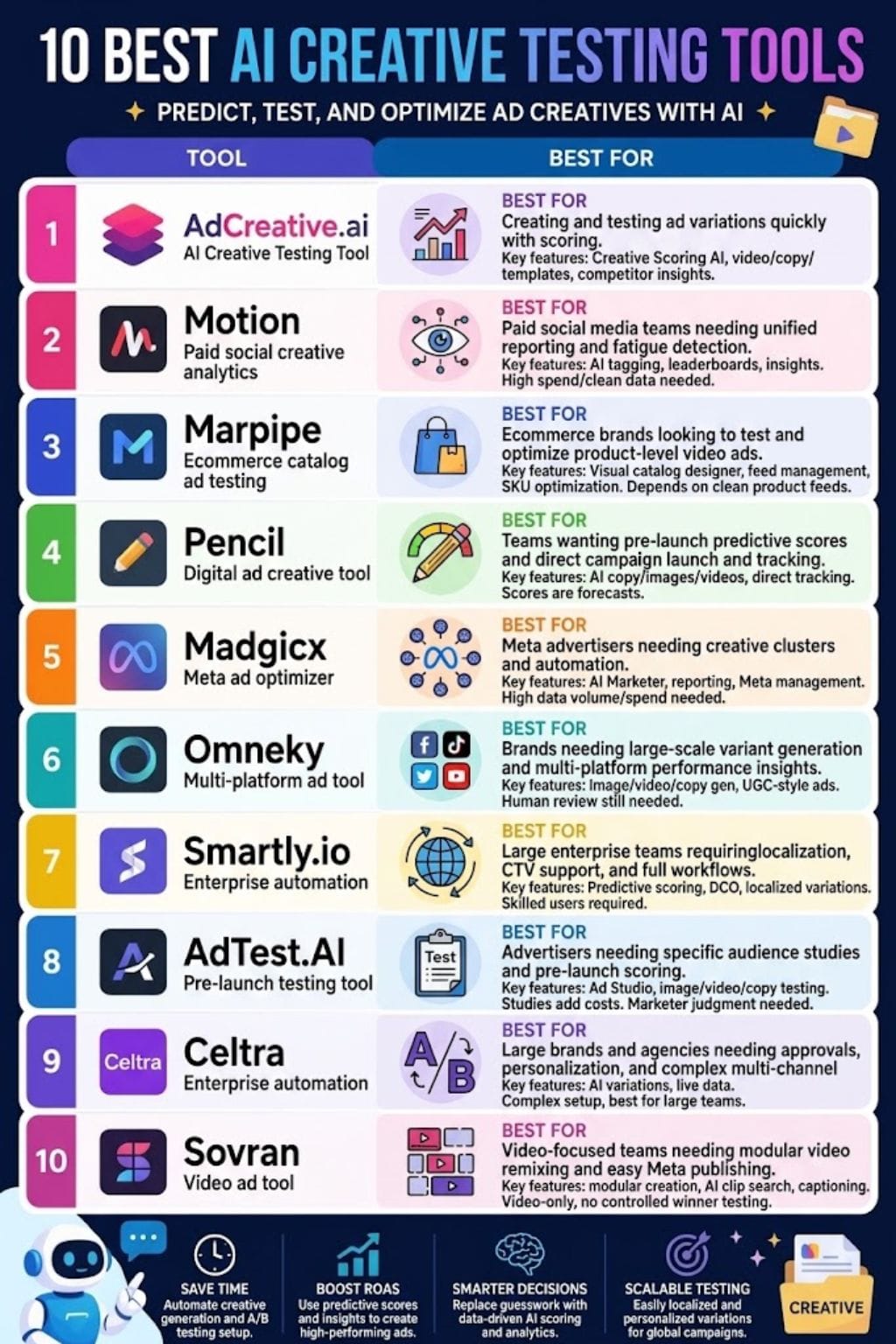
Best AI Creative Testing Tools
| AI Creative Testing Tool | Best For | Key Features | Drawbacks |
|---|---|---|---|
| AdCreative.ai | Creating and testing ad variations | AI creative generation, Creative Scoring AI, images, videos, copy, templates, competitor insights | AI outputs can feel formulaic; less flexible than dedicated design tools |
| Motion | Paid social creative analytics | AI tagging, creative leaderboards, unified reporting, AI insights, creative fatigue detection | Needs clean data and enough spend; entry pricing is high for small advertisers |
| Marpipe | Ecommerce catalog ad testing | Visual catalog designer, automated design rules, product-level video, feed management, SKU optimization | Depends on clean product feeds and sufficient ad volume; Startup plan has limits |
| Pencil | Creating, testing, and improving digital ad creatives | AI copy, images, videos, predictive scores, direct launch and tracking, brand controls | Scores are forecasts; best results need strong brand assets and campaign data |
| Madgicx | Meta ad creative testing and optimization | Creative clusters, AI Marketer, automation rules, reporting, Meta ad management | Depends on data volume; pricing rises with Meta ad spend |
| Omneky | Multi-platform ad creative production and testing | Image, video, UGC-style ads, copy generation, creative variants, performance insights | Human review is still needed; integrations do not replace targeting or media strategy |
| Smartly.io | Enterprise creative automation | Predictive scoring, DCO, localization, creative workflows, analytics, CTV and multi-channel support | May be more than small teams need; requires skilled users |
| AdTest.AI | Pre-launch creative testing | Creative scoring, AI Ad Studio, audience studies, image/video/carousel/copy testing | Additional studies and targeting can add costs; results still need marketer judgment |
| Celtra | Enterprise creative automation and localization | AI creative variations, templates, pre-launch scoring, live data, approvals, personalization | Complex for small teams; setup can take time |
| Sovran | Video ad production and testing | Modular video creation, AI clip search, auto-tagging, captions, voiceover remixes, Meta publishing | Mainly focused on video; does not determine winners through controlled experiments |
AdCreative.ai
AdCreative.ai is an AI-powered tool that helps businesses create and test ads faster. It can generate multiple ad versions using images, videos, copy, and different layouts.
Its Creative Scoring AI predicts which creatives may perform better before they go live, helping teams choose which ones to test. Users can create display, product, and video ads, customize them to match their brand, and connect with platforms like Meta, Google, and LinkedIn.
Eligible plans also include access to iStock images. The platform offers competitor insights and creative performance data. It is useful for small teams that need more ad content.
Pros
- It helps teams narrow a large pool of concepts before spending media budget on live tests
- It can create many variations in minutes, which supports frequent testing
- Visuals, copy, videos, templates, and scoring sit in one product
Cons
- AI outputs may feel formulaic unless users add strong brand rules and human edits
- Designers may find templates and AI layouts less flexible than dedicated design tools
Pricing
| Plan | Pricing |
|---|---|
| Starter Plans | $20/month |
| Professional Plans | $125/month |
| Ultimate Plans | $500/month |
Motion
Motion is an AI-powered creative analytics tool built for paid social teams. It reviews live ad performance and helps teams understand which hooks, visuals, formats, and messages are driving results.
Rather than creating ads or managing campaigns, Motion focuses on what happens after ads go live. It connects with platforms such as Meta and TikTok, combines data into clear visual reports, and helps teams find top-performing ads, weak creatives, and signs of creative fatigue.
Its features include AI tagging, creative leaderboards, unified reporting, AI-generated insights, and suggestions for future tests.
Pros
- Makes creative results easy to read for both growth and creative teams
- Links ad performance to specific creative choices, not just campaign totals
- Supports faster iteration by showing patterns in winning ads
Cons
- Strong findings still depend on clean ad-account data and enough spend
- Current entry pricing is high for small advertiser
Pricing
| Plan | Pricing |
|---|---|
| ProAI | $49/month |
| BusinessAI | $69/month |
Marpipe
Marpipe is an automated creative testing platform built for ecommerce brands that run catalog ads. It helps marketing teams turn product feeds into branded image and video ads and test different designs at scale.
Its features include a visual catalog designer, automated design rules, product-level video, feed management, product sets, and SKU optimization.
Marpipe supports major ad platforms such as Meta, TikTok, Snap, Pinterest, and Reddit. Unlike many generative AI ad tools, Marpipe focuses on controlled creative production and real-world testing.
Marketers can create different ad variations, measure their performance, and improve their campaigns while keeping control.
Pros
- Supports rules that assign different designs to different products or groups
- Includes product-level video and bulk background removal for catalog assets
- Uses flat monthly pricing rather than a share of ad spend or revenue
Cons
- Results rely on clean product feeds, enough SKUs, and sufficient ad volume
- Startup limits users to 500 SKUs, one channel, one market, and three live designs
Pricing
| Plan | Pricing |
|---|---|
| Startup | $199/month |
| Enterprise | $1499/month |
 Vivek Dev Jacob
Pencil
Pencil is an AI-powered platform that helps brands and agencies create, test, and improve digital ad creatives faster.
It can generate ad copy, images, videos, and multiple creative versions, helping teams explore more ideas without spending weeks on production. Pencil also uses live campaign data and predictive scores to show which creatives are more likely to perform well.
Teams can use these insights to decide what to test and where to focus their budget. The platform supports major advertising channels, including Meta, TikTok, YouTube, Google Display, DV360, and LinkedIn. It is designed for marketing teams.
Pros
- Generates copy, images, video, and ad formats in one workflow
- Supports direct launch and tracking across major paid-media channels
- Brand, role, and governance controls can fit larger teams
Cons
- A score is a forecast, not proof; real-world tests still decide winners
- Best results need clean brand assets, clear offers, and reliable campaign data
Pricing
| Plan | Pricing |
|---|---|
| Core | $14/month |
| Growth | $55/month |
| Pro | Custom Pricing |
Madgicx
Madgicx is an AI-powered platform built for Meta ad teams that want to test, understand, and scale creative campaigns faster. It groups similar ads into creative clusters, helping teams spot patterns across images, videos, and ad copy.
The platform can also highlight ads that are likely to perform well and flag weaker ones. Its AI Marketer provides account-level insights, while automation rules can pause poor-performing ads or move budgets toward better ones.
Madgicx also brings campaign data, analysis, and reporting into one platform. It works best for teams already spending enough on Meta ads to generate useful testing data.
Pros
- AI Marketer provides ongoing account reviews and actionable optimization suggestions
- Rules can pause losing ad sets, scale winners, and adjust spend from live performance signals
- It joins creative intelligence, reporting, automation, and Meta ad management in one tool
Cons
- Results depend on good data volume
- Pricing rises as your Meta ad spend grows, which can reduce value for fast-scaling brands
Pricing
| Plan | Pricing |
|---|---|
| Monthly | $45/month |
Omneky
Omneky is an AI platform for making, testing, and improving digital ad creative. It creates image, video, UGC-style ads, and copy from prompts, product data, and brand assets.
Teams can produce many variants, connect ad accounts, and study which visuals, hooks, and messages drive results. Its performance insights help marketers spot winning creative patterns, score ads, and make new versions for Meta, Google/YouTube, TikTok, LinkedIn, and Reddit.
This makes creative testing faster and more data-led, though results still depend on sound campaign setup, sufficient ad spend, and human brand review
Pros
- Supports image, video, and UGC-style ads across several major ad networks
- Lets teams create and compare many creative variants quickly, helping reduce manual production work
- Direct ad-account connections and unlimited exports are included in the Standard plan
Cons
- AI-made ads still need human checks for brand tone, legal claims, audience fit, and visual quality
- Platform integrations do not replace good targeting, landing pages, or media-buying strategy
Pricing
| Plan | Pricing |
|---|---|
| Lite | $29/month |
| Standard | $99/month |
| Pro | $249/month |
| Enterprise | Custom |
StartupTalky Official
Smartly.io
Smartly.io is an enterprise AI advertising platform that helps teams create, test, manage, and improve ads at scale. It can generate multiple versions of images, videos, and copy, while its AI tools predict how an ad may perform before it goes live.
Creative Predictive Potential scores ads based on attention, emotion, and engagement, with heatmaps and suggestions to improve weak areas. The platform also supports Dynamic Creative Optimization, allowing brands to tailor ads by audience, region, and language.
Teams can track creative performance across social, video, display, and CTV, while templates, approvals, brand controls, and shared workflows.
Pros
- It tests likely attention and engagement before media spend, which can reduce slow manual pre-tests
- One creative idea can become thousands of localized versions
- Teams can create, launch, measure, and refresh ads in one workflow
Cons
- Its depth and scale may be more than a small team needs
- Templates, feeds, DCO, analytics, and multi-channel setup need skilled users
Pricing
| Plan | Pricing |
|---|---|
| Request for Pricing (RFP) | Custom Pricing |
AdTest.AI
AdTest.AI is an AI-powered platform that helps marketers test ad creatives before they go live. Users can upload an image, video, carousel, or ad copy and get a score in about 90 seconds.
The platform reviews the creative across 13 areas, including clarity, emotional impact, brand fit, creative strength, expected click-through rate, and compliance. It also helps teams compare different concepts and offers practical suggestions to improve them.
With AI Ad Studio, marketers can create ready-to-use ad variations for different platforms. When teams need feedback from real people, they can also run audience studies.
Pros
- Tests support image, video, carousel, and copy in one workflow
- AI Ad Studio can create three finished image ads from a brand URL for two credits
- Real respondent studies offer a useful check against AI-only scores
Cons
- Local targeting, extra creatives, and custom questions can add study costs
- Results still need marketer judgment, especially for niche audiences and unusual brand goals
Pricing
| Plan | Pricing |
|---|---|
| Creator | $30/month |
| Starter | $50/month |
| Growth | $100/month |
| Pro | $200/month |
| Scale | $350/month |
Celtra
Celtra is an enterprise creative automation platform that helps large teams create, adapt, test, and improve digital ads at scale. Its AI tools can generate brand-safe creative variations, while templates help turn one design into different sizes, languages, and formats for various channels.
Teams can use performance insights and pre-launch scoring to compare creative ideas before spending on media. Live data, such as product prices and stock levels, can also be added to ads and updated automatically.
Celtra supports approvals, workflows, asset management, personalization, and ad delivery across major media platforms.
Pros
- Pre-launch performance scoring can reduce guesswork before an ad goes live
- Creates many on-brand versions from approved templates and rules
- Supports localization across formats, markets, and languages
Cons
- It is built mainly for enterprise programs, so it may be too complex for small teams
- Setup can take time because templates, brand rules, feeds, and workflows need planning
Pricing
| Plan | Pricing |
|---|---|
| Request for Pricing (RFP) | Custom Pricing |
Vivek Dev Jacob
Sovran
Sovran is an AI-powered video ad production tool built for performance marketing teams. It helps teams turn existing footage and brand assets into editable ad drafts and create multiple versions for testing.
Marketers can break videos into reusable hooks, body clips, and CTAs, then combine them to make new ads quickly. Sovran also offers captions, voiceover remixes, AI-powered clip search, automatic tagging, multi-size exports, and Meta publishing.
This makes it easier to produce more video tests without spending hours on editing. However, Sovran does not determine which ad variation will perform best through a controlled experiment.
Pros
- Builds modular hook, body, and CTA combinations from the same asset bank, which speeds up structured video-creative testing
- Finds useful moments in old footage through transcripts, AI clip search, and auto-tagging
- Keeps briefs, approved claims, scripts, and product details in a Context Vault to aid on-brand work
Cons
- It is built mainly for video ads, not broad static-ad design or full creative-suite work
- Its core strength is making and launching variants; teams must still use campaign data and sound test design to judge the winner
Pricing
| Plan | Pricing |
|---|---|
| Base | $99/month |
| 10 Custom Video Ads | $500 one time |
How to Choose an AI Creative Testing Tool
The right tool depends on how your team creates and tests ads.
For creating many ad variations
Tools such as AdCreative.ai, Pencil, and Omneky focus on generating multiple versions of ads, including images, videos, copy, and different formats.
For analyzing live creative performance
Motion focuses on live ad performance and helps teams understand which hooks, visuals, formats, and messages are driving results.
For ecommerce catalog testing
Marpipe is designed around product feeds, catalog ads, product-level video, and SKU optimization.
For Meta-focused teams
Madgicx brings creative intelligence, reporting, automation, and Meta ad management into one platform.
For enterprise teams
Smartly.io and Celtra focus on large-scale creative production, localization, workflows, personalization, and multi-channel advertising.
For pre-launch creative feedback
AdTest.AI focuses on testing creative before it goes live, with AI scoring and the option to collect feedback from real respondents.
For video-focused creative testing
Sovran focuses on turning existing footage into multiple video ad variations that teams can test and launch.
Final Thoughts
AI tools for automated creative testing change how teams learn what works. They test many ideas fast. They spot clear patterns in ads, images, copy, and video. This helps teams make better choices with less guesswork.
It also saves time and cuts waste. Yet people still set the goal, shape the story, and judge what feels right. The best results come when smart systems and human skill work side by side.
Used well, automated testing turns each campaign into a chance to learn, improve, and connect more deeply with the audience.
FAQs
What are AI tools for automated creative testing?
AI tools for automated creative testing help marketers create, test, and compare multiple ad variations. They can analyze creative performance across metrics such as clicks, conversions, engagement, and ROAS.
How do AI tools automate creative testing?
These tools can generate different versions of ad images, videos, headlines, copy, and layouts, then test their performance using campaign data. AI can identify patterns and highlight creatives that perform better.
What are the benefits of automated creative testing?
Automated creative testing can reduce manual work, speed up experimentation, increase the number of creative variations tested, and provide data-based insights into which elements may improve ad performance.
Which AI tools are used for automated creative testing?
Popular options include AdCreative.ai, Pencil, CreativeX, Motion, and other AI-powered creative optimization platforms. The right tool depends on factors such as ad channels, creative formats, testing needs, and budget.
Can AI creative testing replace human marketers?
No. AI can automate creative generation, testing, and analysis, but marketers still need to define goals, provide brand direction, interpret results, and make decisions based on business and audience context.