
10 Best AI Tools for Advertising Agencies to Create Better Ads
Discover the 10 best AI tools for advertising agencies to create ad creatives, write marketing copy, produce videos, optimize campaigns, and automate client reporting.

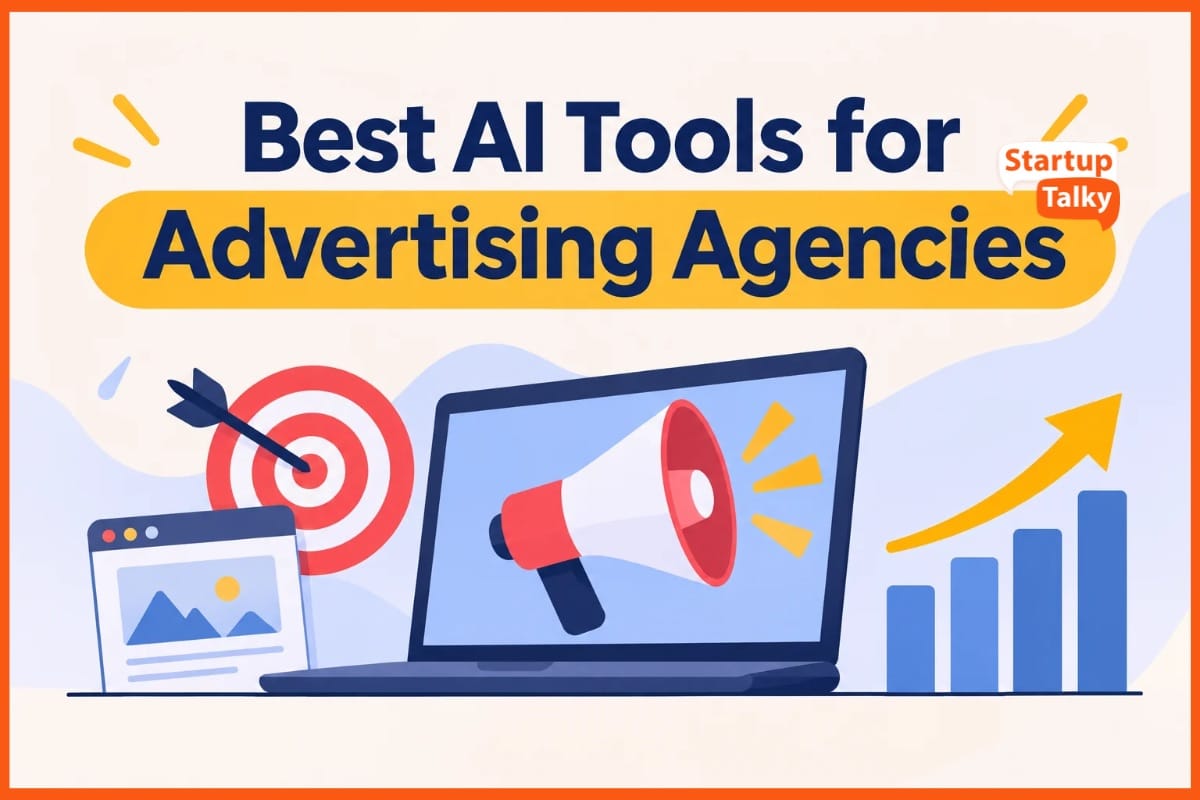
Great ads begin with fresh ideas, but tight deadlines can make creative work harder. The best AI tools for advertising agencies help turn ideas into ads that catch attention.
They can write ad copy, create images, edit videos, and prepare client reports. This saves time and lets teams focus on brand goals and new ideas. These tools can also reduce daily tasks without replacing human skills and creative thinking.
From the first draft to the final design, AI can support each step of the process. This guide explores how agencies can use AI to work faster.
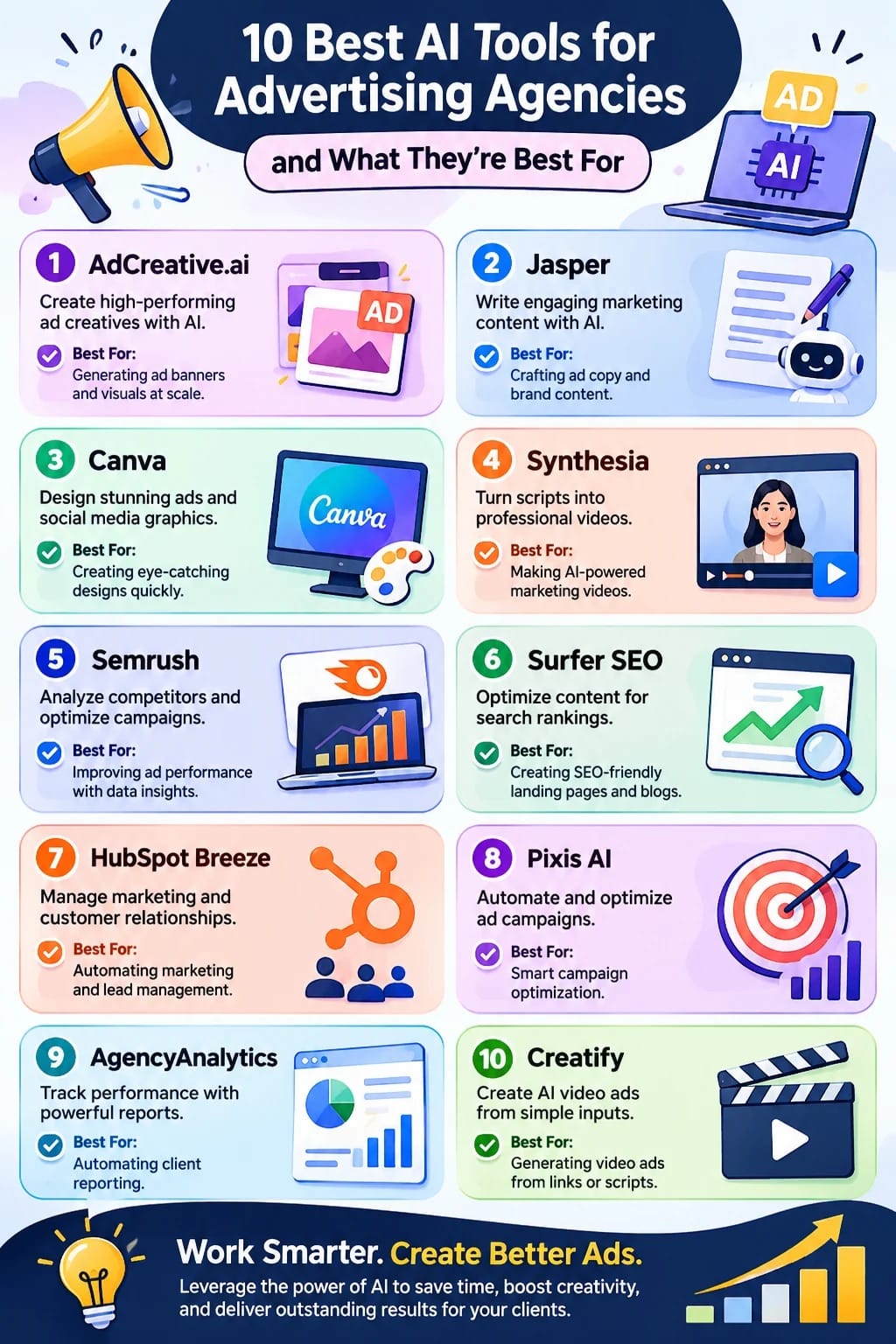
10 Best AI Tools for Advertising Agencies: A Quick Comparison
The following table compares the best AI tools for advertising agencies based on their primary use cases, key features, and limitations.
| Tool | Best For | Key Features | Drawbacks |
|---|---|---|---|
| AdCreative.ai | Creating ad creatives at scale | AI ad scoring, bulk ad creation, templates, brand tools | Unlimited creation does not mean unlimited downloads |
| Jasper | AI-powered ad copy and marketing content | Brand Voice, Canvas, AI agents, bulk content tools | Advanced features require Business plans |
| Canva | Designing ads and social media creatives | Magic Write, Magic Resize, Brand Kits, AI image and video tools | Advanced usage and additional seats can increase costs |
| Synthesia | Creating AI-powered advertising videos | AI avatars, voice cloning, captions, multilingual videos | More editors and advanced features require higher plans |
| Semrush | Advertising research and campaign optimization | Advertising Toolkit, competitor research, AI Visibility Toolkit | Separate toolkits may require additional budgets |
| Surfer SEO | SEO content creation and optimization | Content Editor, AI writing, content audits, topic maps | Higher plans are needed for more team members |
| HubSpot Breeze | AI-powered marketing and customer management | AI assistant, prospecting agent, customer agent, CRM insights | Usage fees can increase costs |
| Pixis AI | Campaign automation and ad optimization | Prism, Adroom, automated bidding, audience insights | Requires sufficient campaign data for effective optimization |
| AgencyAnalytics | Automated client reporting and analytics | Custom dashboards, AI insights, scheduled reports, 90+ integrations | Some features are paid add-ons |
| Creatify | AI-generated video advertisements | AI avatars, AdFlow, Ad Clone, multilingual video creation | Higher plans are needed for larger teams |
1. AdCreative.ai
AdCreative.ai helps ad agencies make ads for their clients in less time. It turns brand details into banners, ad copy, product shots, and videos. Teams can make many versions to test fresh ideas across ad platforms.
Its AI scores ads before launch to help teams choose what to test first. Brand tools help keep each client’s look clear and consistent. Other key features include bulk ad creation, custom templates, stock photos, and tools that check ads for compliance.
Teams can also track ad results and study rival ads. This gives agencies one place to create, review, and refine.
Pros
- Make many ad versions without starting each one from scratch
- Paid plans offer space for several brands and team members
- Ad insights show which ads work best and offer tips for new ones
Cons
- Unlimited ad creation does not mean unlimited downloads
- Agencies may need a higher tier as they take on more clients
AdCreative.ai Pricing
| Plan | Pricing |
|---|---|
| Starter Plans | $39/month |
| Professional Plans | $249/month |
| Ultimate Plans | $999/month |
2. Jasper
Jasper is an AI tool that helps ad agencies write content for client brands. It can draft ads, emails, blog posts, and social posts. Its Brand Voice tool helps match each client’s tone.
Teams can add brand facts and audience details to guide drafts. Canvas gives users a space to plan, write, and edit content. Built-in AI agents help with set marketing tasks. The Business plan adds custom agents, bulk content tools, and API access.
These tools suit agencies that need many assets for each campaign. Plan limits matter, though, when teams serve many clients with distinct voices.
Pros
- Save a client’s voice and reuse it across drafts
- Teams can tailor copy without restating the same brief each time
- Business includes Jasper Grid and custom agents
Cons
- API access, Grid, and the custom agent builder need Business
- Agencies with many clients may find these caps too tight
Jasper Pricing
| Plan | Pricing |
|---|---|
| Pro | $69/month |
| Business | Contact Sales |
3. Canva
Canva helps ad agencies make ads, social posts, and short videos in one place. Its AI tools turn text prompts into draft designs, images, and clips. Magic Write helps teams draft headlines and captions.
Magic Resize adapts designs for each ad size, while Translate helps reach more markets. Teams can remove backgrounds, edit photos, and add motion with ease. Brand Kits keep client fonts, logos, and colours in sync.
Shared files and comments help staff review work. Paid plans add more tools and AI use. This makes Canva useful for quick drafts, fresh ad ideas.
Pros
- Teams spend less time on each new ad format
- Agencies can keep each client’s look apart and check work before use
- Teams can draft copy, make images, and edit designs in one place
Cons
- Complex tasks use more, so busy teams may need paid add-ons
- Each new paid seat adds to the agency’s bill
Canva Pricing
| Plan | Pricing |
|---|---|
| Pro | $18/month |
| Business | $25/month |
| Enterprise | Contact Sales |
 Vivek Dev Jacob
4. Synthesia
Synthesia helps ad teams turn scripts into videos with AI hosts. It suits product demos, brand updates, client pitches, and social posts.
Teams can start with a prompt, file, or link. Key tools include AI voices, stock avatars, voice cloning, captions, and video templates. Support for over 140 languages helps brands reach more markets.
Teams can add their own images, clips, and music. Paid plans let users remove the Synthesia logo. Some tools, such as Brand Kits and live team edits, need Enterprise. Agencies can change scripts and make fresh clips without booking a new shoot each time.
Pros
- helps teams fix product facts or update offers without a fresh shoot
- Voices in over 140 languages help teams make local versions of the same core message
- Guest users can leave comments on videos
Cons
- Teams that need more editors must seek an Enterprise plan
- A mix of tasks can drain the same pool and raise costs
Synthesia Pricing
| Plan | Pricing |
|---|---|
| Starter | $9/month |
| Pro | $49/month |
| Enterprise | Contact Sales |
5. Semrush
Semrush helps ad agencies plan, build, and track client campaigns with AI tools. Its Advertising Toolkit brings Google and Meta ads into one place. Teams can find rival keywords, study Shopping ads, create ad copy and visuals, and get AI tips to improve campaigns.
Its separate AI Visibility Toolkit tracks brand mentions in ChatGPT, Google AI, Gemini, and Perplexity. It also checks brand sentiment, finds gaps against rivals, and tests site access for AI bots.
These tools help teams link paid ads with search insights, spot new content needs, and make clear choices based on data.
Pros
- Manage Google and Meta ads from one dashboard
- Unlimited ad creative generation lets teams build more options to test across client campaigns
- The AI toolkit shows where brands appear in AI answers and where rivals gain more mentions
Cons
- Agencies that need both must budget for each
- The AI Visibility base plan tracks 25 custom prompts and one domain for brand analysis
Semrush Pricing
| Plan | Pricing |
|---|---|
| Base | $99/month |
| Pro | $220/month |
6. Surfer SEO
Surfer SEO helps ad agencies write web content that aims to rank in search. Its Content Editor gives live tips on words, headings, and page structure. An AI writing tool helps teams draft and refine text.
Content audits flag weak pages and drops in rank. Topic maps help teams plan posts and find gaps. Some plans track brand mentions in AI search tools, too. Shared workspaces help staff keep client work in one place.
For agencies, Surfer fits blog posts and web pages best. Its main role is to guide search content.
Pros
- Live tips and one-click changes help writers fix gaps as they work
- Teams can keep each client’s voice, facts, and work apart
- Agencies can see how brands show up in AI answers, not just web search
Cons
- Agencies that need five must move to Pro, which costs more
- AI prompts refresh each week, not each day
Surfer SEO Pricing
| Plan | Pricing |
|---|---|
| AI Search Analytics | $95/month |
| Standard | $119/month |
| Pro | $219/month |
| Peace | $359/month |
Vivek Dev Jacob
7. HubSpot Breeze
HubSpot Breeze is an AI toolkit built into HubSpot for sales, marketing, and service teams. For ad agencies, it helps draft emails, sum up client records, and find useful CRM insights.
Its AI assistant helps staff with daily tasks in one place. The prospecting agent checks leads and drafts outreach based on their needs. The customer agent answers common questions and sends tough cases to staff.
These tools can help agencies win clients and manage leads with less manual work. Breeze suits teams that use HubSpot, though paid plans and usage fees can raise costs.
Pros
- Staff can pull client and lead details from HubSpot
- The prospecting agent researches leads and suggests tailored outreach
- The customer agent handles common questions at any hour
Cons
- Agencies with uneven workloads may leave some unused each month
- More leads or chats can mean extra fees
HubSpot Breeze Pricing
| Plan | Pricing |
|---|---|
| Pricing | Request for Pricing (RFP) |
8. Pixis AI
Pixis is an AI ad platform that helps agencies manage campaigns and create ads for clients. Its Prism tool tracks results and adjusts bids and budgets based on live data.
Adroom creates visuals and copy that match each brand’s style. Teams can make ad variants, test fresh ideas, and find new audience groups. Shared insights help staff plan campaigns and explain results to clients. Pixis cuts time spent on routine tasks, so teams can focus on strategy and design.
It brings ad creation, spend control, and campaign insights together to help agencies serve more clients.
Pros
- AI adjusts bids and budgets as results change
- Teams can build more ad variants without starting each one from scratch
- AI spots groups that may respond well to ads
Cons
- Agencies should check whether their client accounts provide enough data to guide changes
- Brand rules can guide AI output, but teams should check copy and visuals before launch
Pixis AI Pricing
| Plan | Pricing |
|---|---|
| Pricing | Request for Pricing (RFP) |
9. AgencyAnalytics
AgencyAnalytics is an AI reporting tool for ad agencies. It brings data from Google Ads and over 90 marketing tools into one place. Teams can build custom dashboards and send reports on a set schedule.
Its AI answers questions about client results and links each claim to its source. It also flags odd changes, tracks goals, and helps forecast trends. Agencies can add their own brand to client portals.
Staff get shared access without extra seat fees. The main role is to make results clear and cut report work, not to build ads or run bids.
Pros
- Links lead back to the report or dashboard behind each claim
- Unlimited staff accounts let more team members work without extra seat fees
- Links lead back to the report or dashboard behind each claim
Cons
- Rank Tracker and AI Tracker are paid add-ons, not part of the base price
- The base fee applies to each client, so more clients mean a larger bill
AgencyAnalytics Pricing
| Plan | Pricing |
|---|---|
| Core | $25/client/month |
Vivek Dev Jacob
10. Creatify
Creatify helps ad teams make video ads from product links, images, or scripts. Its AI writes scripts, adds voices, and pairs them with digital actors. Teams can choose from stock actors or build custom avatars for client brands.
The tool supports over 75 languages, which helps agencies reach new markets. Its AdFlow tool links tasks in one shared flow. Ad Clone helps teams remake ads with their own products.
Higher plans add tools to track rival ads and manage brand spaces. Teams can also edit text, clips, and layouts, then make more ad versions to test fresh ideas.
Pros
- Turn a store link into a video draft which cuts the steps needed to build ads for client products
- Business includes 10 seats and 10 brand spaces
- Use AI actors, custom avatars, and voice options to try new ad styles across 75+ languages
Cons
- Teams with gaps between client jobs may lose paid capacity
- Larger teams need a higher plan for more users and faster batch work
Creatify Pricing
| Plan | Pricing |
|---|---|
| Standard | $10/month |
| Pro | $38/month |
| Max | $66/month |
How Advertising Agencies Can Choose the Right AI Tools
Choosing the right AI tools depends on an agency's services, client requirements, team size, and budget. Instead of adopting every available platform, agencies should identify the tasks that consume the most time and select tools that address those needs.
Here are some important factors to consider:
1. Identify Your Agency's Creative Requirements
Start by understanding the type of advertising work your agency handles. Agencies focused on visual campaigns may benefit from Canva and AdCreative.ai, while teams producing video advertisements can explore Synthesia and Creatify.
For agencies that create large volumes of marketing copy, Jasper can support content production.
2. Consider Campaign Management and Optimization
Agencies managing multiple paid advertising campaigns need tools that provide useful performance insights and help improve campaign results.
Platforms such as Semrush and Pixis AI can support campaign research, advertising optimization, and performance analysis.
3. Look for Brand Management Features
Advertising agencies often work with several clients, each having different brand guidelines, messaging styles, and visual identities.
Tools with brand management features can help teams maintain consistency across advertisements and marketing content.
4. Evaluate Reporting and Analytics
Client reporting is an important part of agency operations. Platforms such as AgencyAnalytics help bring campaign data together, create dashboards, and automate reports.
This can reduce repetitive reporting tasks and make campaign performance easier to understand.
5. Compare Pricing and Team Requirements
Before selecting a subscription, agencies should compare pricing, usage limits, available seats, and additional fees.
A tool that appears affordable initially may become expensive as the agency adds more clients and team members.
6. Keep Human Creativity at the Centre
AI can help agencies create content, generate design variations, and automate repetitive tasks. However, human creativity, brand understanding, and strategic thinking remain important.
Teams should review AI-generated content before publishing to ensure that it meets client expectations and campaign objectives.
Conclusion
The right AI tools can help your agency save time and get more done. They handle routine tasks, support new ideas, and give your team more time to focus on creative work. However, good ads still need a human touch.
Your team's ideas, judgment, and care help turn technology into real value for clients. Start with a few tools, test them, and see what works best. Choose options that match your goals and budget.
Let AI handle routine work while your team focuses on fresh ideas. Growth depends on how well you use these tools.
FAQs
What are the best AI tools for advertising agencies?
Some of the best AI tools for advertising agencies include AdCreative.ai, Jasper, Canva, Synthesia, Semrush, Surfer SEO, HubSpot Breeze, Pixis AI, AgencyAnalytics, and Creatify. These tools support ad creation, content writing, video production, campaign optimization, and reporting.
How do AI tools help advertising agencies?
AI tools help advertising agencies automate repetitive tasks, generate ad copy and visuals, create videos, analyze campaign performance, and prepare client reports. They save time and allow teams to focus more on creative strategies and client requirements.
Which AI tools are best for creating advertising creatives?
AdCreative.ai and Canva are useful for creating advertising creatives. AdCreative.ai helps generate multiple ad variations, while Canva offers AI-powered design, image editing, and video creation features.
Can AI tools replace advertising agency teams?
No. AI tools can support content creation, design, campaign management, and reporting, but they cannot fully replace human creativity, strategic thinking, and brand understanding. Human review remains important for producing effective advertisements.