
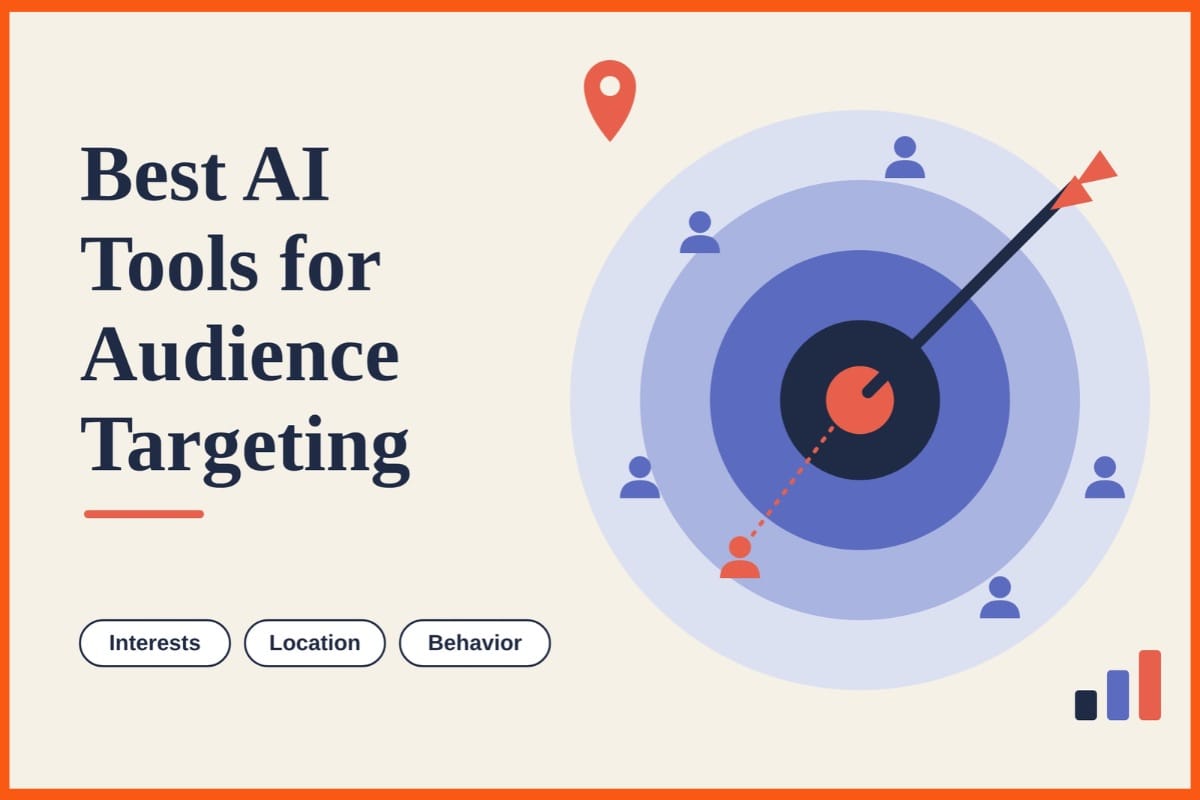
Best AI Tools for Audience Targeting
Discover the 10 best AI audience targeting tools to improve ad campaigns. Compare features, pricing, pros, and cons to find the right platform for your business.

The right AI tools can help your agency save time and get more done. They handle routine tasks, support new ideas, and give your team more time to focus on creative work. However, good ads still need a human touch.
Your team's ideas, judgment, and care help turn technology into real value for clients. Start with a few tools, test them, and see what works best. Choose options that match your goals and budget.
Let AI handle routine work while your team focuses on fresh ideas. Growth depends on how well you use these tools.
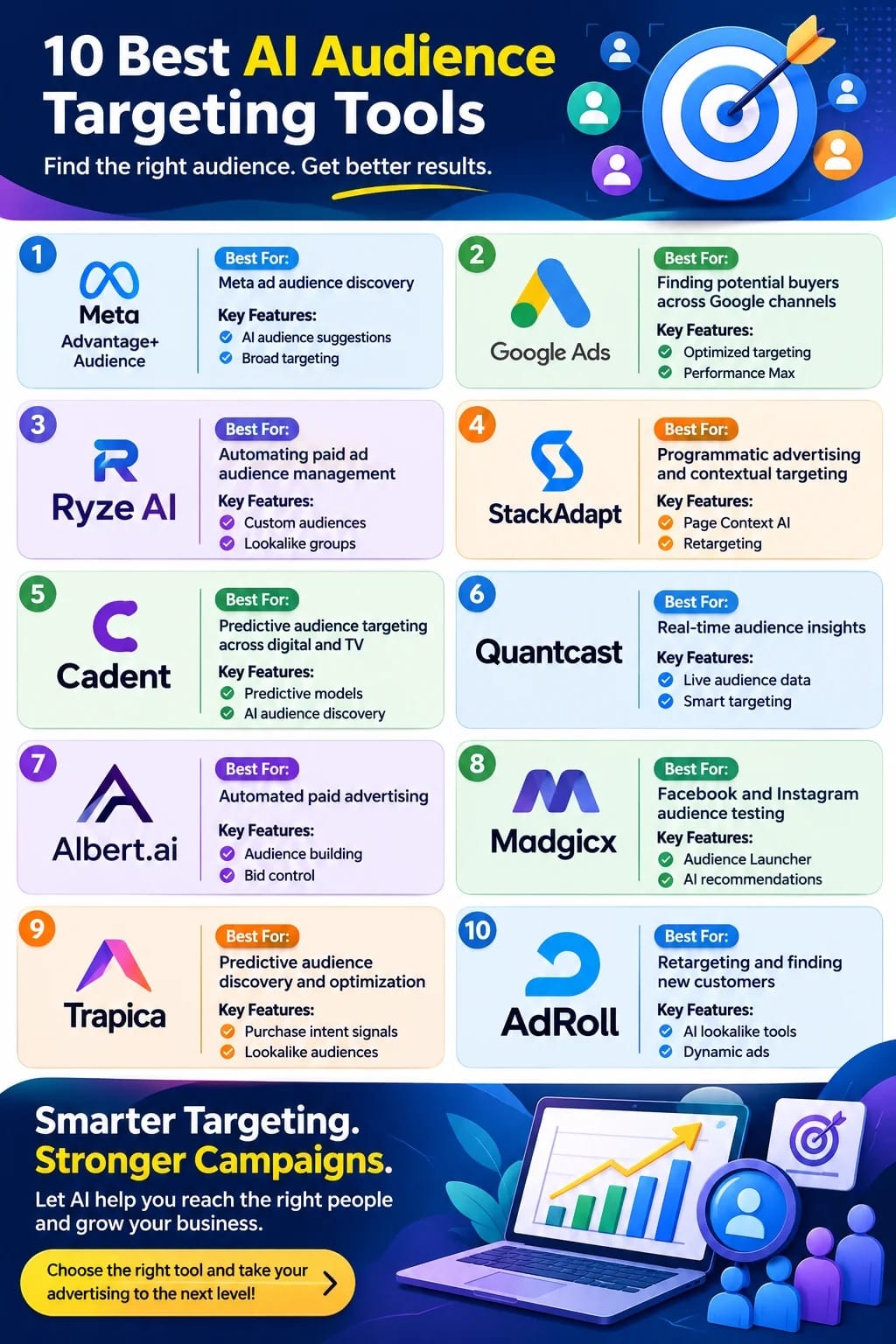
Here are 10 AI audience targeting tools that can help businesses and marketing agencies improve their advertising campaigns.
Best AI Audience Targeting Tools: Comparison Table
The following table compares the leading AI audience targeting tools based on their features, pricing, best use cases, and limitations.
| Tool | Best For | Key Features | Pricing Level | Drawbacks |
|---|---|---|---|---|
| Meta Advantage+ Audience | Meta ad audience discovery | AI audience suggestions, custom audiences, broad targeting | Included with Meta Ads | Limited control over some audience exclusions |
| Google Ads AI Targeting | Finding potential buyers across Google channels | Optimized targeting, audience signals, Performance Max | Custom advertising budget | Requires sufficient campaign budget; reach can go beyond selected groups |
| Ryze AI | Automating paid ad audience management | Custom audiences, lookalike groups, overlap checks, budget optimization | Paid plans from $89/month | Heavy users may need higher plans |
| StackAdapt | Programmatic advertising and contextual targeting | Page Context AI, retargeting, account-based targeting, real-time optimization | Custom pricing | Self-serve access requires approval |
| Cadent | Predictive audience targeting across digital and TV | Predictive models, AI audience discovery, campaign optimization | Custom pricing | May be more than basic advertising teams need |
| Quantcast | Real-time audience insights and cross-channel advertising | Live audience insights, smart targeting, cookieless targeting | Custom pricing | Learning curve and additional audience data costs |
| Albert.ai | Automated paid advertising and audience management | Audience building, bid control, budget planning, ad testing | Custom pricing | Requires human input for strategy and brand messaging |
| Madgicx | Facebook and Instagram audience testing | Audience Launcher, Audience Studio, AI recommendations | Paid plans from $32/month | Tracking Pro costs extra; pricing increases with ad spend |
| Trapica | Predictive audience discovery and optimization | Purchase intent signals, lookalike audiences, automated bidding | Custom pricing | Best suited to businesses with higher advertising budgets |
| AdRoll | Retargeting and finding new customers | AI bidding, lookalike audiences, dynamic ads, contextual targeting | Contact for pricing | Some features are add-ons; third-party audiences are limited to US customers |
Meta Advantage+ Audience
Meta Advantage+ Audience helps businesses find people who are more likely to engage with their ads.
It is built into Meta Ads Manager and uses audience suggestions to guide who sees each ad. Brands can add details such as age, gender, interests, and customer groups. The AI then uses these hints to find more people who may respond well.
Its features include broad audience targeting, custom audience options, and controls for location, age, language, and excluded groups. It is useful for brands looking to save time on audience selection and reach new customers.
Pros
- AI helps find your audience, so you spend less time building and testing target groups
- The tool can go beyond your first audience hints to find new people
- Set location, minimum age, language, and customer group exclusions to keep reach within key bounds
Cons
- You cannot exclude lookalike audiences, which limits how you separate some target groups
- Suggested age, gender, and interests may not limit reach and can be a poor fit when strict targeting matters
Meta Advantage+ Audience Pricing
Meta Advantage+ Audience is included with Meta Ads. Businesses pay for their advertising campaigns rather than a separate audience targeting subscription.
| Plan | Pricing |
|---|---|
| Meta Advantage+ Audience | Included with Meta Ads |
Google Ads AI Targeting
Google Ads earns a place in an AI audience targeting shortlist through tools that help brands find likely buyers. Its optimized targeting looks beyond chosen groups to reach new users who may convert.
Key features include audience signals, customer data use, and insights drawn from ad text and landing pages. Performance Max adds reach across Google channels and uses AI to guide ad delivery toward set goals.
Brands can share audience hints to help the system learn. These hints guide reach rather than set strict limits. This makes it useful for teams that want broader reach.
Pros
- Finds users outside your chosen groups and can help you reach buyers you might miss with manual targeting
- AI uses your goals and signals to help choose who sees your ads
- Customer signals help guide AI toward relevant new users, giving it a useful starting point
Cons
- Google warns that AI Max for Search will not work well when campaigns lack enough budget
- Ads can reach people outside the groups you chose
Google Ads AI Targeting Pricing
Google Ads does not charge a separate subscription fee for its AI targeting features. Advertising costs depend on campaign settings, bidding, and budget.
| Plan | Pricing |
|---|---|
| Google Ads | Custom advertising budget |
Ryze AI
Ryze AI is a paid ads tool to consider for a top ten audience targeting shortlist. It helps teams reach users through Google and Meta ads.
Key features include custom audiences, lookalike groups, overlap checks, and budget shifts based on results. Its chat lets you review ads and request changes in plain words.
You can set clear approval rules to stay in charge. The tool also creates ad content and tracks site actions with its pixel. It suits teams that want less manual work across ad accounts. Treat it as a shortlist choice.
Pros
- Spots audience overlap, helping teams avoid spending on groups
- Approval settings let you review budget and campaign changes before they go live
- The Paid Ads plan supports unlimited ad accounts
Cons
- Heavy users should check how fast their tasks use them
- Teams that need more must choose the Agency plan
Ryze AI Pricing
Ryze AI offers different plans for businesses and agencies.
| Plan | Pricing |
|---|---|
| Paid Ads | $89/month |
| SEO Starter | $129/month |
| Agency | $279/month |
| Traffic Printer | $599/month |
| Shopify CRO | $1,499/month |
StackAdapt
StackAdapt is a useful choice for any list of top AI audience targeting tools. It helps brands reach people based on their interests, buying intent, and the content they read online.
Its Page Context AI places ads on web pages that match the ad topic. Brands can also use their own customer data to build audiences and find new people with similar interests. Other features include retargeting, account-based targeting, and real-time campaign changes.
The platform also lets teams manage ads across different channels in one place. It helps brands find new customers, reconnect with past visitors.
Pros
- Page Context AI uses page content to guide where ads appear
- Use customer lists, lookalike groups, and retargeting to reach new prospects
- Target firms by size, sector, revenue, tech use, and buying intent
Cons
- Self-serve access requires an application and approval
- There is no spend minimum, but StackAdapt says most teams hit their stride near $5,000 a month
StackAdapt Pricing
StackAdapt follows a custom pricing model. Businesses can contact the company to discuss their advertising requirements and pricing.
| Plan | Pricing |
|---|---|
| StackAdapt | Request for Pricing (RFP) |
 Bhoraniya Huda Hifzur Rehman
Cadent
Cadent helps brands find and reach people who may act on their ads. Its AI tools let teams build audiences, buy ad space, and track results in one place.
Users can find groups with plain English prompts, then refine them to fit their goals. Predictive models help spot likely buyers, even when user IDs are not available. Ads can run across digital channels, streaming, and live TV.
Built in tools track results and adjust campaigns as they run. For a top ten shortlist, Cadent suits brands that want broad reach and less manual work.
Pros
- Models can find likely buyers without user IDs
- Teams can describe a target group in plain English
- AI agents track ads, flag issues, and adjust campaigns which can free up time for planning and creative work
Cons
- AI scores help guide ad spend, but they do not ensure sales
- Teams with basic needs may find that scope more than they need
Cadent Pricing
Cadent uses a custom pricing model. Businesses can request a proposal based on their campaign requirements.
| Plan | Pricing |
|---|---|
| Cadent | Request for Pricing (RFP) |
Quantcast
Quantcast helps brands find and reach people who may buy their products. Its AI uses live web signals to spot trends and build groups based on shared traits. Brands can use their own data, reach past site visitors, and find new people with similar habits.
Key features include live audience insights, ad planning, smart targeting, and campaign reports. It supports display, video, mobile, audio, and connected TV ads. Its tools can also reach people without third-party cookies.
Teams can track results and adjust ads in one place. This makes it an option for brands that want smarter paid ad.
Pros
- Use these signals to reach people when they are more likely to act
- Run ads across the web, mobile, audio, and TV and manage these channels in one place
- Reach audiences even when third-party cookies are absent
Cons
- Some outside audience data has a separate CPM charge—a fee per thousand ad views
- Learning curve for some users
Quantcast Pricing
Quantcast offers custom pricing based on business requirements and advertising needs.
| Plan | Pricing |
|---|---|
| Quantcast | Request for Pricing (RFP) |
Albert.ai
Albert.ai helps brands find and reach the right groups through paid ads. It runs ads across search, social, and other paid sites. Its AI builds audience groups, tests ad options, and shifts spend as results change.
Key tools include bid control, budget planning, keyword grouping, ad rotation, and reports. Teams can use these tools to cut routine work and track what works.
Staff still set goals, guide brand messaging, and shape the core ad plan. For a top ten shortlist, its main draw is audience targeting linked with ad management
Pros
- Builds campaigns and audience groups, then adjusts bids and budgets
- Teams can test which ads work for each group
- Teams can manage these channels through one tool
Cons
- This makes cost checks harder before a sales call
- Staff must set goals and lead brand and content plans
Albert.ai Pricing
Albert.ai follows a custom pricing model. Businesses need to contact the company for pricing information.
| Plan | Pricing |
|---|---|
| Albert.ai | Request for Pricing (RFP) |
Vivek Dev Jacob
Madgicx
Madgicx is a strong pick for a top ten list of AI tools for audience targeting. It helps brands find, test, and reach shoppers on Facebook and Instagram.
Its Audience Launcher offers preset groups for each stage of the sales funnel. Audience Studio helps users track results, find fresh interests, and blend groups that work well. AI tools review ad data and suggest changes, while rules help manage spend. Users can also make ads and view reports in one place.
These tools suit teams that want to test more groups and cut the time spent on daily ad tasks.
Pros
- Preset audience groups help teams launch tests for each sales stage with less manual work
- Audience Studio lets users find new interests and mix groups based on their results
- Users can review changes before they go live
Cons
- Tracking Pro is a paid add-on, not part of the base fee
- The monthly fee grows as ad spend goes up
Madgicx Pricing
Madgicx offers monthly, quarterly, and annual subscription options.
| Plan | Pricing |
|---|---|
| Monthly Plan | $45/month |
| Quarterly Plan | $38/month |
| Annual Plan | $32/month |
Trapica
Trapica is a tool to consider for a top 10 list of AI tools for audience targeting. It helps ad teams find groups likely to buy, based on their traits, interests, and actions. Its AI spots signs of purchase intent, builds lookalike groups, and finds new groups to test.
Live updates keep these groups fresh as user habits change. Teams can sync groups across Meta, Google, TikTok, and LinkedIn. Trapica can also leave out groups less likely to buy.
Beyond targeting, it adjusts bids, shifts budgets, tests ads, and tracks results to help teams cut waste .
Pros
- Finds new audience groups and builds lookalikes from past sales patterns
- Updates groups as users act and show new purchase intent
- Runs bid changes, budget shifts, and ad tests, so teams can spend more time on plans and ad content
Cons
- Trapica says it works with firms spending $10,000 a month or more on ads
- Teams that need several ad channels must choose a higher tier
Trapica Pricing
Trapica offers custom pricing based on business requirements and advertising needs.
| Plan | Pricing |
|---|---|
| Trapica | Request for Pricing (RFP) |
Shubham Kumar
AdRoll
AdRoll is an option for a top 10 list of AI tools for audience targeting. It helps brands reach new shoppers and bring past visitors back. Its AI finds people who share traits with your best buyers.
You can group users by site visits, viewed products, or contact lists. Context tools place ads near web content that fits your brand. Its AI bid engine picks ad spots based on campaign goals. Dynamic ads show items a shopper has viewed.
Brands can track sales, review results, and use store data to shape ads across the web and other paid channels.
Pros
- AI lookalike tools find people like your buyers
- Build groups from page views, store data, and contact lists
- The AI bid engine picks ad spots and sets bids to suit your goals
Cons
- Social ads and cross-channel sales tracking are add-ons in Ads plans
- Third-party audience groups are only open to US customers
AdRoll Pricing
AdRoll pricing depends on the selected advertising features and business requirements. Contact the company for a pricing proposal.
| Plan | Pricing |
|---|---|
| AdRoll | Contact for Pricing |
How to Choose the Right AI Audience Targeting Tool
Choosing an AI audience targeting tool depends on your advertising goals, budget, customer data, and the platforms you use. Not every tool is suitable for every business. Consider the following factors before making a decision.
1. Identify Your Advertising Goals
Start by understanding what you want to achieve. Some businesses want to find new customers, while others want to bring back website visitors or improve conversions.
Choose a tool that supports your primary advertising goal.
2. Check Platform Compatibility
Check whether the tool works with your preferred advertising platforms, such as Meta, Google, TikTok, and LinkedIn.
If you run campaigns across multiple channels, choose a platform that can manage audience targeting across them.
3. Consider Your Advertising Budget
Compare subscription fees, advertising spend requirements, and additional feature costs.
Some tools are included with advertising platforms, while others require monthly subscriptions or custom contracts. Make sure the total cost fits your budget.
4. Look for Automation and Reporting Features
A good AI audience targeting tool should help automate repetitive tasks and provide useful campaign insights.
Look for features such as audience discovery, lookalike targeting, campaign optimization, reporting, and budget management.
5. Keep Human Oversight
AI can identify patterns and suggest audience groups, but it cannot replace human judgment.
Review audience suggestions, check campaign performance, and make sure your targeting decisions match your brand goals and customer expectations.
Final Thoughts
AI can help you reach the right people with less guesswork. It turns data into clear clues about what your audience wants and when to act. But strong results take more than smart tech. You need clear goals, good data, and a message that feels human. Choose what fits your needs, test small, and learn as you go.
Keep trust at the heart of each choice. The goal is not just more clicks. It is to build real ties with people who value what you offer. Start with purpose, stay curious.
FAQs
What are AI audience targeting tools?
AI audience targeting tools use artificial intelligence and customer data to identify potential buyers, understand user behaviour, and find audiences more likely to engage with advertisements.
Which are the best AI audience targeting tools?
Some of the best AI audience targeting tools include Meta Advantage+ Audience, Google Ads AI Targeting, Ryze AI, StackAdapt, Quantcast, Madgicx, and AdRoll.
How does AI improve audience targeting?
AI analyses customer data, interests, browsing behaviour, and purchase patterns to identify relevant audience groups. It also helps businesses discover new customers, build lookalike audiences, and optimize advertising campaigns.
Are AI audience targeting tools suitable for small businesses?
Yes. Small businesses can use AI audience targeting tools to save time, discover potential customers, and improve ad performance. Tools such as Meta Advantage+ Audience and Google Ads AI Targeting offer accessible starting points for businesses with different budgets.